

How a Mechanical Watch Escapement Works (Swiss Lever Explained)
Wind a mechanical watch, and energy flows from the mainspring through the gear train. Without something to regulate that flow, all stored energy would be released at once, and the hands would spin uncontrollably.
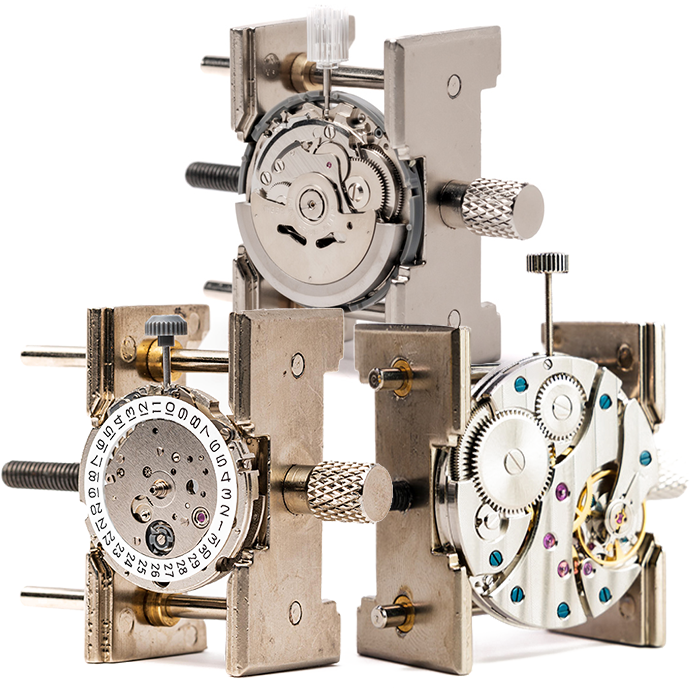
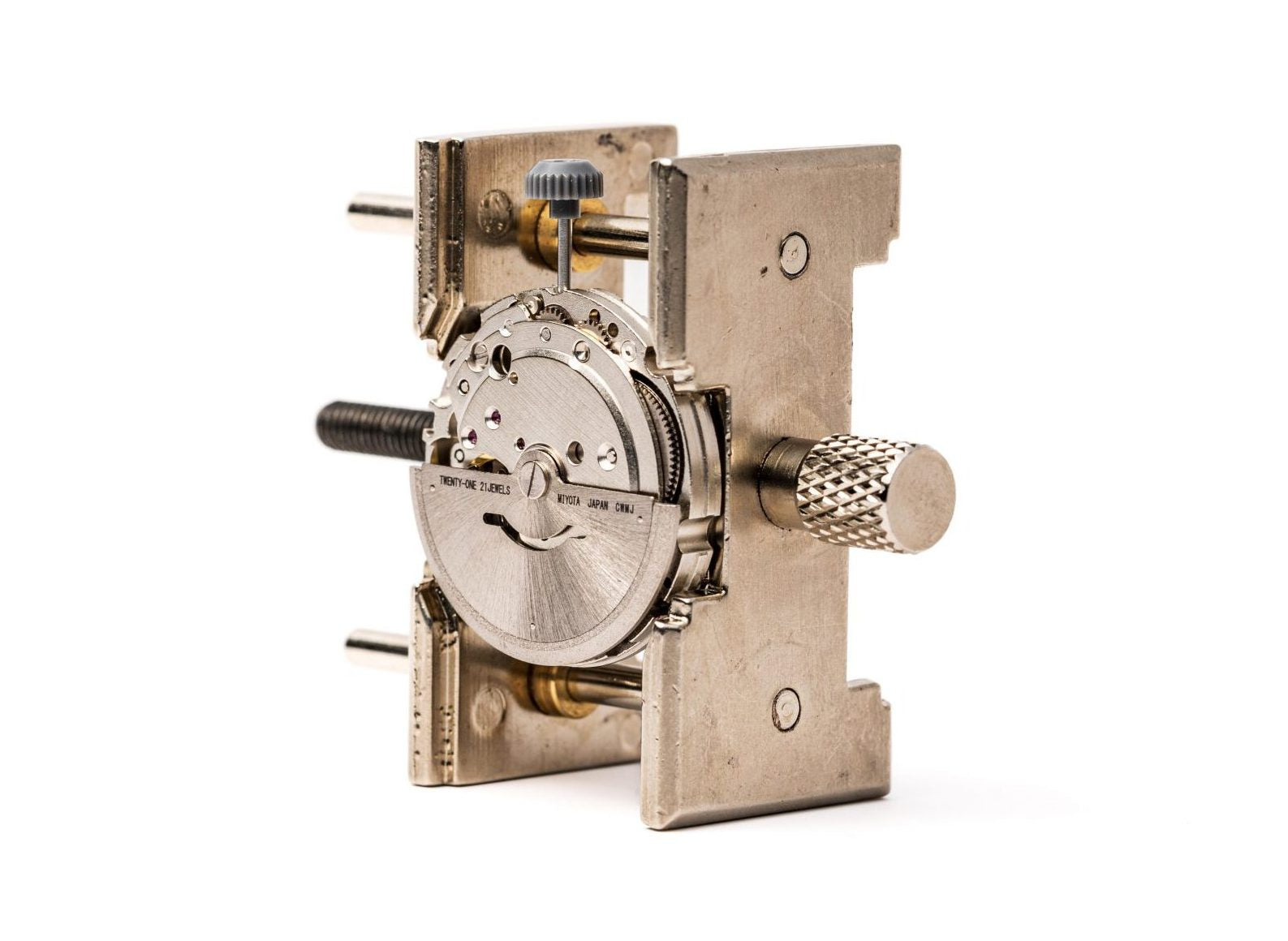
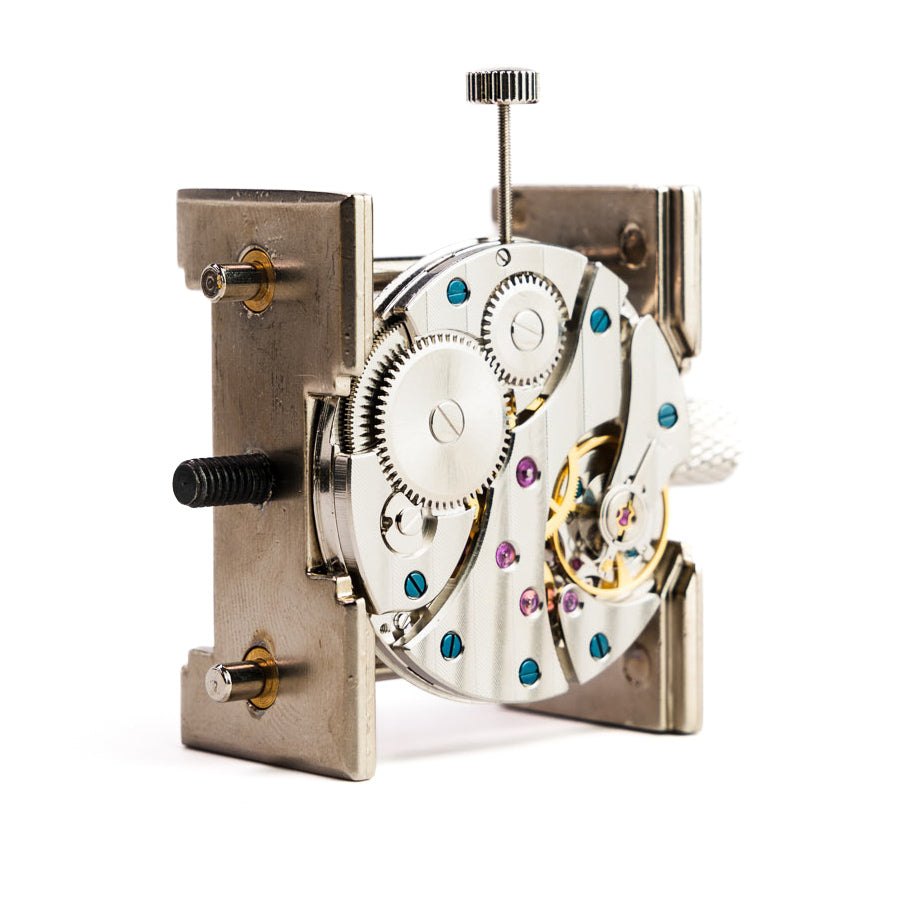
The escapement prevents this. Thomas Mudge invented the lever escapement around 1755, and Swiss watchmakers refined it into the modern form by the mid-1800s. Nearly every mechanical watch today uses the Swiss lever design. Building a hand-wound movement kit lets you see the escapement working firsthand.
What the Escapement Does
The escapement serves two jobs: release energy from the gear train in controlled increments, and deliver tiny pushes to keep the balance wheel swinging.
Without the escapement, the hands would spin freely until the mainspring unwound in seconds.
Controlled Energy Release
The escapement breaks continuous motion into tiny, measured steps. Each step equals one tick, one beat, and one precise hand movement. A watch at 21,600 vibrations per hour releases energy six times per second, producing consistent timekeeping.
Energy Transfer to the Balance Wheel
The balance wheel loses energy each oscillation through friction. The escapement compensates by giving a small push, called an impulse, during each beat. Without regular impulses, the balance gradually slows and stops.
The Three Parts of a Swiss Lever Escapement
Three components work together in a rapid, repeating cycle. Each plays a specific role in controlling energy flow and keeping accurate time. Synthetic ruby and sapphire jewels serve as bearing surfaces at critical contact points, reducing friction that would otherwise wear steel components and degrade accuracy.
Key components include:
- Escape wheel with shaped teeth that lock and release against the pallet fork
- Pallet fork with two jewel stones that alternately block and free the escape wheel
- Balance wheel with a ruby impulse pin that triggers each cycle
The Escape Wheel
The last wheel in the gear train has shaped teeth, usually 15 or 20, depending on movement frequency. The gear train pushes the escape wheel forward, but the pallet fork blocks and releases its teeth to control rotation.
The Pallet Fork
Two jewel stones at each end, called pallet stones, lock against the escape wheel teeth until the balance triggers release. Pallet stones are synthetic rubies polished to mirror smoothness, far harder than steel and nearly frictionless at the contact surface. When the balance swings through the center, it pushes the fork sideways, releasing one tooth and catching the next. Watches advertising "17 jewels" or "21 jewels" count these escapement jewels among their total.
The Balance Wheel and Impulse Pin
A small ruby impulse pin on the balance wheel enters the fork's slot during each swing. Each push unlocks one escape wheel tooth and locks the next. The hairspring pulls the balance back, repeating the process thousands of times per hour.
How the Cycle Works
Four phases happen in rapid sequence with every tick and tock you hear. A watch running at 21,600 vibrations per hour produces a slower, distinct tick. Higher-beat movements at 28,800 vibrations per hour create a smoother, more rapid sound. The beat rate affects both the audible character and the accuracy of the watch.
The four phases are:
- Lock: pallet stone holds an escape wheel tooth, stopping the gear train
- Unlock: balance wheel pushes the impulse pin against the fork
- Impulse: released tooth slides along the stone's face, delivering energy to the balance
- New lock: opposite pallet stone catches the next tooth
Lock, Unlock, Impulse, New Lock
One pallet stone holds an escape wheel tooth during lock. The balance pushes the impulse pin against the fork, triggering unlock. The released tooth delivers energy back to the balance as an impulse. The opposite stone catches the next tooth, creating a new lock, and the balance reverses under the hairspring.
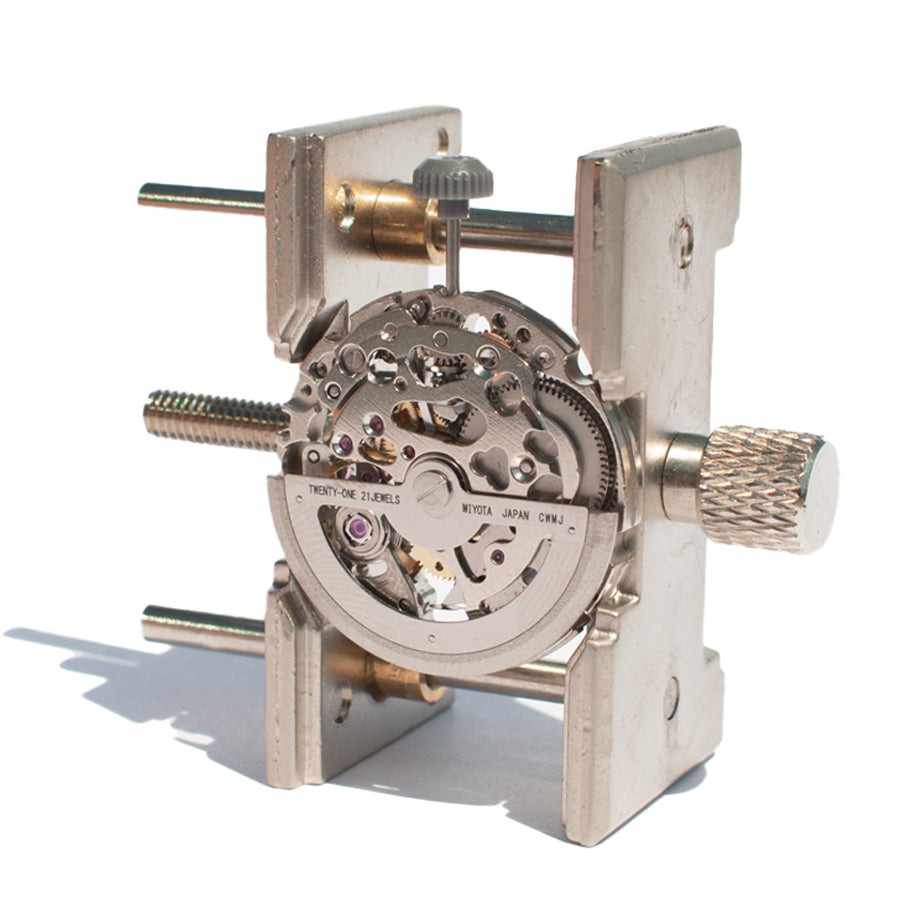
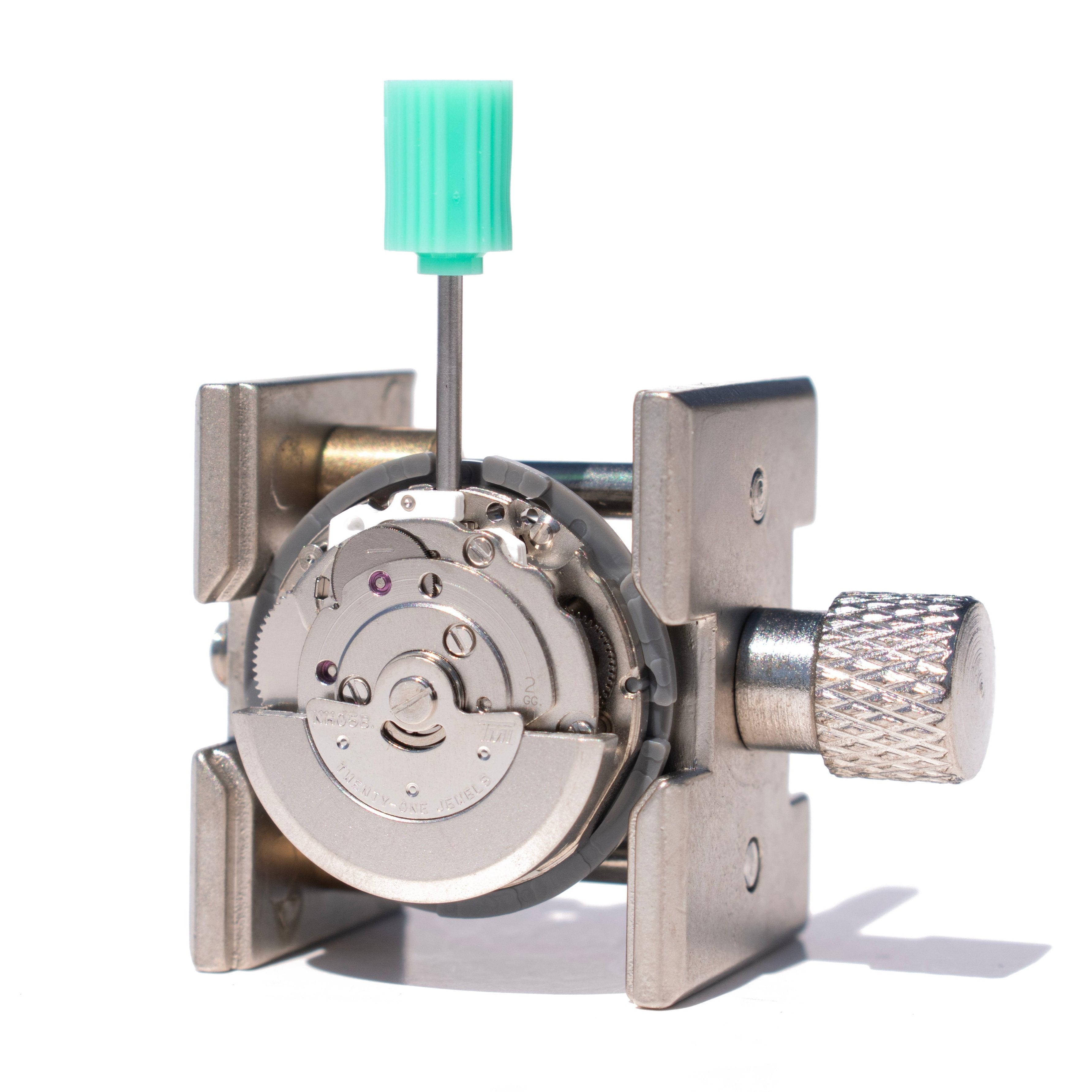
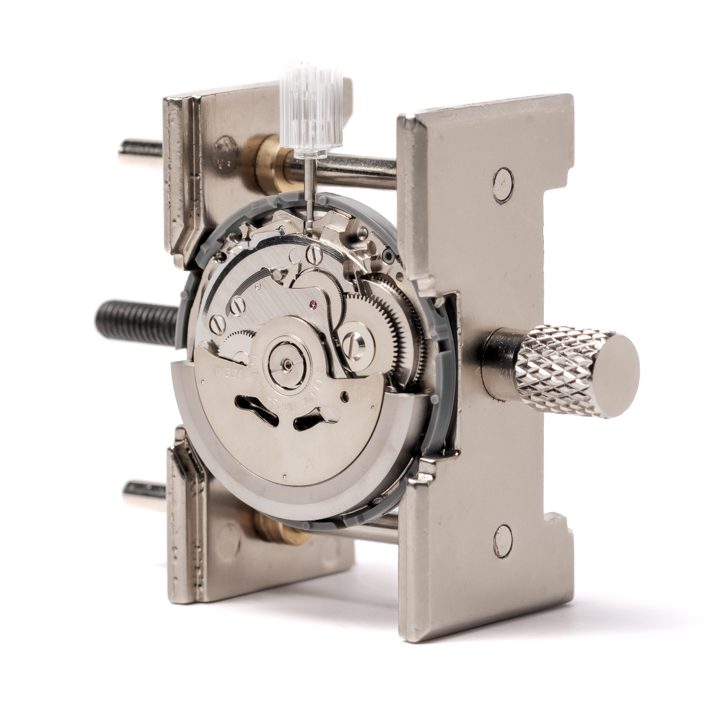
A standard automatic movement kit at 21,600 vibrations per hour completes this cycle six times every second.
Why the Swiss Lever Became Standard
The Swiss lever won over competing designs through durability, self-starting ability, and shock resistance. Centuries of refinement produced an escapement that no alternative has surpassed.
Self-Starting and Shock Resistant
The Swiss lever is "detached," meaning the balance swings freely for most of its oscillation. Contact only occurs at impulse and unlock. The detached design survives shocks without the pallet fork skipping a tooth, a problem that plagued earlier designs. The detent escapement used in marine chronometers offered superior accuracy but lacked shock resistance and self-starting ability, making the Swiss lever the practical winner for wristwatches.
Proven Over Centuries
Centuries of refinement made the Swiss lever remarkably efficient. Modern versions lose only a few seconds per day when properly regulated. Silicon escape wheels and pallet forks represent the latest advancement, eliminating the need for lubrication at contact surfaces, resisting magnetic interference, and achieving tighter manufacturing tolerances than traditional steel components.
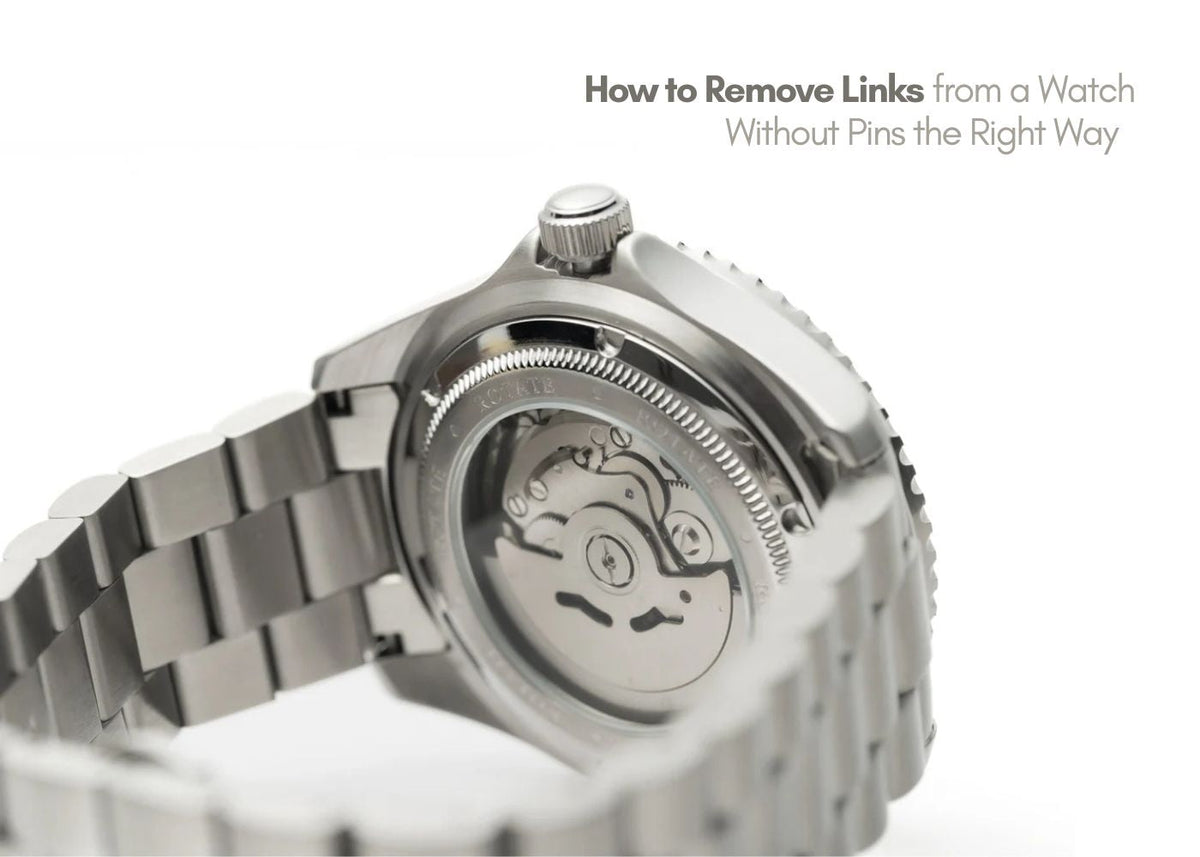
Building a DIY watch kit and watching the escapement through an exhibition caseback makes the mechanism tangible.
Conclusion
The Swiss lever escapement makes mechanical timekeeping possible. Escape wheel, pallet fork, and balance wheel work together in a repeating cycle of lock, unlock, impulse, and new lock.
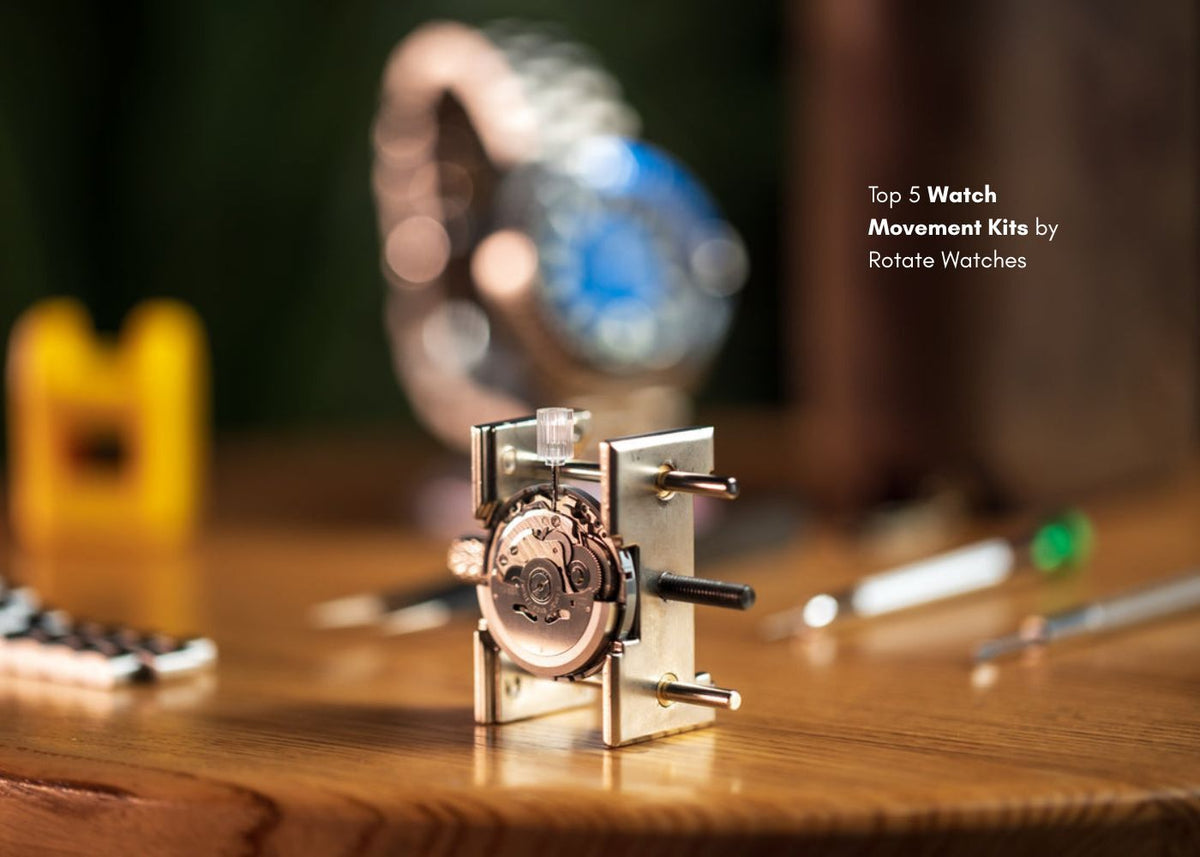
Rotate Watches watchmaking kits and movement kits include movements where you can observe the escapement firsthand, with detailed guides and expert support.
Frequently Asked Questions
Q1. What is the escapement in a mechanical watch?
The escapement controls energy release from the mainspring through the gear train. Without it, the gear train would spin freely and unwind instantly. The escapement delivers small impulses, keeping the balance wheel oscillating at a steady rate.
Q2. What are the parts of a Swiss lever escapement?
The three main components are the escape wheel, pallet fork with two pallet stones, and balance wheel with an impulse pin. The pallet fork alternately locks and releases escape wheel teeth while the balance wheel triggers each release cycle.
Q3. Why is it called a "Swiss lever" escapement?
"Swiss" distinguishes the modern club-tooth design from the earlier English lever, which used pointed teeth and a right-angle layout. The Swiss version uses club-shaped teeth in an inline arrangement, offering better efficiency and reduced wear on components.
Q4. How often does the escapement tick?
Most watches tick at 21,600 vibrations per hour, equaling six beats per second. Higher-frequency movements tick at 28,800 or 36,000 vibrations per hour. Higher frequencies improve accuracy but increase wear on escapement components.
Q5. Does the Seiko 7S26 have hacking or hand-winding?
No. The 7S26 lacks both hacking and hand-winding — cost-reduction decisions Seiko made in 1996 to compete with quartz pricing. The seconds hand cannot be stopped for time-setting, and the crown does not wind the mainspring.
Q6. How accurate is the Seiko 7S26 movement?
Seiko rates the 7S26 at -20 to +40 seconds per day. In practice, a well-maintained example typically runs between +5 and +20 seconds daily. Regulation by a watchmaker can tighten performance toward the lower end of that range.
Q7: Can you replace a 7S26 with an NH36 movement?
Yes. The NH36 shares the same 27.0mm diameter as the 7S26, making it a common upgrade path. You will need a new crown stem and a compatible day wheel, and should verify caseback clearance.
Q8: Why did Seiko stop making the 7S26?
Seiko discontinued the 7S26 and replaced it with the 4R36 (NH36) in newer models. The 4R36 adds hacking and hand-winding while retaining identical dimensions, making it a direct functional upgrade at comparable cost. The 7S26 is no longer used in new Seiko production.
Q9. Can an escapement wear out over time?
Yes. Pallet stones and escape wheel teeth experience friction during every cycle. Specialized watch oils applied to these surfaces gradually thicken, attract dust, and lose their lubricating properties. Warning signs include noticeable timekeeping drift, unexpected stopping, or unusual sounds. Regular servicing every five to seven years replaces degraded oils and minimizes long-term wear.
Q10. What is a co-axial escapement?
Developed by George Daniels and commercialized by Omega in 1999, the co-axial reduces sliding friction in Swiss lever designs. The co-axial uses radial impulse rather than sliding contact, requiring less frequent lubrication between services.