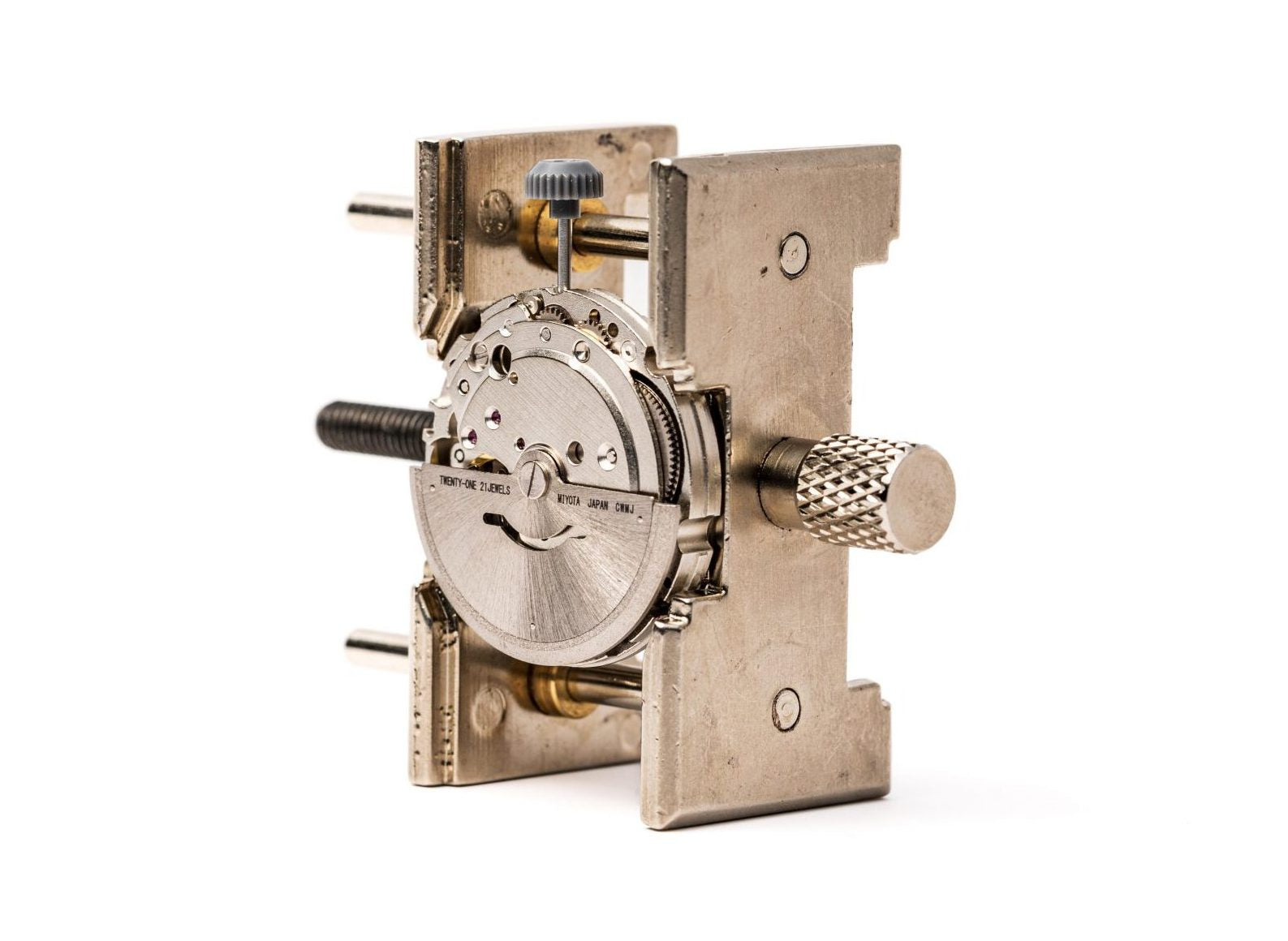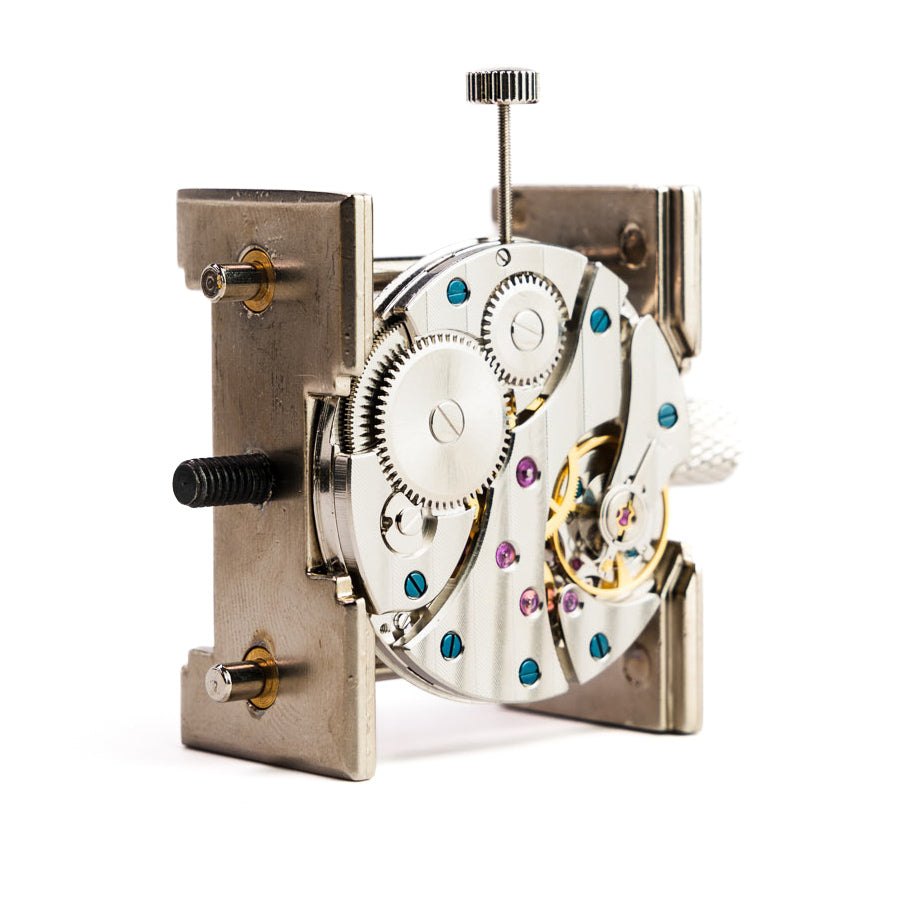

How to clean a watch without an ultrasonic cleaner?
Professional watchmakers use ultrasonic machines that vibrate solutions at high frequencies to remove every particle of dirt and old oil. Professional-grade machines can cost hundreds to thousands of dollars and are not necessary for every cleaning situation.
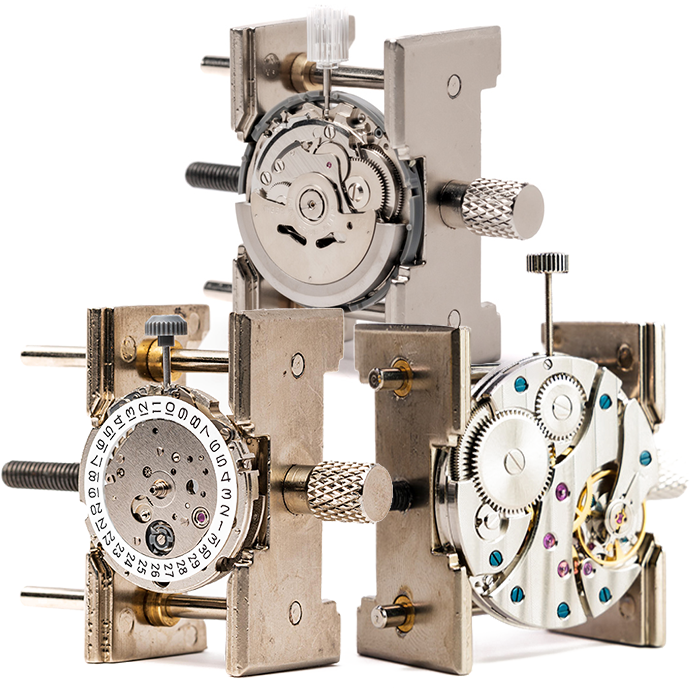
If you are maintaining a DIY watch building kit or cleaning a movement between services, hand-cleaning methods work well with patience and the right approach. Learning how to clean a watch movement at home is a practical skill that keeps your timepiece running between professional services.
What You Need for DIY Watch Cleaning
Gather supplies before disassembly. Having everything within reach prevents scrambling mid-process.
Basic Supplies
You do not need specialized equipment to clean a watch without an ultrasonic cleaner:
- Lighter fluid (naphtha) or watch cleaning solution
- Small glass jars with lids
- Peg wood sticks or wooden toothpicks
- Soft-bristle brush (a clean paintbrush works)
- Lint-free cloth or watchmakers paper
- Precision Q-tips for detailed cleaning
- Rodico watchmaking putty for dust removal
- Tweezers and a parts tray
Note: Dedicated watch cleaning solutions (such as L&R products) produce cleaner results than lighter fluid for critical work. Some modern lighter fluid formulations contain trace oils that may leave residue on parts. Lighter fluid remains a practical and affordable option for hobbyist cleaning.
Safety: Work in a well-ventilated area when using lighter fluid or naphtha. Keep away from open flames and heat sources, as these solvents are highly flammable.
Workspace Setup
Work on a clean, well-lit surface. White paper underneath helps spot dropped screws. Keep cleaning solutions in stable containers. A loupe magnifier helps verify parts are truly clean.
Step-by-Step Watch Cleaning at Home
The process follows simple logic: disassemble, soak, scrub gently, rinse, dry, inspect. Each step builds on the previous one, so rushing ahead often means going back to fix what you missed.
Hand cleaning takes longer than running parts through a machine, but the trade-off is direct control. You see every jewel hole, inspect every pivot, and know exactly what condition each part is in before reassembly. That hands-on familiarity makes you a better builder and more confident troubleshooter over time.
Step 1: Disassemble and Organize
Remove the movement from the case. Separate into major subassemblies: mainspring barrel, bridges, gear train wheels, and balance assembly. Place each group in a numbered section of your parts tray. Keep the balance wheel and hairspring separate from everything else.
Before soaking, do a quick pre-clean pass. Use a Q-tip dampened with solvent to wipe visible grease from jewel holes, barrel surfaces, and bridge recesses. Pre-cleaning removes the heaviest contaminants first, keeping your wash solution cleaner and letting you inspect pivots and jewels more clearly before the full soak.
Step 2: Soak Metal Parts
Place non-delicate metal parts into a glass jar filled with lighter fluid or watch cleaning solution. Let them soak five to 10 minutes. The solvent dissolves old lubricant, dust, and grime.
Parts safe to soak:
- Movement plates and bridges
- Gear train wheels and pinions
- Barrel components (without mainspring)
- Screws and stems
Parts you should NOT soak:
- Balance wheel and hairspring assembly
- Dial and hands
- Gaskets and seals
Step 3: Brush Away Residue
After soaking, use a soft brush to scrub each part. Peg wood sticks clean jewel holes and pivot holes where a brush cannot reach. Sharpen the tip, insert into each hole, and rotate gently.
Step 4: Rinse With Fresh Solution
Dip cleaned parts in a second container of fresh solvent to dilute any remaining contaminants. For best results, use a third container as a final rinse. Each rinse stage further dilutes leftover residue from the previous one. A final rinse in 99% isopropyl alcohol speeds drying and leaves parts chemically clean. Use 99% concentration, not 70%, because the water content in diluted IPA can cause rust on steel parts.
Parts must be free of cleaning solution residue, not just visible dirt. Leftover residue draws lubricant away from pivot points after reassembly, which shortens service life.
Step 5: Dry Completely
Place parts on lint-free cloth and let them air dry. A hand air blower speeds evaporation. Never blow directly from your mouth, as moisture deposits on metal surfaces. A hairdryer on low heat prevents condensation from forming on parts as solvents evaporate. Every part must be completely dry before reassembly. Inspect each part under a loupe after drying to confirm jewel holes are clear and no debris remains.
Step 6: Handle the Balance Wheel Carefully
Clean the balance wheel separately with a very soft brush barely dampened with solution. Never soak the hairspring assembly. A peg wood stick lightly touching the pivots removes debris safely. The balance wheel is the heart of your watch, and careful handling here protects the accuracy of your entire build. Working through a watch movement kit teaches exactly how sensitive these components are.
Cleaning the Case and Crystal
A dirty case makes even a clean movement look neglected. Sweat, skin oils, and dust build up in bracelet links, around bezels, and inside case crevices over months of wear.
Regular exterior cleaning prevents grime from hardening into stubborn deposits. Keeping the case and crystal in good shape also protects gaskets and seals, which maintain the water resistance your movement depends on.
Case Cleaning
For stainless steel, warm water with mild dish soap and a soft toothbrush removes grime. Rinse and dry with a lint-free cloth. Avoid soap on leather straps or gaskets. A Cape Cod cloth handles light scratches on polished steel, but do not polish brushed finishes.
Crystal Cleaning
Sapphire crystals clean easily with a damp cloth. Mineral glass scratches more easily, so use only soft materials. Acrylic crystals can be buffed with plastic polish compound for fine scratches.
Conclusion
Cleaning without an ultrasonic cleaner takes more patience but produces good results. Soak in solvent, brush carefully, rinse, and dry thoroughly. Handle the balance wheel separately and clean the case with soap and water.
Learning to clean your own movement builds confidence for future maintenance and deeper projects. Each cleaning session sharpens your eye for detail and your comfort handling precision parts.
Ready to put those skills to work? Rotate Watches offers DIY watch kits and movement kits with detailed guides that teach proper handling, assembly, and care from your very first build.
Frequently Asked Questions
Q1. Can I clean a watch movement at home?
Yes. Lighter fluid, soft brushes, peg wood, and lint-free cloths handle basic cleaning between professional services. Soak metal parts in solvent, brush each piece, rinse in fresh solution, and dry with gentle heat. A pre-clean pass with Q-tips removes heavy grease before the main soak. Home cleaning keeps your movement running well, though it does not replace a full professional service.
Q2. What solution works for cleaning watch parts?
Lighter fluid (naphtha) or dedicated watch cleaning solution from brands like L&R work well for the wash stage. 99% isopropyl alcohol works as a final rinse because it evaporates quickly and leaves no residue. Avoid 70% IPA because the water content can cause rust on steel movement parts. For hairsprings specifically, specialized solutions like One Dip are the safest option.
Q3. Can I soak the balance wheel?
No. Clean the balance wheel gently with a very soft brush barely dampened with solvent. Soaking risks distorting the hairspring coils, which directly affects timekeeping accuracy. A peg wood stick lightly touching the pivots removes debris without applying dangerous pressure. Always handle the balance assembly separately from all other parts.
Q4. How often should I clean my movement?
Full cleaning happens during professional service every three to five years. Light cleaning between services helps when you notice dust buildup or sluggish performance. Lubricants inside the movement degrade over time regardless of wear, so routine servicing prevents dry pivots and premature wear. Watches worn daily in active conditions may benefit from service closer to the three-year mark.
Q5. Can I use water on movement parts?
No. Water causes corrosion on the steel pivots, wheels, and screws inside a movement. Even small amounts of moisture can form rust that creates friction and stops the watch. Use solvent-based solutions like naphtha or 99% IPA for all movement parts. Water with mild soap is fine for cleaning stainless steel cases and bracelets externally.
Q6. What is peg wood for?
Peg wood is a soft wood stick sharpened to a point for cleaning jewel holes and pivot holes in watch movements. The wood is firm enough to scrape away dried lubricant but soft enough to avoid scratching jewels or metal surfaces. Sharpen the tip with a blade, insert it into the hole, and rotate gently until the wood comes out clean. Watchmakers also use peg wood to clean between pinion leaves and remove debris from hard-to-reach areas.