
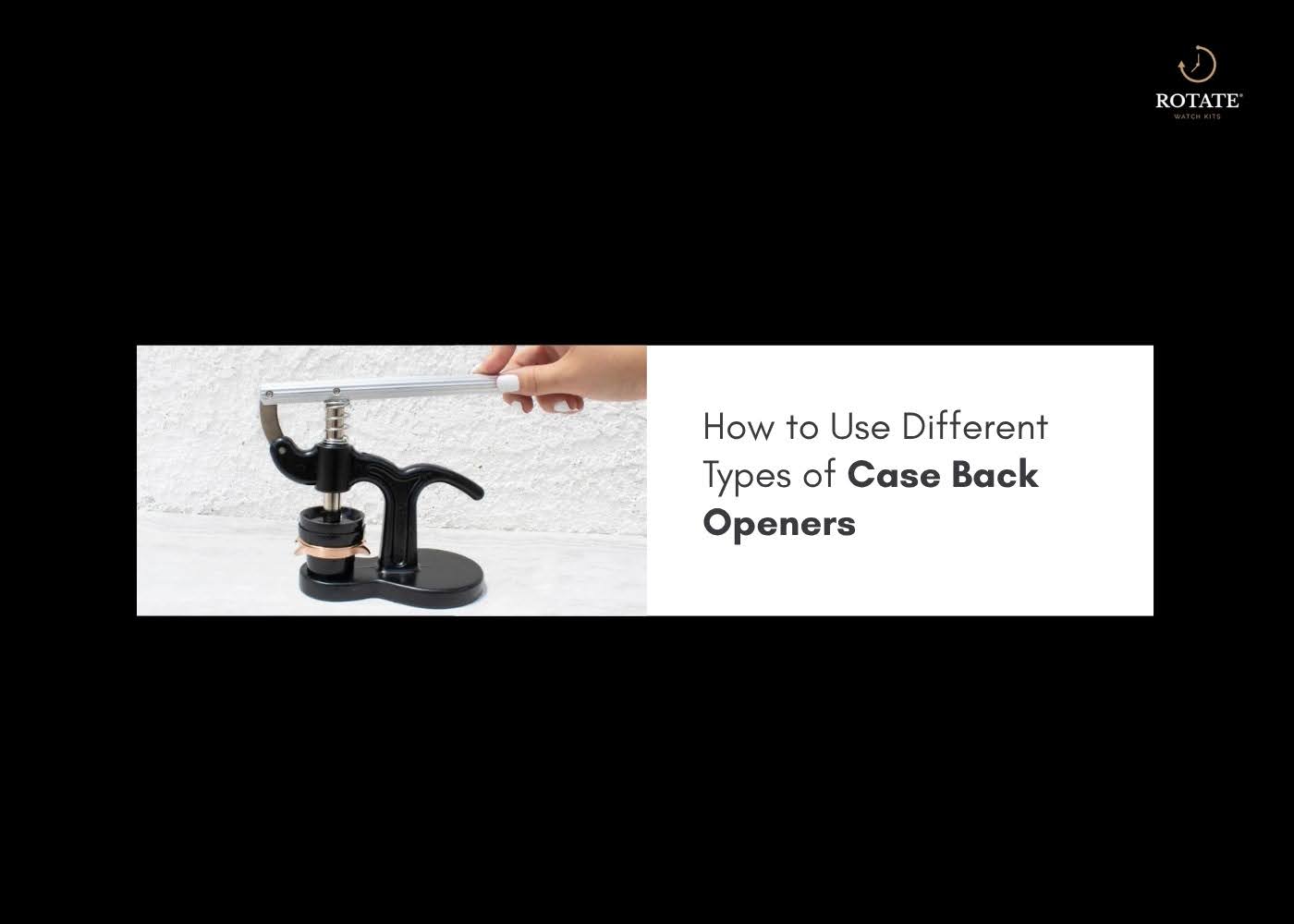
How to Use Different Types of Case Back Openers
Opening a watch case back is the first step for battery changes, movement inspections, and servicing. Using the wrong tool risks scratching the case or damaging the gasket.
Case backs fall into a few categories, each with a matching tool. Pair the right opener to your watch and the process becomes straightforward.
Key Takeaways:
- Match your tool to your case back type: knives for snap-off, pin wrenches for notched, friction balls for smooth screw-down
- Apply firm downward pressure with pin wrenches to prevent slipping
- Lubricate gaskets with silicone grease before reassembly
- Tape the case back before using a knife to prevent scratches
What Type of Case Back Does Your Watch Have?
Watch case backs come in four main types, each requiring a different opener. Flip your watch over to identify yours.
- Snap-off (press-fit): No threading. Look for a small notch or indent along the edge. Most affordable quartz watches and vintage mechanicals use this design.
- Screw-down with notches: Six or more small notches around the edge. The back threads into the case for a tighter seal. Most sport and water-resistant watches use this style.
- Screw-down with slots: One or two large slots instead of notches. A flat screwdriver-style bit fits the slot. Certain vintage and military watches use this style.
- Screw-held: Four or more small screws around the perimeter. A precision screwdriver matched to the screw size removes them.
Which Opener Fits Your Case Back?
Each case back type requires a specific tool. Wrong tools risk damage.
The Case Knife for Snap-Off Backs
A case knife has a thin, dull blade that slides between the case and back. Rotate kits ship with a case opener knife that handles snap backs cleanly. Locate the notch, insert the blade, and twist. Tape the case back first to prevent scratches if the blade slips.
The Pry-Type Opener for Stubborn Snap Backs
Pry-type openers, like the Bergeon 4755 style, use a lever instead of twisting. Insert the fine edge into the gap and push down to lift the back off. Pry openers handle tight backs that resist a knife.
Friction Ball and Suction Openers
Friction balls are small, tacky rubber balls. Press firmly onto the case back and twist counterclockwise. Suction openers work similarly using vacuum pressure. Both work best on smooth screw-down backs without notches, and most first-time builders find them the easiest tool to start with.
Pin Wrenches for Notched Backs
Pin wrenches are the standard tool for notched screw-down backs:
- Two-pin wrenches are compact and affordable. Adjust the pin width to match two opposing notches, press firmly, and turn counterclockwise.
- Three-pin (Jaxa) wrenches offer more stability with three contact points. The extra pin reduces slipping.
Insert pins into the notches, apply firm downward pressure, and turn slowly. Insufficient pressure causes pins to jump out and scratch the back.
How to Open and Close Safely
Safe technique prevents most scratches and gasket damage. Follow these practices:
- Secure the watch. Use a case holder or soft cloth. Remove metal bracelets first if they block access.
- Turn counterclockwise for screw backs. Once resistance breaks, remove by hand to avoid dropping it.
- Protect the gasket. The gasket seals water resistance. Avoid jabbing tools near it. Note its position for reassembly.
Closing Snap-On Backs
Align the back with the case, ensuring any notch sits over the crown stem. Press firmly with your thumbs, or use a case press for even pressure.
Closing Screw-Down Backs
Start threading by hand to avoid cross-threading. Once finger-tight, use the wrench for one final snug turn. Lubricate the gasket with silicone grease before closing. Over-tightening strips threads or damages gaskets.
When Should You Open Your Watch Case Back?
Open the case back only when you have a specific reason:
- Seiko or Miyota movement inspections, or moisture checks
- Quartz battery replacement
- Regulator access for timekeeping adjustments
- Working through a DIY watch kit requiring repeated case access
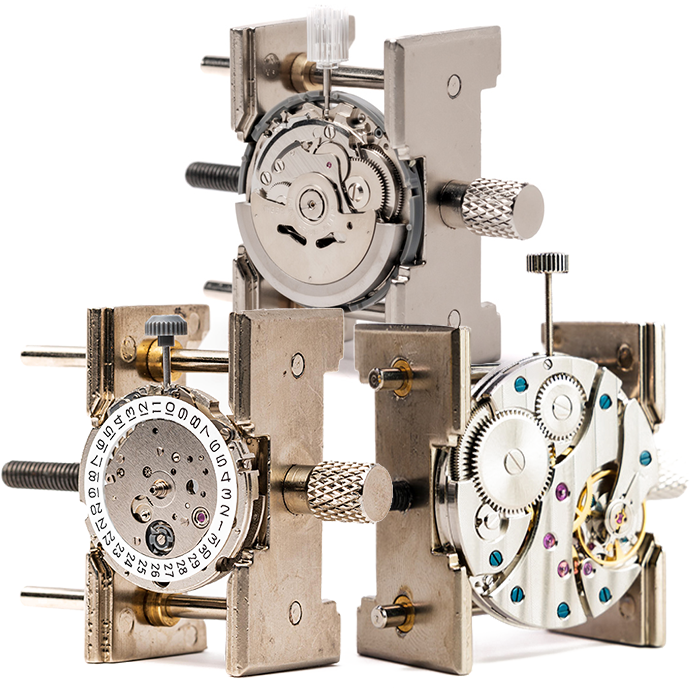
If you are practicing movement inspection, regulation, or assembly, a dedicated movement kit makes the process easier and safer. A Seiko NH36 movement kit is a great option for working with the popular Seiko automatic movement, while a Miyota 8N24 movement kit helps beginners and hobbyists learn with a reliable Japanese mechanical movement. These kits are designed for hands-on watchmaking practice and provide a practical way to understand how movements fit, function, and operate inside a watch case.
Avoid opening in dusty or humid environments.
Conclusion
Matching the right opener to your case back type is the most important step. Snap-off backs need knives or pry tools. Screw-down backs need pin wrenches or friction balls. Patient technique keeps your watch scratch-free.
For hands-on practice, watchmaking kits include a complete tool set and exhibition case backs designed for repeated use.
FAQs
Q1. Can you open a watch case back without special tools?
A rubber ball or rubber glove pressed against a screw-back can sometimes grip enough to twist it open. A butter knife works for snap-off backs in a pinch. Dedicated tools give better control and reduce scratching.
Q2. How do you know if a case back is screw-down or snap-off?
Screw-down backs have notches, slots, or a textured edge. Snap-off backs have a smooth edge with a small pry notch. Press a friction ball against the back and twist gently to test.
Q3. What causes scratches when opening a watch case back?
Slipping tools cause most scratches. Wrong-size pins, insufficient pressure, or an unsecured watch increase slipping risk. A case holder and correct tool sizing prevent most damage.
Q4. How tight should a screw-down case back be?
Finger-tight plus an eighth to a quarter turn with a wrench is sufficient. Over-tightening damages gaskets or strips threads. The goal is a snug seal that compresses the gasket evenly.
Q5. Do you need to replace the gasket every time you open the case back?
Not necessarily, but inspect it each time. Replace gaskets that appear flat, cracked, dried out, or deformed. A compromised gasket cannot maintain water resistance.
Q6. Which case back opener is best for beginners?
A friction ball is the safest starting point because soft rubber cannot scratch the case. For snap-off backs, a case opener knife with a dull blade minimizes risk. A two-pin wrench handles most screw-down backs as skills grow.