
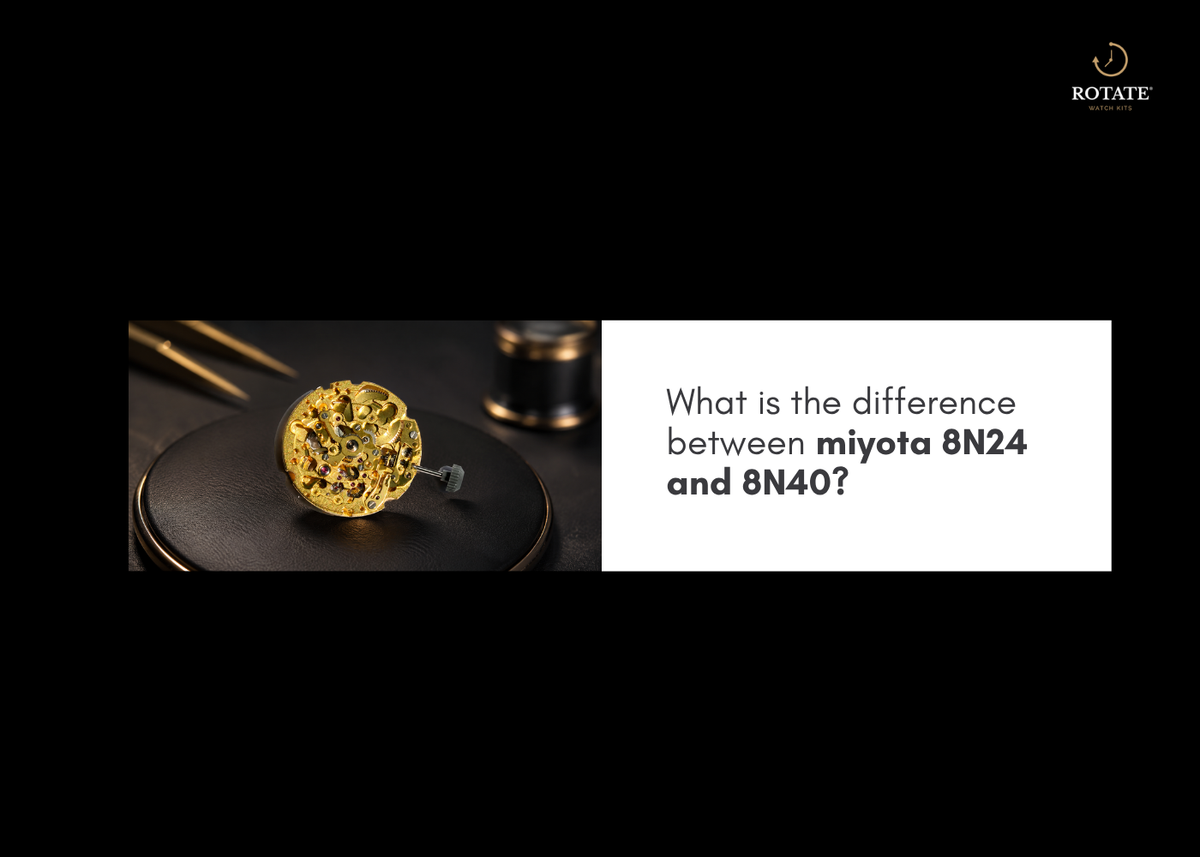
What is the difference between miyota 8N24 and 8N40?
Both the Miyota 8N24 and 8N40 are skeleton automatic movements built on the same 8NXX base framework, sharing the same size, height, accuracy, and power reserve. On paper, the two calibers look almost identical. So what actually separates them?
The difference between Miyota 8N24 and 8N40 movements comes down to one design choice: where the seconds hand sits. The 8N24 has a central seconds hand, while the 8N40 uses a small seconds subdial offset at 4:30. That single decision changes the watch design possibilities, the visual balance, and the dial layout in meaningful ways.
Key Takeaways
- The Miyota 8N24 features a central seconds hand (three hands, all centered).
- The Miyota 8N40 features a small seconds subdial at 4:30 (two central hands plus offset seconds).
- Both share the same 8NXX base: 11.5 lignes, 5.55mm height, 21 jewels, 42-hour power reserve.
- Both are skeleton automatic movements with identical accuracy specs.
- The 8N24 is more widely used in commercial skeleton watches than the 8N40.
Shared Specifications
Understanding what the two movements share helps set context before diving into the differences.
Identical Core Specs
Both the Miyota 8N24 and 8N40 deliver the same mechanical performance. According to Miyota's official specifications, both share these core numbers:
- Size: 11.5 lignes (26mm diameter)
- Height: 5.55mm
- Accuracy: -20 to +40 seconds per day
- Power reserve: Approximately 42 hours
- Vibration frequency: 21,600 per hour
- Jewels: 21
- Lift angle: 49 degrees
- Winding: 40 crown turns to full wind
- Anti-shock system: Parashock
- Hand-windable: Yes
- Stop second device: Yes (hacking)
Both movements belong to Miyota's 8 Series lineup, part of the Cal. 82 family that has been in production since 1975. The skeleton variants (8N24 and 8N40) were introduced in 2006 as purpose-built open-worked calibers. Miyota also produces related skeleton variants, including the 8N26 with a taller hand pinion for higher hand positions and the 8N33, a manual-wind skeleton caliber with 17 jewels.
Same Skeleton Architecture
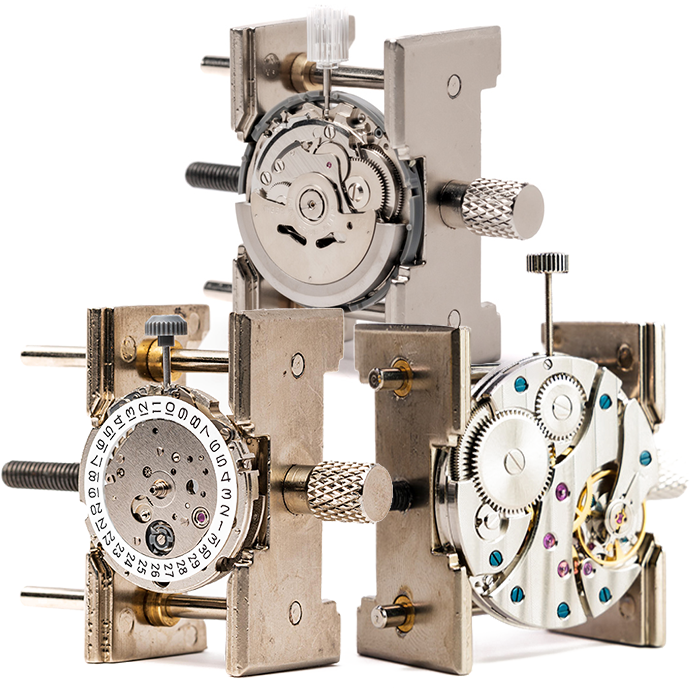
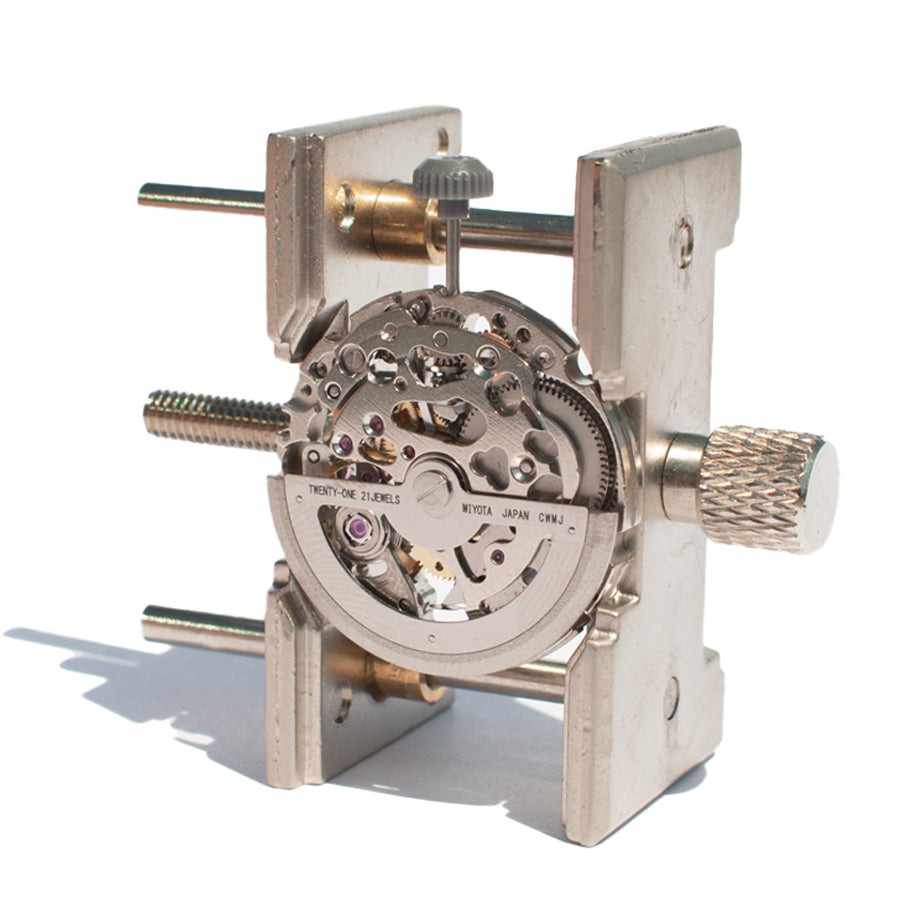
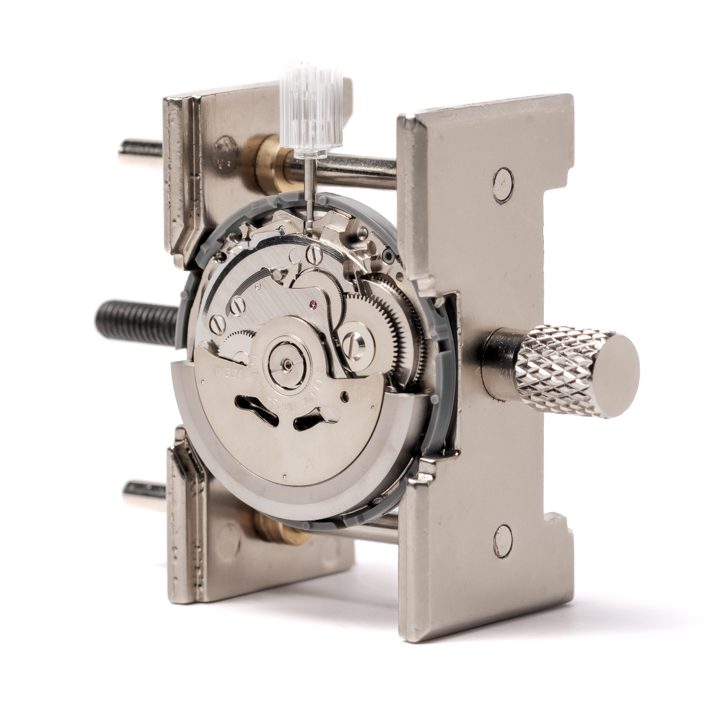
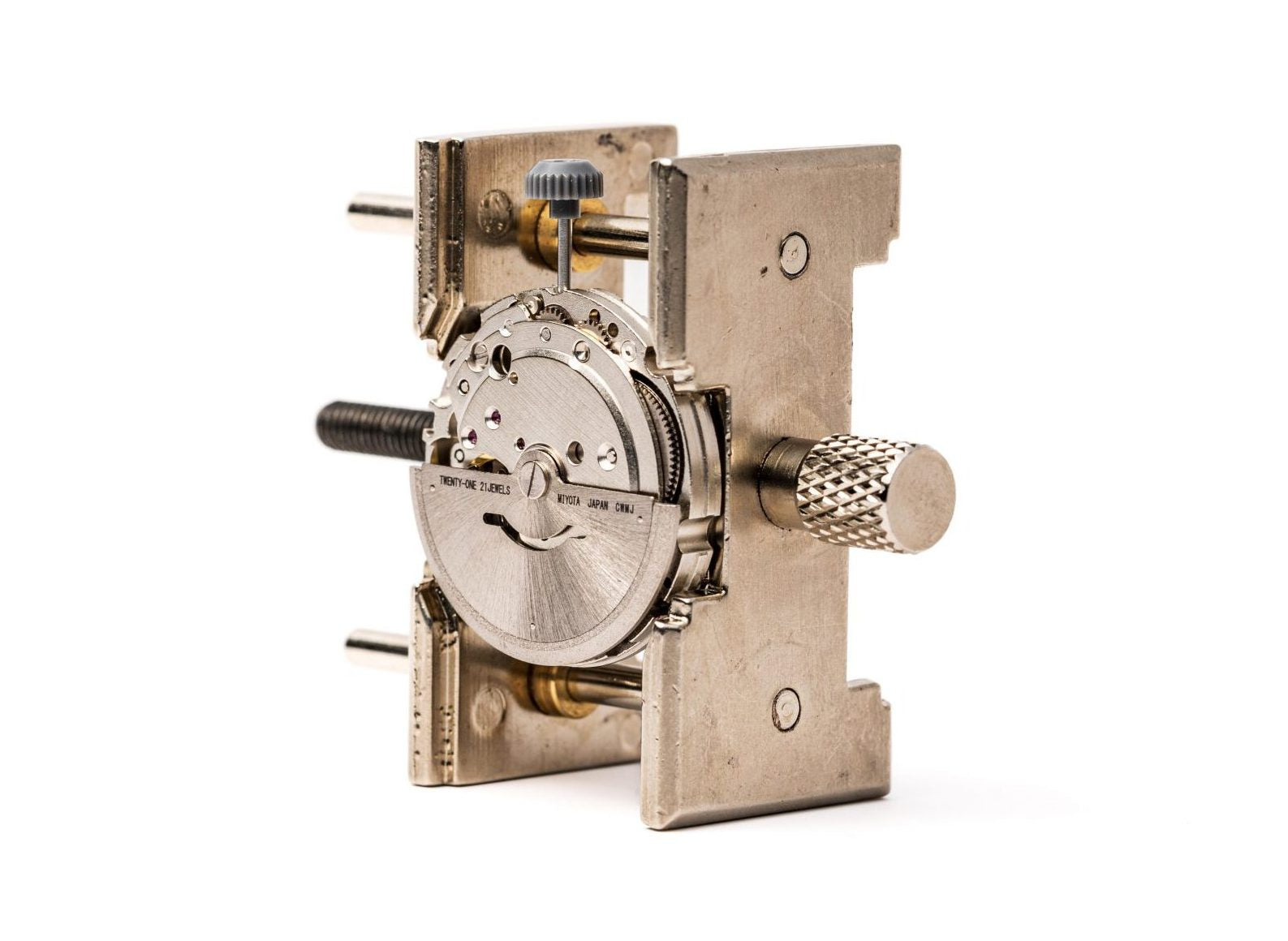
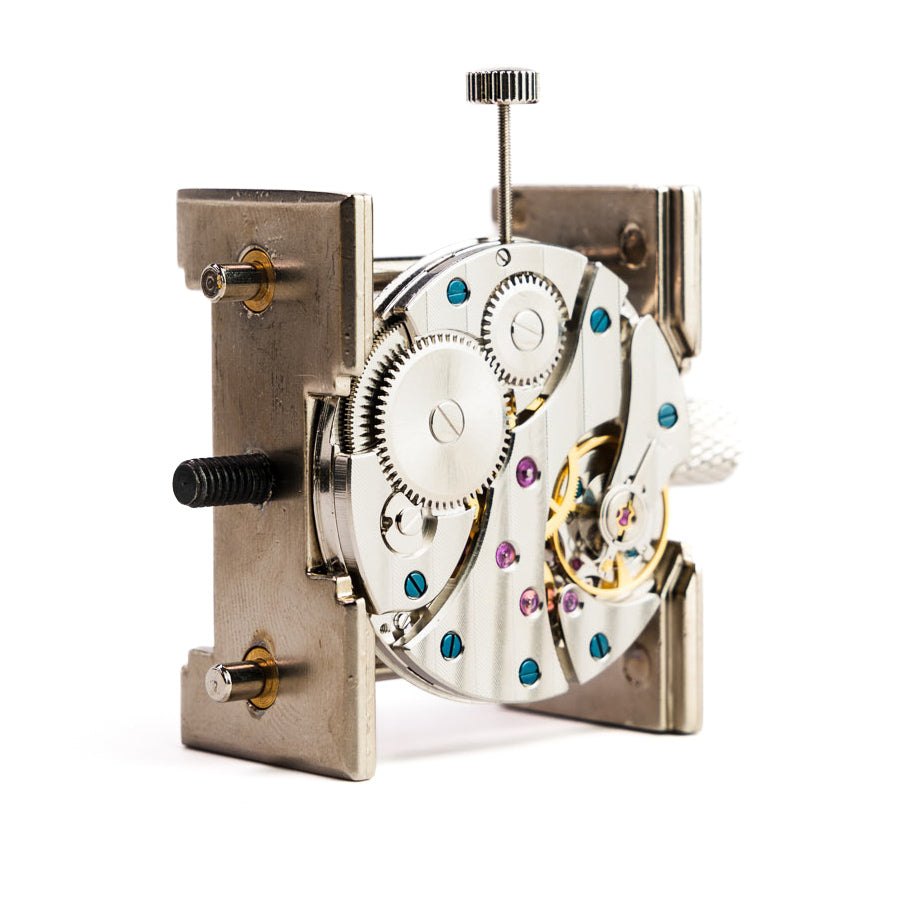
Both calibers are fully skeletonized, meaning the baseplate and bridges are cut away to reveal the gear train, mainspring barrel, and escapement. The rotor is also skeletonized to maximize the view of the open-worked components beneath, and both movements are factory-produced skeleton designs rather than standard movements with material removed as an afterthought. All major parts use metal construction, which enhances the visual depth of colors and textures through the open-worked frame. For builders who want to showcase the mechanics from the front of the watch, pairing either caliber with a skeleton dial completes the open-worked effect.
The Key Difference: Seconds Hand Placement
With every shared specification aside, the seconds hand placement is the only functional difference between these two movements.
8N24: Central Seconds
The Miyota 8N24 specs include a three-hand display with all hands mounted centrally, and the seconds hand sweeps around the full dial circumference from the center post. The central seconds layout creates a familiar, balanced look that most watch wearers recognize immediately.
Per Miyota's official documentation, the 8N24 uses indirect drive for the seconds hand. Indirect drive means the seconds hand is not directly connected to the fourth wheel but is instead driven through an intermediate wheel. That intermediate connection causes a subtle wobble sometimes called the "Miyota stutter," where a slight knock or jolt may cause the seconds hand to momentarily pause before resuming. The stutter has no bearing on accuracy.
8N40: Small Seconds at 4:30
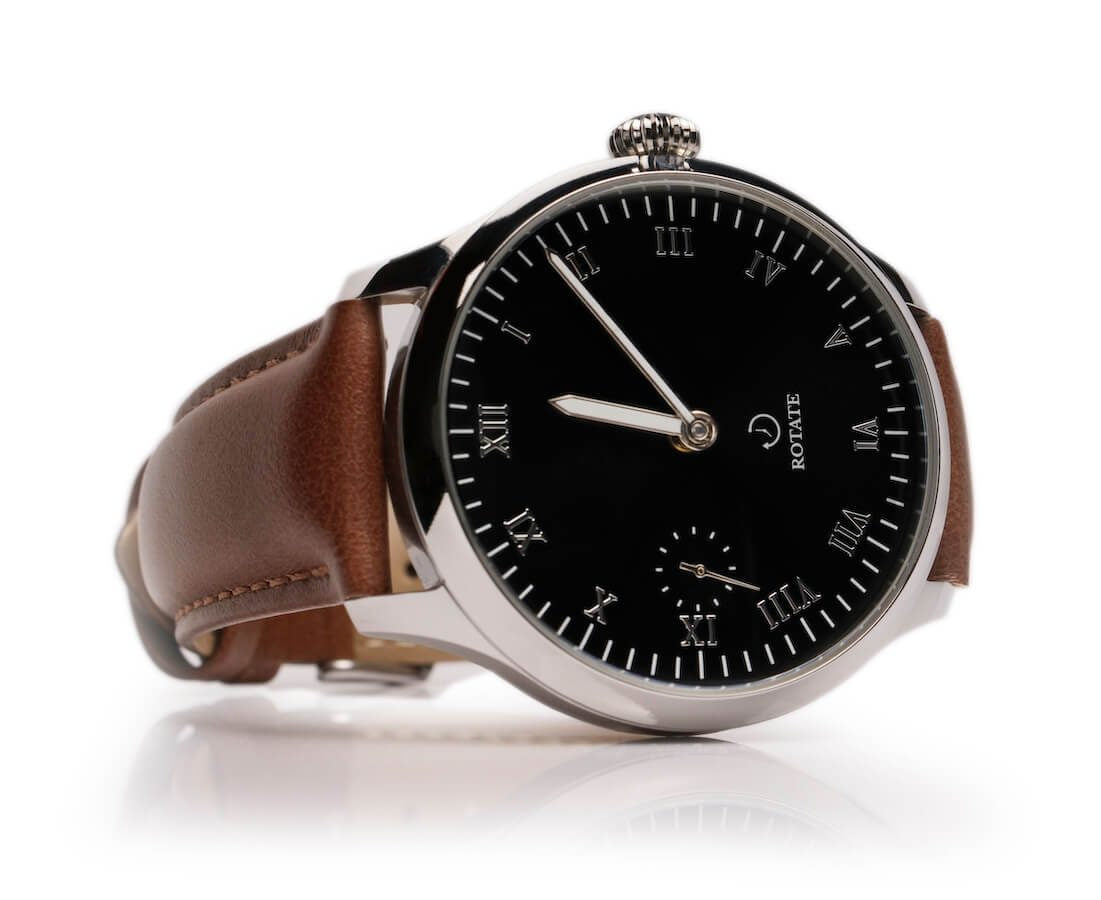
The Miyota 8N40 features a two-hand central display (hours and minutes) with an offset small seconds subdial positioned at approximately 4:30 on the dial. The small seconds display creates a more vintage-inspired aesthetic, drawing from classical pocket watches and early wristwatches that commonly used offset seconds layouts.
The offset position also opens up the dial center for a cleaner view of the skeleton movement, since no central seconds hand passes over the middle of the gear train. As a result, the escapement and mainspring barrel remain visually unobstructed.
Design Implications
Choosing between the 8N24 and 8N40 affects the watch case and dial design significantly:
- 8N24 dials need no subdial cutout, keeping the skeleton view clean at center.
- 8N40 dials require a subdial opening or marker ring at 4:30.
- 8N24 is easier to read at a glance because all three hands share the same axis.
- 8N40 offers a distinctive look that stands apart from typical skeleton watches.
| Feature | Miyota 8N24 | Miyota 8N40 |
|---|---|---|
| Seconds display | Central sweep | Small seconds subdial at 4:30 |
| Central hands | 3 (hour, minute, seconds) | 2 (hour, minute) |
| Subdial on dial | No | Yes, at 4:30 |
| Dial center visibility | Seconds hand passes over center | Center unobstructed |
| Commercial adoption | Wider (Fossil, Festina, Rotary) | Niche |
| Gilt version | Yes (Cal. 8N24 Gilt) | Yes (Cal. 8N40 Gilt) |
Which Movement Is More Common?
The Miyota 8N24 sees wider commercial use, with brands like Fossil, Festina, and Rotary selecting it for their skeleton watch lines. The centralized hand layout accommodates standard dial designs with less custom work, which makes the 8N24 a practical choice for mass-produced watches.
The 8N40 appears in fewer commercial watches because small seconds designs appeal to a niche audience that appreciates vintage aesthetics and unconventional dial layouts.
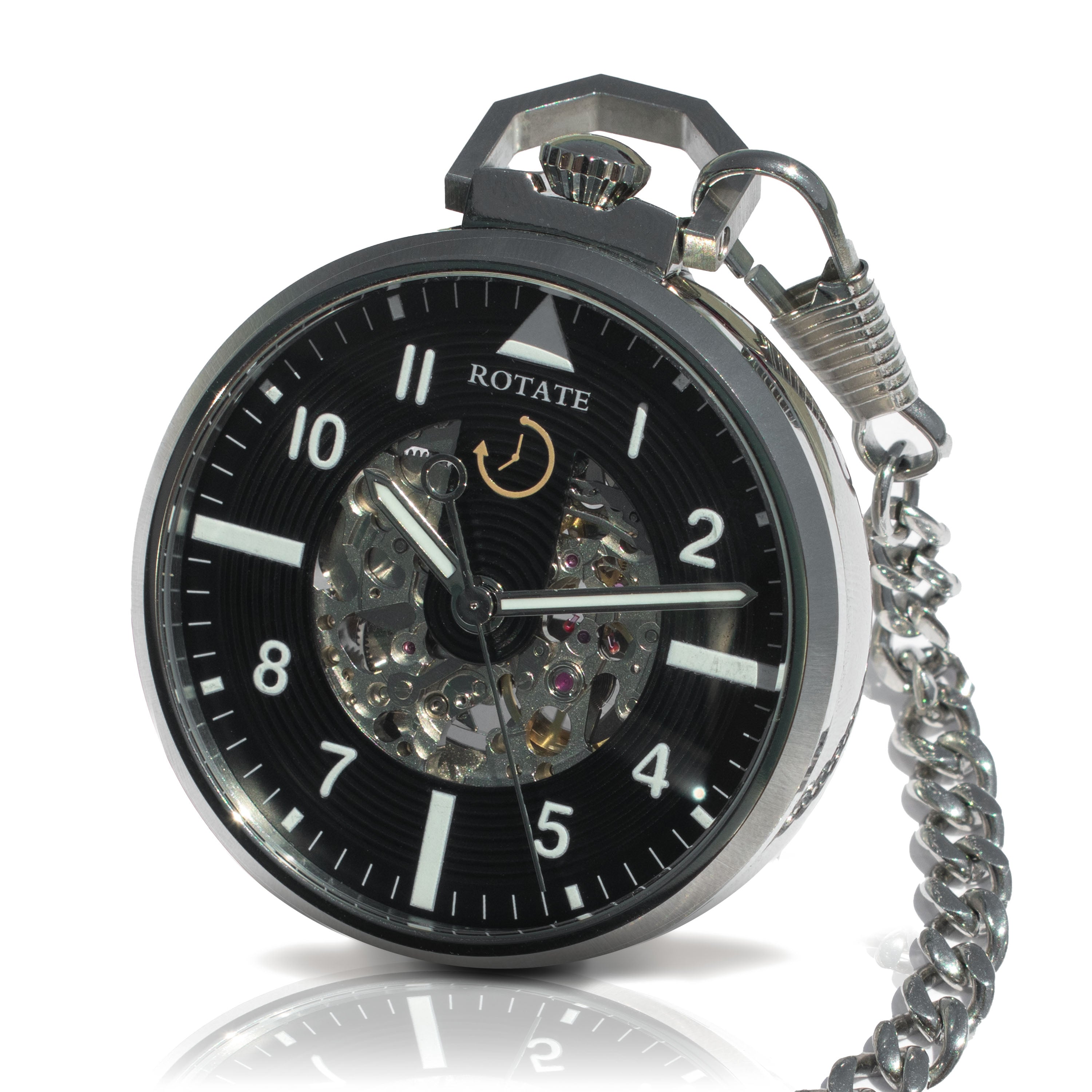
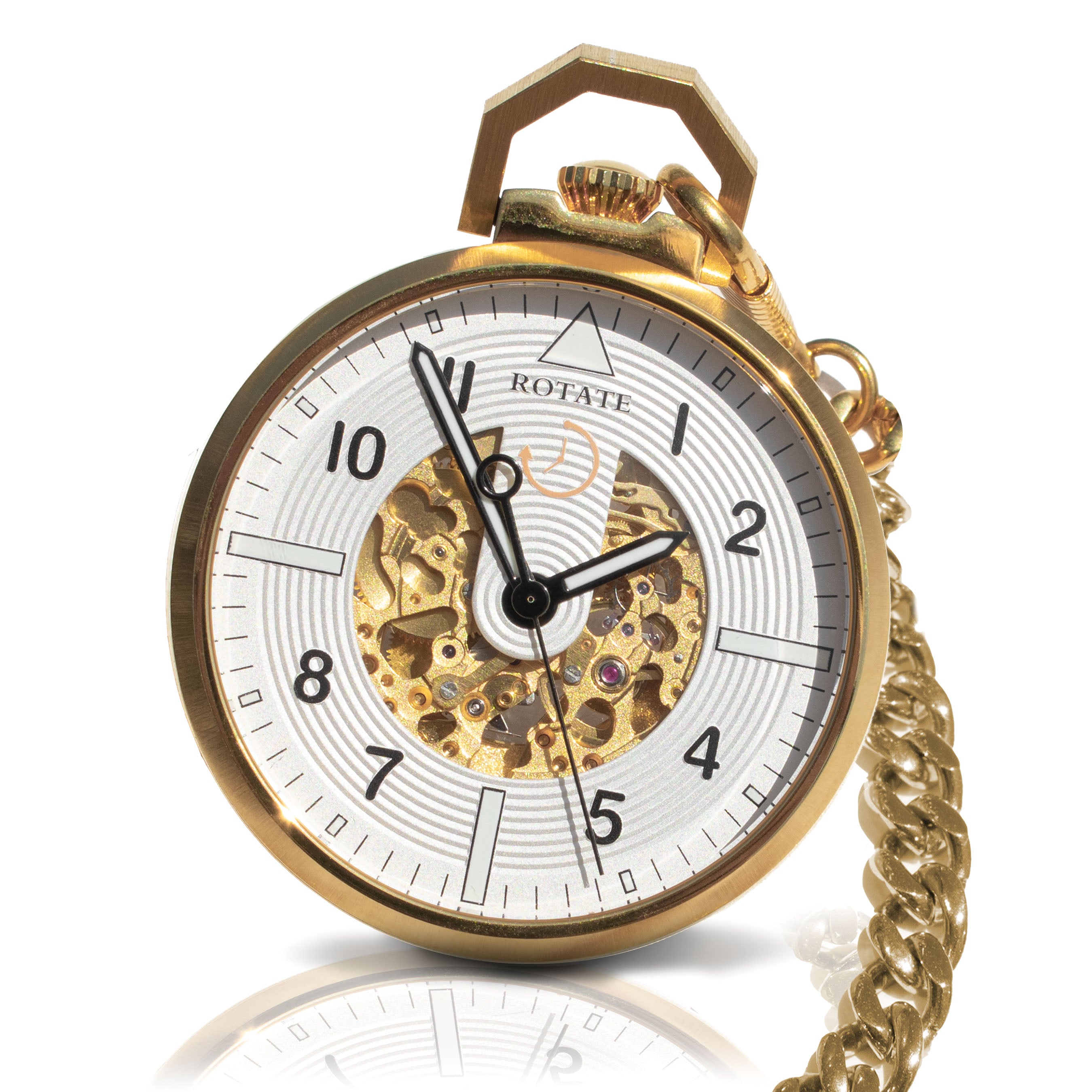
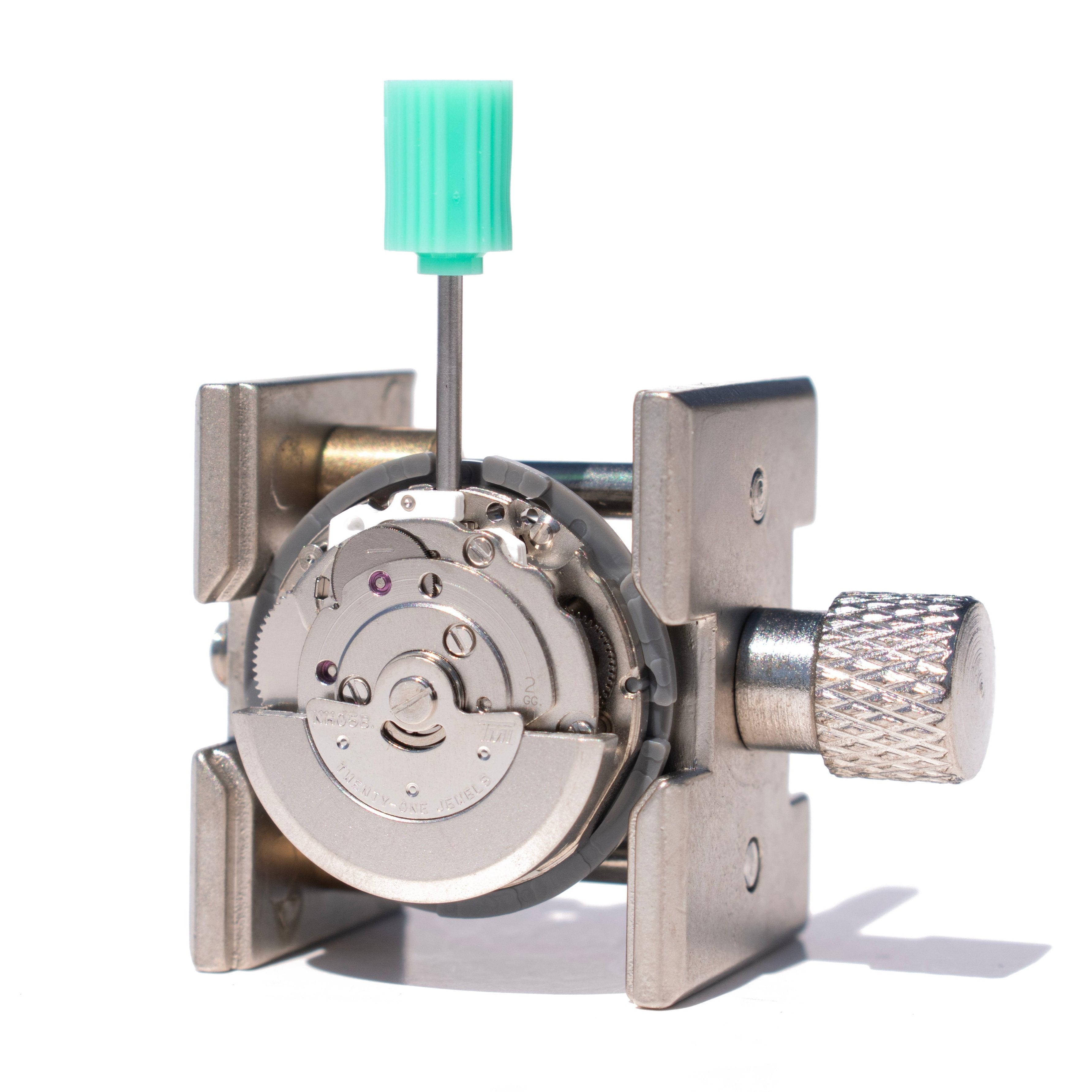
For DIY builders, the 8N24 is the more accessible choice. Skeleton movement kits using the 8N24 come with 40+ components, tools, and guides for full disassembly and reassembly. The 8N24 movement kit costs $140 and ships with the movement pre-assembled for safe transit, and each kit includes a movement holder, screwdrivers, tweezers, a magnetizer tool, finger cots, pliers, an organizing case & labels, and a leather case. An optional warranty add-on covers lost or damaged parts during the learning process. Complete pocket watch builds like the Hudson ($235) also feature the 8N24, pairing the skeleton movement with a stainless steel case, black skeleton dial, and chain.
How They Handle No-Date Design
Both the 8N24 and 8N40 are true no-date movements, meaning neither has a date wheel, date window, or phantom crown position for date adjustment. The crown has only one position: hand-setting.
For skeleton watch designs, a no-date layout is ideal because date wheels would obscure the visible gear train, defeating the purpose of the skeletonized architecture. Both movements prioritize mechanical visibility over functional complications.
Gilt Versions
Miyota offers gilt (gold-toned) versions of both movements:
- Cal. 8N24 Gilt
- Cal. 8N40 Gilt
The gilt versions feature gold-plated bridges and components designed for watches with warmer color schemes. For custom projects that call for the gilt finish, the 8N24 gold movement is available as a $70 standalone unit.
Conclusion
The difference between the Miyota 8N24 and 8N40 is straightforward: central seconds versus small seconds at 4:30, with every other specification remaining identical. The 8N24 suits builders who want a conventional three-hand skeleton watch, while the 8N40 appeals to those drawn to vintage-inspired small seconds aesthetics.
Want to work with the 8N24 yourself? The Miyota 8N24 movement kit includes the skeleton movement, tools, and a complete guide for learning automatic movement assembly and disassembly. Movements arrive pre-assembled and properly lubricated, and builders who prefer starting from scratch can request a disassembled unit. All 8N24-compatible products, including kits, movements, and accessories, are grouped on one page for easy build planning.
Frequently Asked Questions
Are the 8N24 and 8N40 the same size?
Yes, both measure 11.5 lignes (26mm diameter) and 5.55mm in height, so case compatibility is identical between the two.
Does the 8N40 have a date function?
No. Both the 8N24 and 8N40 are true no-date movements with only a time-setting crown position.
Which movement is better for a skeleton watch?
Both are designed specifically for skeleton watches, with the 8N24 being more common commercially and the 8N40 offering a distinctive small seconds layout. Miyota movements are known for high impact resistance, so both calibers remain durable despite the open-worked construction.
What is the "Miyota stutter"?
The indirect drive mechanism in the 8N24's central seconds hand causes a subtle wobble or momentary pause when the watch receives a bump or jolt. The effect is purely cosmetic and does not affect timekeeping accuracy.
Can I swap an 8N24 for an 8N40 in the same case?
The case dimensions are compatible, but the dial needs to accommodate the small seconds subdial at 4:30 for the 8N40. A dial designed for the 8N24 will not work with the 8N40 without modification.
Is the 8N24 a stripped-down version of another movement?
No. The Miyota 8N24 is a factory-produced skeleton movement, not a regular caliber with material removed after production. The 8N40 derives from the Miyota 8218 small seconds platform, adapted for skeleton display, and both leave the factory as dedicated skeleton calibers with purpose-cut bridges and baseplates.