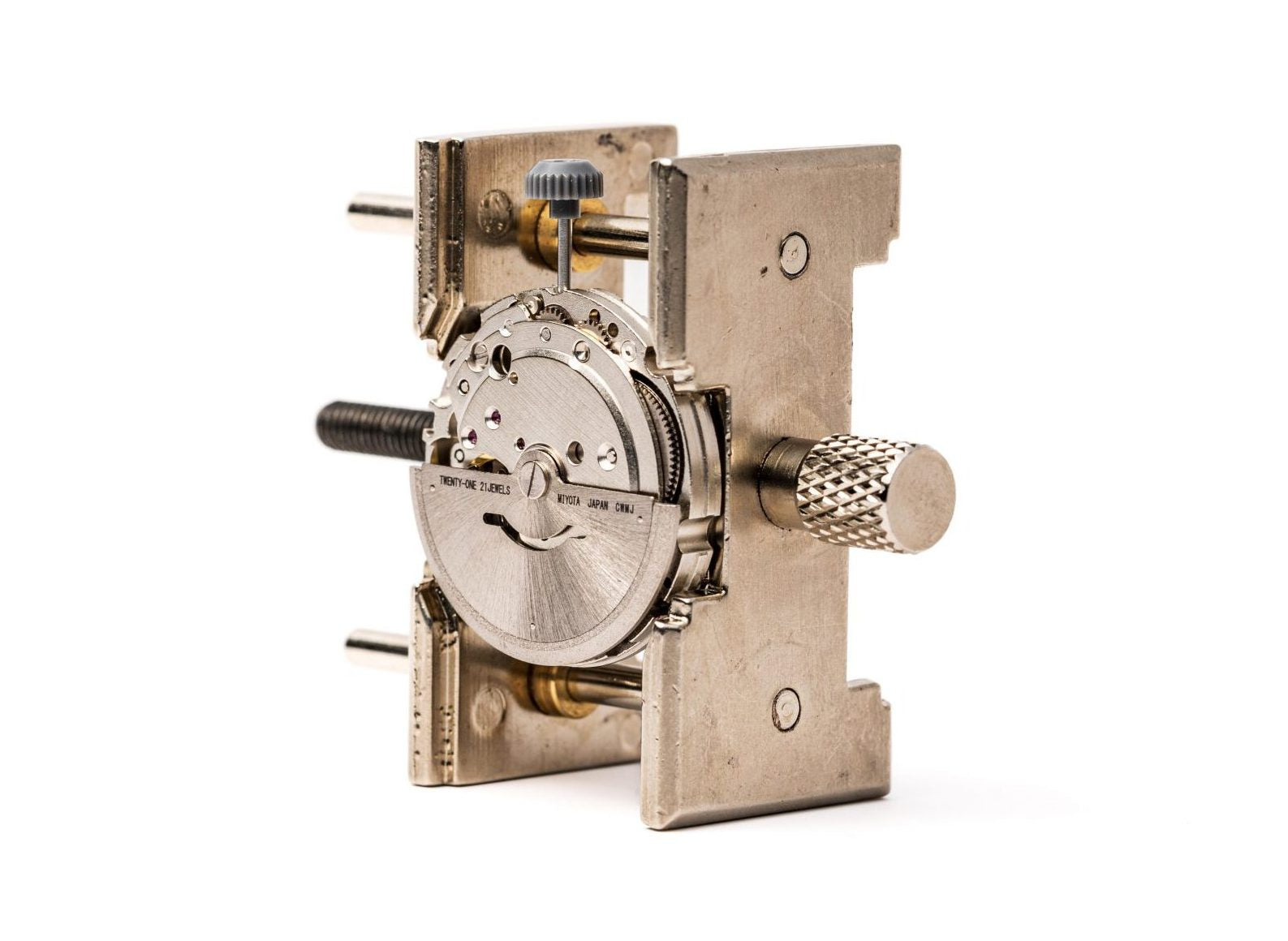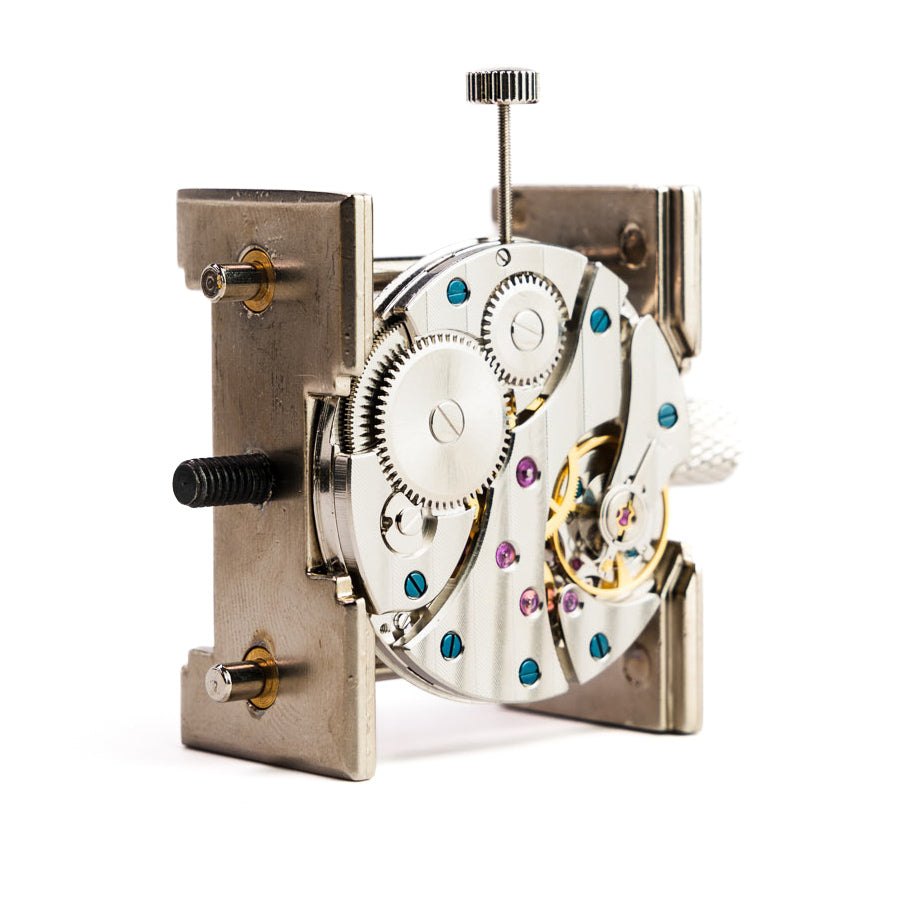

Watch Movement Lubrication Guide
A mechanical watch has dozens of metal parts meshing thousands of times per hour. Without lubrication, friction wears those parts down fast. Oil keeps a movement running smoothly and accurately for years between services.
Lubrication is one of the most important skills beyond basic assembly. Even if you have built a watch from a DIY watchmaking kit, knowing where to apply oil takes your abilities further.
Why Watch Movements Need Oil
Metal-on-metal contact creates friction that slows the gear train, reduces amplitude (the arc of the balance wheel's swing), and wears down pivots and jewel bearings. Lubricants also create a protective barrier against moisture-related corrosion.
Proper lubrication dramatically reduces friction, keeping energy flowing from the mainspring through the gear train to the escapement.
A freshly serviced watch keeps time within about five to 15 seconds per day, depending on the movement grade. As the lubricant dries out, friction increases. Modern synthetic oils evaporate rather than gum up, so a watch may keep running with dry pivots that wear silently. Most manufacturers recommend re-oiling every three to five years, though brands like Rolex now extend intervals to 10 years.
Watch Lubricant Types
Watchmakers use several lubricant categories inside a movement, each matched to the speed and pressure at its contact point.
Light Oils for Fast-Moving Parts
Thin oils go on the escapement and balance wheel jewels. Moebius 9010 is the industry standard. Pallet fork jewel stones sometimes receive a thicker lubricant (such as Moebius 9415). Points that receive light oil:
- Pallet fork jewel stones
- Escape wheel pivot jewels
- Balance wheel pivot jewels
Heavier Oils for Slow-Moving Parts
Thicker oils go on gear train pivot jewels and barrel arbor pivots. Moebius 9020 or HP-1300 handles the higher pressure at slower-moving contact points.
Grease for the Mainspring and Keyless Works
The mainspring receives grease, not oil. Grease prevents stiction, where the mainspring sticks to the barrel wall, causing erratic power delivery. Keyless works also receive grease.
Watch Movement Lubrication Steps
Oil the movement in a logical sequence, starting from the slowest parts and working toward the fastest.
Step 1: Clean Everything First
Old oil mixed with new creates gummy residue. Clean the movement thoroughly before applying fresh lubricant.
Step 2: Grease the Mainspring Barrel
Apply a thin film inside the barrel walls and along the mainspring coils to prevent stiction.
Step 3: Oil the Gear Train
Using an oiler, place a tiny drop of medium-viscosity oil on each gear train jewel:
- Center wheel upper and lower pivots
- Third wheel upper and lower pivots
- Fourth wheel upper and lower pivots
Oil stays in place through capillary action, where liquid flows naturally into narrow spaces between surfaces.
Step 4: Oil the Escapement
Switch to lighter oil for the pallet fork jewels and escape wheel pivots. Epilame, a surface treatment that controls oil spread, helps keep lubricant at the contact point. Over-oiling the escapement directly harms timekeeping.
Step 5: Oil the Balance Wheel Pivots
Place a very small drop on both upper and lower balance pivots. The balance oscillates thousands of times per hour, so excess oil creates drag.
Step 6: Grease the Keyless Works
Apply grease to the winding stem, clutch wheel, and keyless components. Sliding contacts need grease rather than oil.
Common Lubrication Mistakes
Even experienced builders make lubrication errors. A hand-wound watch movement kit gives you practice with every friction point covered below.
Over-Oiling Spreads Where It Should Not Go
Excess oil migrates through capillary action and can reach the hairspring, causing coils to stick and destroying regulation. A barely visible drop is enough.
Using the Wrong Type
Heavy oil on fast parts adds resistance. Light oil on slow parts migrates away. Match viscosity to each application point.
Skipping the Clean
Old lubricant mixed with new creates a thick residue that accelerates wear. Always clean completely before re-oiling. Watch oils also expire, so check expiration dates before use.
Conclusion
Proper lubrication separates a well-running movement from one that wears itself out. Once you are comfortable oiling pivots, servicing the escapement, and regulating accuracy becomes the next skill to develop.
Browse the full collection of DIY watchmaking kits and movement kits to start building mechanical watch skills today.
FAQs
Q1. How often should a watch movement be lubricated?
Every three to five years, as part of a full service, including disassembly, cleaning, and fresh lubrication. Modern synthetics may extend intervals to seven or more years. Wearing a watch daily helps distribute lubricant evenly, while watches sitting idle can develop dry spots faster.
Q2. What is the best oil for a watch movement?
Moebius 9010 (light) and 9020 (medium) are industry standards used by watchmakers worldwide. The correct choice depends on speed and pressure at each contact point. Fast-moving parts like the escapement need thin oil, while slower gear train pivots need thicker oil that resists migration.
Q3. Can you use regular oil on a watch?
No. Household oils contain additives that damage watch components and degrade jewel surfaces. Watch-specific synthetic oils maintain stable viscosity across temperature changes and resist breakdown for years. Cooking oil, machine oil, and general-purpose lubricants are too thick and chemically incompatible with precision watch parts.
Q4. What happens if you over-oil a movement?
Excess oil migrates beyond the contact point, attracts dust, and can reach the hairspring. Oil on the hairspring causes coils to stick, making the watch run fast or erratically. Removing excess requires full disassembly, making over-oiling one of the costliest beginner mistakes.
Q5. What is stiction in a watch?
Stiction occurs when the mainspring sticks to the barrel wall due to dried-out or degraded lubrication. The condition causes inconsistent power delivery, resulting in erratic timekeeping or sudden stops. Proper barrel greasing during service prevents stiction by maintaining a controlled friction layer between the spring and barrel wall.
Q6. Do quartz watches need lubrication?
Quartz gear trains benefit from lubrication, but intervals are longer and requirements simpler. A quartz movement has fewer friction points since the battery-powered stepper motor replaces the mainspring and escapement. Most quartz watches need lubrication only during battery services every five to seven years.