

What Is a Pallet Fork in a Watch Movement?
Every mechanical watch makes a ticking sound. A tiny component called the pallet fork creates that sound by locking and unlocking the escape wheel hundreds of times per minute. Without the pallet fork, the mainspring would uncoil instantly, and the watch would spin its hands to the end in seconds.
The pallet fork's function in a watch is to act as a traffic controller for energy. Understanding what the pallet fork does helps anyone working with mechanical movements appreciate the precision engineering behind even the most affordable calibers.
Key Takeaways
- The pallet fork sits between the escape wheel and balance wheel in the escapement.
- Two jewel-tipped arms lock and release the escape wheel one tooth at a time.
- The pallet fork creates the "tick-tock" sound heard in all mechanical watches.
- Worn pallet jewels are a common cause of timekeeping problems in older movements.
- Most modern movements use a Swiss lever escapement with a pallet fork.
How the Pallet Fork Works
The pallet fork watch movement function becomes easier to understand when broken down as a step-by-step cycle.
The Energy Flow
A mechanical watch stores energy in the mainspring. That energy travels through a series of gears called the gear train until it reaches the escape wheel. Left unchecked, the escape wheel would spin freely and release all the energy at once. The pallet fork prevents this from happening by catching the escape wheel's teeth and releasing them one at a time.
The Tick-Tock Cycle
Here is what happens in each "tick":
- The balance wheel swings and pushes the impulse pin against the forked end of the pallet fork.
- One pallet jewel releases a tooth on the escape wheel, allowing the wheel to advance by exactly one step.
- The opposite pallet jewel catches the next tooth, locking the escape wheel again.
- A small burst of energy transfers back through the pallet fork to the balance wheel, keeping it swinging.
The process then repeats in the opposite direction for the "tock."
In a movement running at 21,600 vibrations per hour, the pallet fork acts six times per second, producing three ticks and three tocks. Movements like the Seagull ST3600 and Miyota 8215 both run at this frequency.
Why Jewels Matter
The two arms of the pallet fork are tipped with synthetic ruby jewels called pallet stones. Without these jewels, metal-on-metal contact would create excessive friction and wear, degrading accuracy quickly. Ruby pallet stones reduce that friction to almost nothing, allowing the escapement to operate smoothly for years or even decades.
Why the Swiss Lever Escapement Became Standard
The pallet fork owes its role in modern watchmaking to English watchmaker Thomas Mudge, who invented the lever escapement around 1755. Before Mudge's design, earlier escapement types like the verge and cylinder kept the balance wheel in constant contact with the escapement, causing friction and wear. Mudge solved the problem by placing a jeweled pallet fork between the escape wheel and balance wheel, separating the two components.
Because the pallet fork only touches the balance wheel briefly during each swing, friction dropped significantly, accuracy improved, and parts lasted longer. Britannica describes the lever escapement as the most widely used device for regulating spring-driven watches, and nearly every mechanical wristwatch produced today still relies on it. Cheaper alarm clocks and kitchen timers use a simpler version called the pin-pallet escapement, which substitutes metal pins for the ruby jewels.
Parts of the Pallet Fork
Once you know the physical structure of the pallet fork, its function becomes much clearer. Anyone planning a movement disassembly will benefit from this knowledge.
The Fork End
The forked end of the pallet fork engages with the impulse pin on the balance wheel's roller. A small notch in the fork receives the pin with each swing. Alongside the fork end sits a guard pin, which works with the safety roller to prevent overbanking. If a sudden shock jolts the fork out of position, the guard pin pushes it back to the correct side.
The Pallet Stones
Two angled jewel surfaces sit at the working end of the pallet fork:
- The entry pallet stone catches the approaching escape wheel tooth.
- The exit pallet stone releases the departing tooth.
The angle and polish of these stones directly affect energy transfer efficiency. In quality movements, pallet stones are precisely ground and polished to minimize energy loss during each cycle.
The Arbor
The pallet fork pivots on a thin axle called the arbor, and jeweled bearings at the pivot points reduce friction even further. For the escapement to function properly, the arbor must be perfectly straight, because even microscopic bends cause inconsistent locking and poor timekeeping.
Why the Pallet Fork Matters for DIY Watchmakers
Anyone working with DIY watch kits or movement kits encounters the pallet fork during disassembly and reassembly. Handling this component correctly is one of the most important skills a new builder develops.
Handling Precautions
The pallet fork is one of the most delicate components in a movement, so proper handling matters. Never touch the pallet stones with bare fingers, as oils from skin attract dust and increase friction over time. Instead, use tweezers or watchmaking putty to handle the fork, and keep a loupe magnifier handy to see the tiny pallet stones clearly during reinstallation.
Common Issues
A pallet fork that is improperly seated will cause the movement to stop immediately. If a reassembled movement refuses to tick, the pallet fork alignment is the first thing to check. The fork must sit freely on its arbor, with the pallet stones engaging the escape wheel teeth without binding.
What Wear Looks Like
Over time, pallet stones can develop flat spots from repeated contact with escape wheel teeth. Once worn, the stones allow the escape wheel to "slip" slightly, causing the watch to gain or lose time unpredictably. Professional watchmakers inspect pallet stones during routine service. In most modern movements, the entire pallet fork assembly is replaced as a unit rather than re-stoned.
The Pallet Fork Across Different Movements
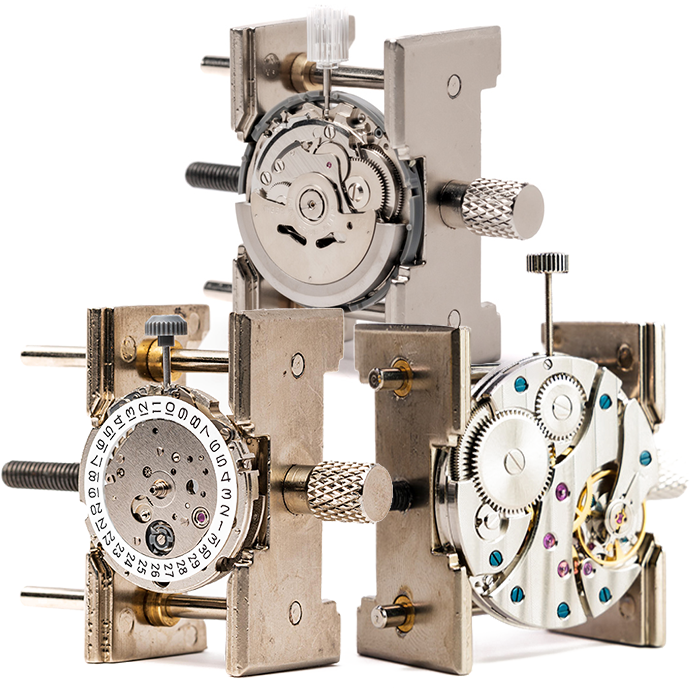
The pallet fork functions identically across all Swiss lever escapements. Still, each movement in the Rotate lineup gives builders a slightly different perspective on this component.
In the Seagull ST3600
The hand-wound ST3600 uses a standard Swiss lever escapement, making it one of the clearest movements for studying pallet fork behavior. During a hand-wound movement kit disassembly, the pallet fork is typically one of the last components removed and one of the first reinstalled. That repeated exposure helps builders develop confidence with the alignment process.
In the Miyota 8215 and 8N24
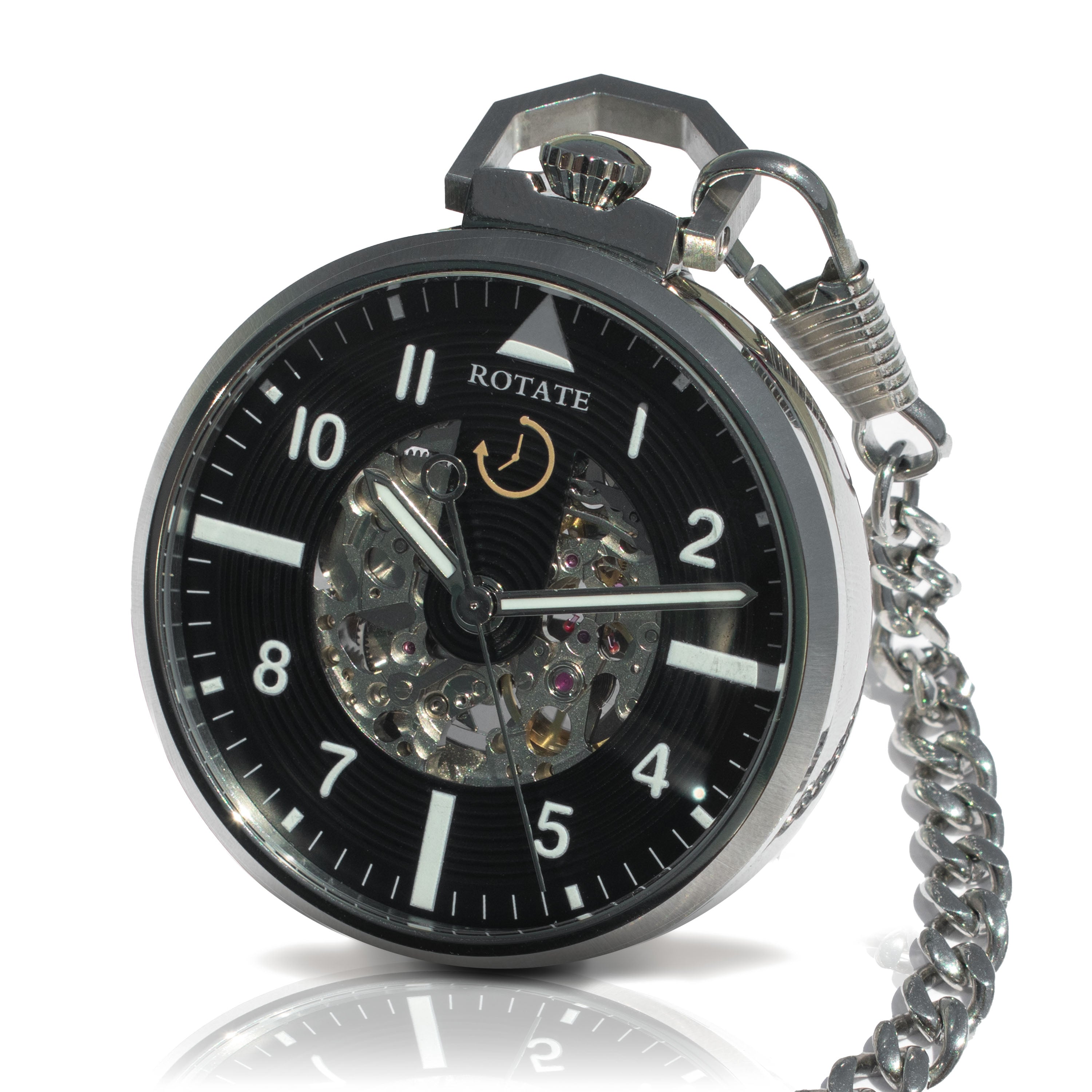
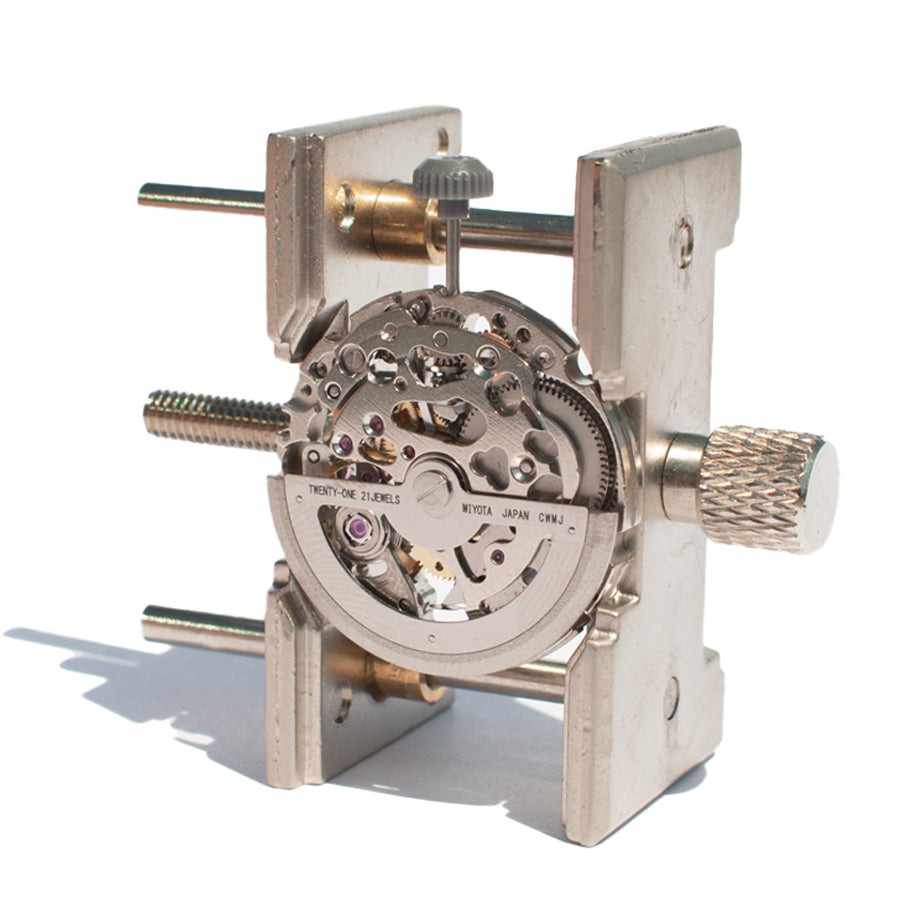
Miyota's automatic movements share the same escapement architecture as the ST3600. The pallet fork operates at 21,600 vibrations per hour, creating the familiar six-ticks-per-second rhythm. Miyota's own manufacturing documentation notes that each pallet fork contains five separate components, all smaller than a grain of rice. Automated precision processes at their Iida Factory assemble these tiny parts. The 8N24 skeleton movement is especially interesting because its skeletonized bridges make the pallet fork visible, offering a direct view of the escapement in action. A skeleton movement kit lets you take this movement apart and watch each component work up close.
In the Seiko NH36
The Seiko NH36 uses the same Swiss lever escapement design, and its pallet fork operates at 21,600 vibrations per hour. With 24 jewels in the movement, including jewels at the pallet fork pivot points, the NH36 delivers consistent and smooth energy transfer.
Conclusion
The pallet fork is one of the smallest parts in a mechanical watch, yet it controls everything about how the watch keeps time. Without it, there is no regulated timekeeping, no tick-tock, and no functional watch. Understanding the pallet fork watch movement function deepens appreciation for the engineering packed into every mechanical timepiece.
Want to see the pallet fork up close? A movement kit lets you disassemble and reassemble the entire escapement, pallet fork included, with your own hands.
FAQs
What does a pallet fork do in a watch?
The pallet fork locks and releases the escape wheel one tooth at a time, regulating the release of energy from the mainspring. Each locking and unlocking action produces the ticking sound heard in all mechanical watches.
Can a worn pallet fork be repaired?
In modern movements, the pallet fork assembly is usually replaced as a complete unit rather than repaired individually. Vintage movements, however, may be re-stoned by experienced restorers who specialize in older calibers.
What causes a pallet fork to fail?
The most common causes are worn pallet jewels, a bent arbor, or improper reassembly after servicing. When a pallet fork fails, the movement stops entirely because the escape wheel can no longer advance in a controlled manner.
How many times does a pallet fork cycle per second?
In a movement running at 21,600 vibrations per hour, the pallet fork acts six times per second. Higher beat-rate movements, such as those running at 28,800 or 36,000 vibrations per hour, cycle eight or ten times per second, respectively.
Are all pallet forks the same?
No, pallet fork dimensions and jewel angles differ between calibers. Because of these differences, replacement pallet forks must match the specific movement they are intended for.
Can I see the pallet fork working?
Yes. Skeleton movements and watches with exhibition case backs let you observe the pallet fork interacting with the escape wheel in real time.