
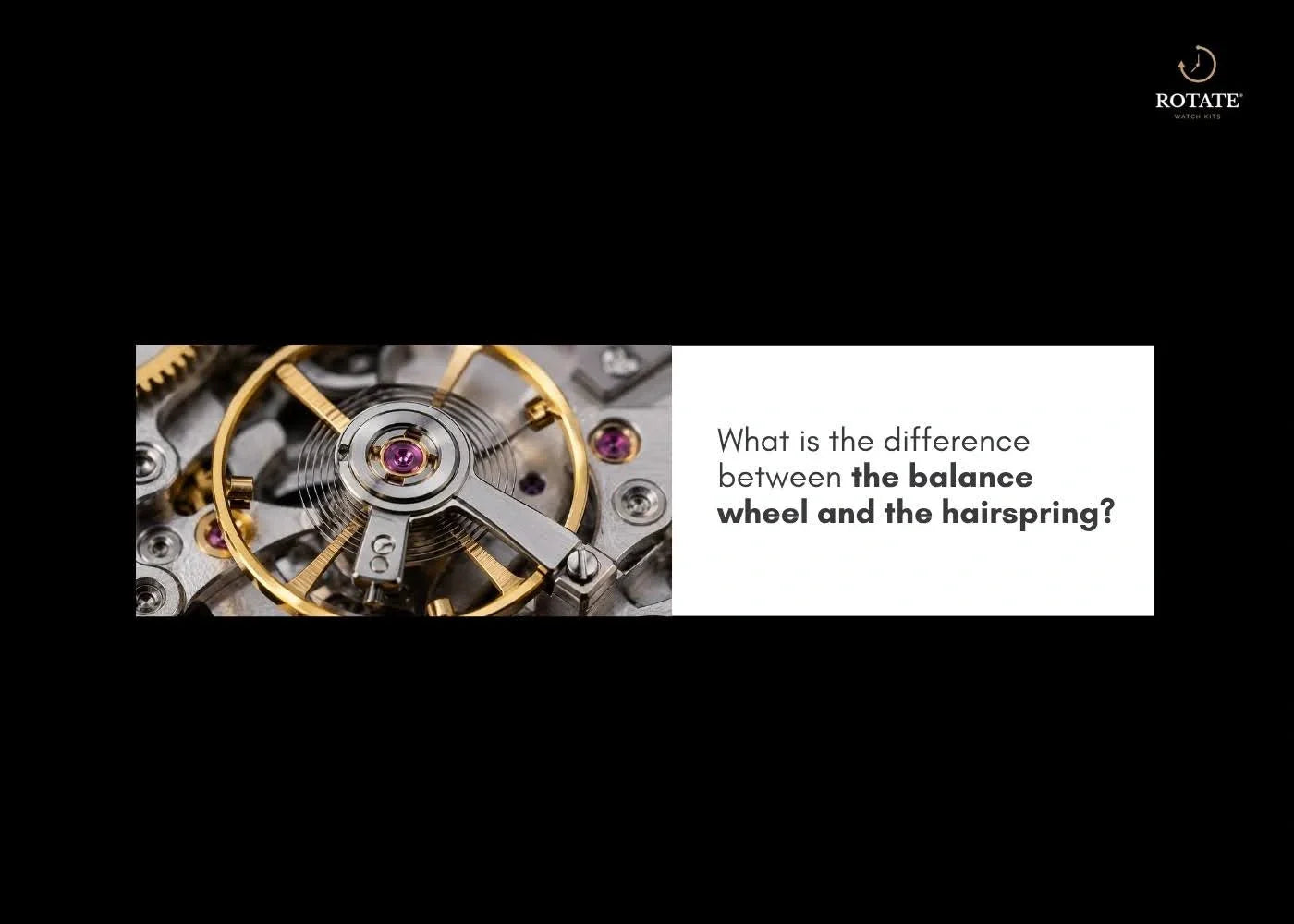
What is the difference between the balance wheel and the hairspring?
Open the caseback of a mechanical watch and you will see a small wheel rocking back and forth. That is the balance wheel, the heartbeat of the movement. Attached to it is the hairspring, coiled in a tight spiral barely thicker than a human hair.
Both parts work together as the watch's regulator. But they serve different roles. The balance wheel provides momentum. The hairspring provides the restoring force that creates consistent rhythm.
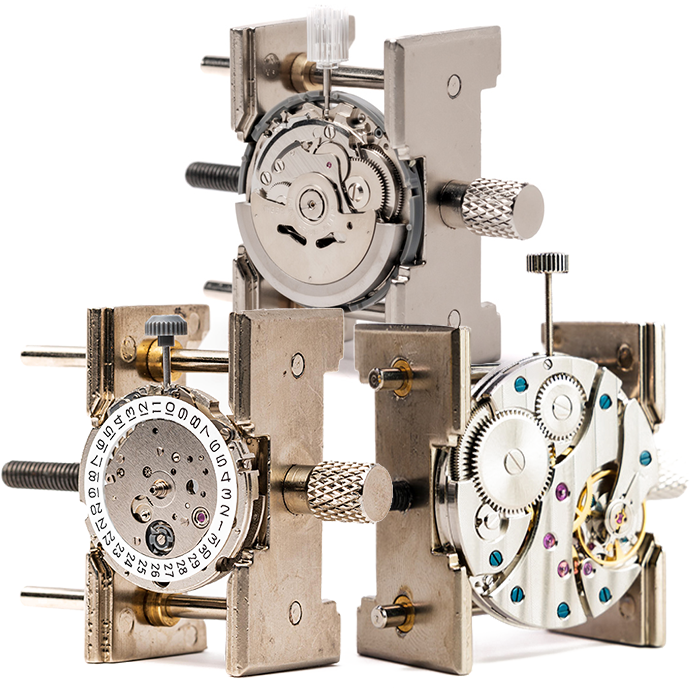
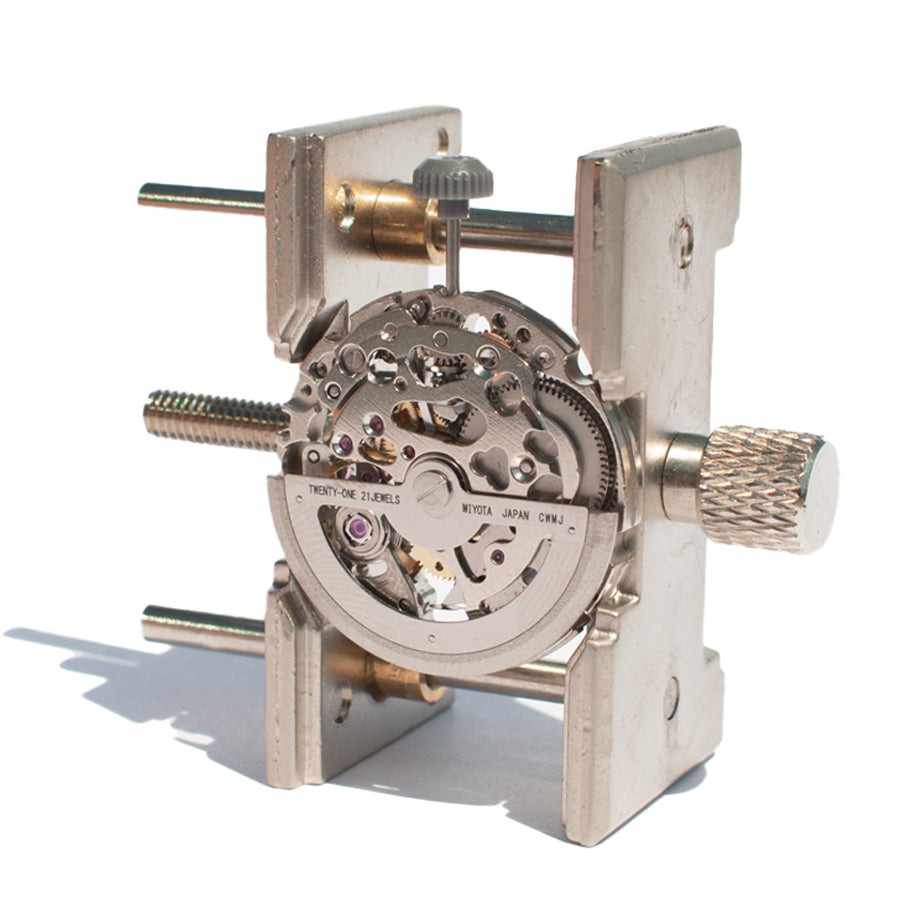
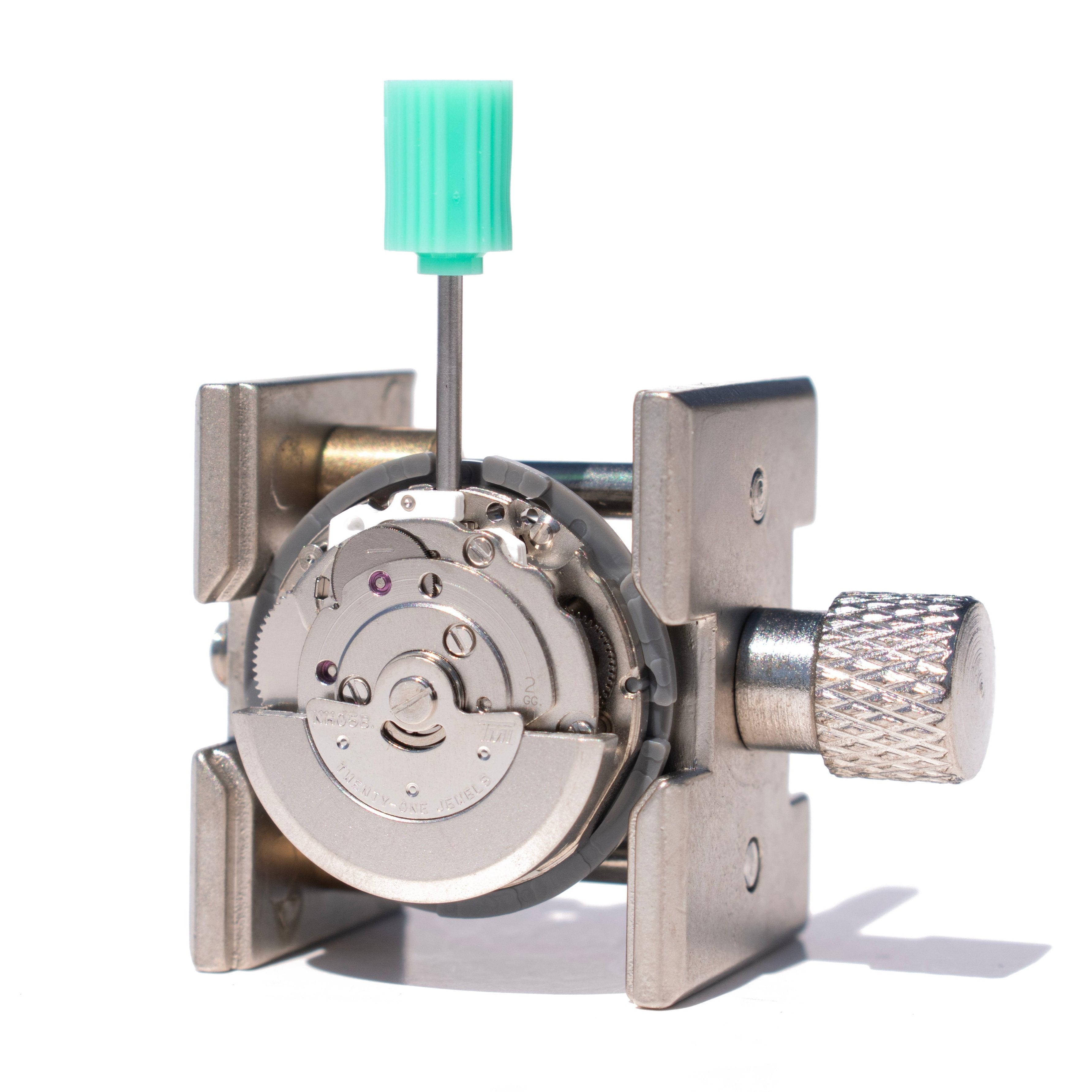
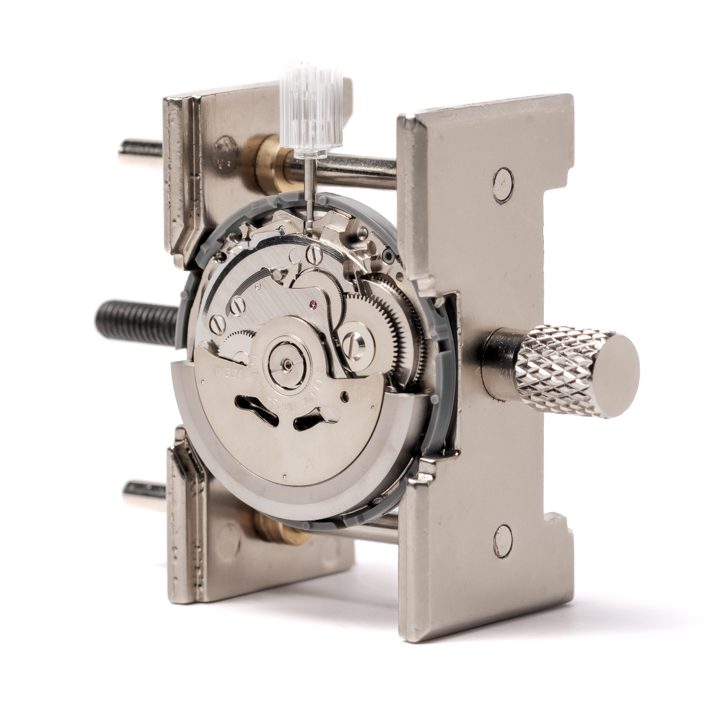
Understanding the balance wheel vs hairspring relationship is key to understanding how mechanical watches keep time. Building a hand-wound watch movement kit lets you see both parts working firsthand.
What the Balance Wheel Does
The balance wheel is a weighted wheel that oscillates back and forth at a consistent rate. Each oscillation advances the gear train by a precise amount. Without it, stored energy would release all at once.
How the Balance Wheel Works
The balance wheel receives energy through the escapement. With each pulse, the wheel swings one direction, then back. Each swing in one direction is called a beat. Many balance wheels oscillate at 21,600 vibrations per hour (3 Hz), or six beats per second. Higher-frequency wheels (28,800 vph) provide smoother seconds hand movement.
Construction and Materials
Modern balance wheels use glucydur (a beryllium-copper-iron alloy) that resists temperature expansion. Small screws or weights around the rim allow fine-tuning. Adjusting weight changes the moment of inertia and oscillation rate.
Key balance wheel characteristics include:
- Weighted rim stores rotational energy during each oscillation
- Smooth surface reduces air friction for consistent swing
- Jeweled pivot bearings minimize mechanical friction
- Precision factory balancing ensures even weight distribution
What the Hairspring Does
The hairspring is a fine spiral spring attached to the balance wheel's center. The hairspring controls oscillation speed. Without it, the balance wheel would have no reason to reverse direction.
How the Hairspring Controls Rhythm
When the balance swings one direction, the hairspring coils tighter. Stored elastic energy pushes the wheel back, creating the restoring force that produces consistent rhythm.
The wire measures about 0.02 to 0.05 millimeters thick. Handling it requires extreme care and precision tools. Most modern hairsprings use Nivarox, an iron-nickel alloy whose elasticity stays stable across temperature changes. The name stands for "Non-Variable Non-Oxidizing." Modern high-end watches often use silicon hairsprings instead, which are anti-magnetic and require less lubrication overall.
Most watches use flat spiral hairsprings. Higher-grade movements use a Breguet overcoil, where the outer coil bends upward and inward. The overcoil helps the spring expand and contract evenly around its center, improving isochronism.
How They Work Together
Neither functions alone. The balance provides mass and momentum. The hairspring provides restoring force and periodicity. The quality of their pairing determines whether a watch gains or loses seconds each day. The ultimate goal is isochronism, meaning the oscillation period stays constant regardless of how much energy the mainspring delivers.
The Oscillating System
Together, they form the regulating organ. The escapement delivers energy pulses, and the system's frequency determines how fast the gear train advances. Every tick corresponds to one half-oscillation.
Factors affecting consistency:
- Temperature changes (affect spring elasticity)
- Positional variation (gravity pulls the balance differently when the watch is face-up, face-down, or on its side, causing rate changes between positions)
- Magnetism (can cause hairspring coils to stick)
- Shock (can deform the hairspring)
Regulation
When a watchmaker adjusts accuracy, the primary change is the effective hairspring length. A regulator lever with curb pins changes the active portion of the spring, adjusting the rate. Anyone who has built a DIY watch kit and watched the balance through the caseback sees this system in action.
Higher-grade watches use free-sprung balance wheels instead of a regulator. Free-sprung designs keep the hairspring at its full natural length and adjust rate by moving small screws or weights on the balance wheel rim. Changing the weight distribution alters the wheel's inertia, speeding or slowing oscillation. Free-sprung systems avoid errors caused by the hairspring contacting regulator pins and resist rate changes from accidental shocks.
Common Problems
Balance wheel and hairspring assemblies are the most delicate parts inside a mechanical watch. Magnetic fields, accidental drops, and temperature swings can all disrupt their precise rhythm.
Magnetization
Magnetic fields cause hairspring coils to attract each other, making the watch run fast. A demagnetizer corrects this quickly.
Shock Damage
Dropping a watch can bend pivots, deform the hairspring, or shift the balance off-axis. Modern shock protection systems (like Incabloc) cushion pivots against impacts.
Hairspring Deformation
A bent hairspring oscillates asymmetrically, causing inconsistent rates. Correcting a bent hairspring is among the most difficult watchmaking tasks. Working with a movement kit teaches you how delicate the component is.
Common signs your regulating organ needs attention:
- Watch consistently gains or loses more than 30 seconds per day
- Timekeeping accuracy changes dramatically between positions
- Seconds hand stutters or pauses during normal operation
Conclusion
The balance wheel provides mass and momentum. The hairspring provides restoring force and rhythm. Together, they regulate a mechanical watch's timekeeping. Understanding how these components interact gives you deeper appreciation for what happens inside every mechanical movement.
Rotate Watches watchmaking kits and movement kits let you work directly with balance wheels, hairsprings, and escapements. Every kit includes tools, components, and guided instructions to build a functioning mechanical watch.
Frequently Asked Questions
Q1. What is the balance wheel?
The balance wheel is a weighted wheel that swings back and forth at a controlled rate, regulated by the hairspring. Each oscillation allows the gear train to advance by a precise amount, acting as the timekeeping heartbeat of every mechanical movement.
Q2. What is a hairspring?
A hairspring is a fine spiral spring creating the restoring force for consistent balance wheel oscillations. The wire measures roughly 0.02 to 0.05 millimeters thick, making it one of the most delicate watch components.
Q3. Can a watch work without a hairspring?
No. Without the hairspring, the balance wheel cannot reverse direction in a controlled rhythm. The gear train would release stored energy immediately, and the watch could not divide time into equal intervals.
Q4. What causes a watch to run fast after magnet exposure?
Magnetic fields cause adjacent hairspring coils to attract and stick together, shortening the effective spring length. Shorter spring length speeds up oscillation and makes the watch gain time. A demagnetizer restores normal coil spacing quickly.
Q5. How does a watchmaker regulate accuracy?
A regulator lever with curb pins adjusts the effective hairspring length. Shortening the active spring makes the balance oscillate faster, speeding the watch up. Lengthening slows oscillation down, correcting timekeeping within a few seconds per day.
Q6. What is standard balance wheel frequency?
Many movements operate at 21,600 vibrations per hour (3 Hz), producing six beats per second. Higher-end movements commonly run at 28,800 vph (4 Hz), providing smoother seconds hand movement. All Rotate Watches movements operate at 21,600 vph.