

Power Reserve Complication: How It's Measured and Displayed
Every mechanical watch runs on stored energy. Wind the mainspring, and the watch runs for a set number of hours before stopping. But how do you know when the mainspring is running low?
A power reserve indicator answers that question right on the dial. The complication measures remaining mainspring tension and displays it so you know how much run time is left.
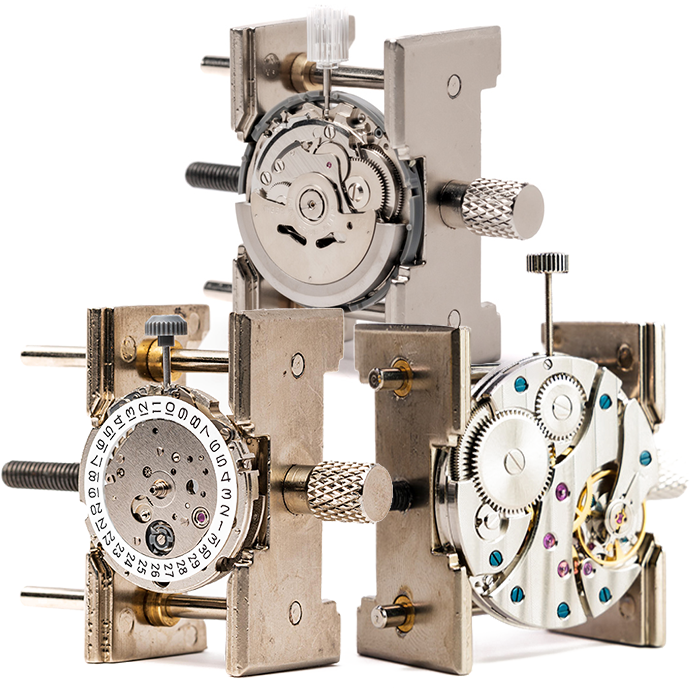
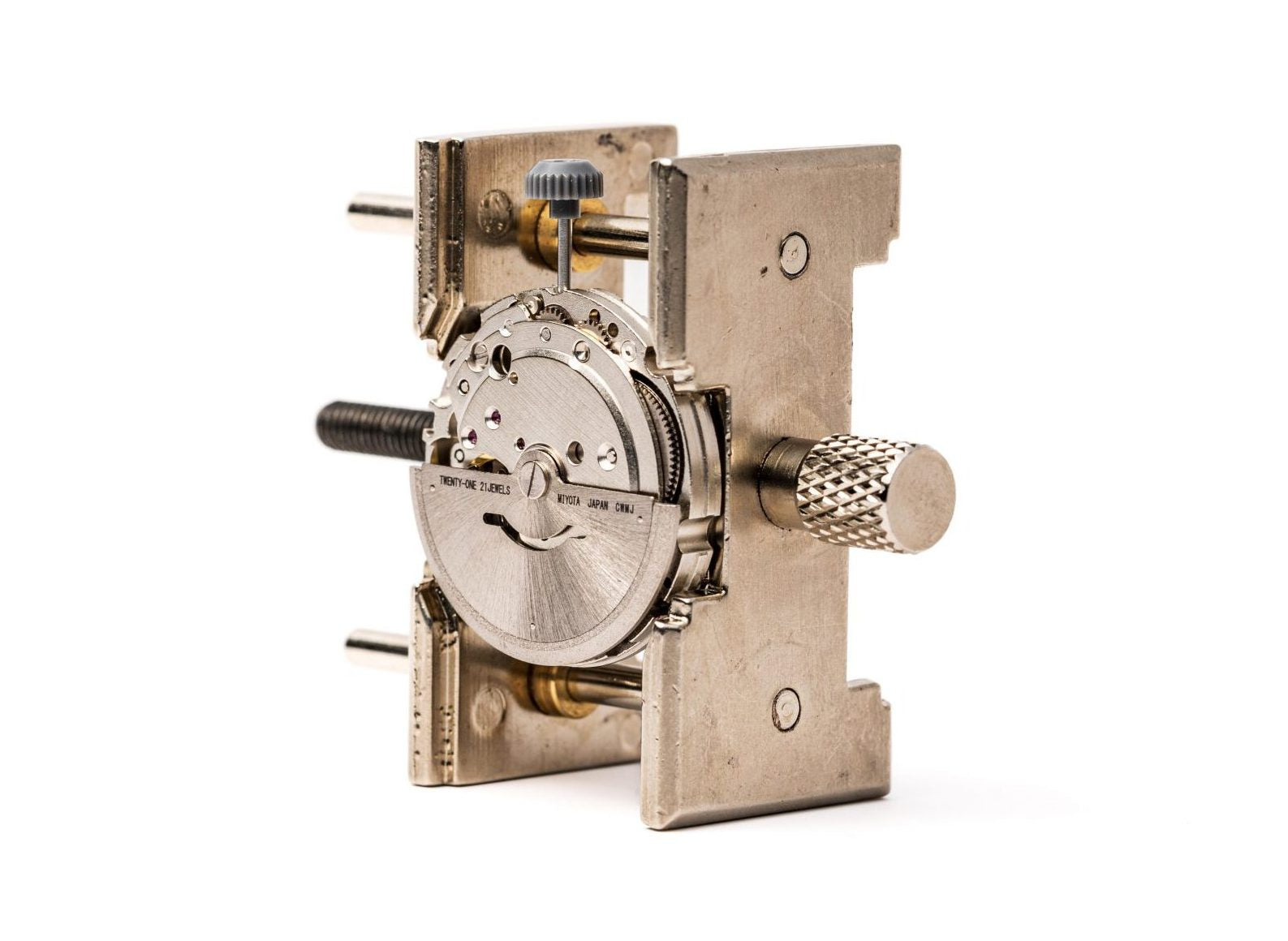
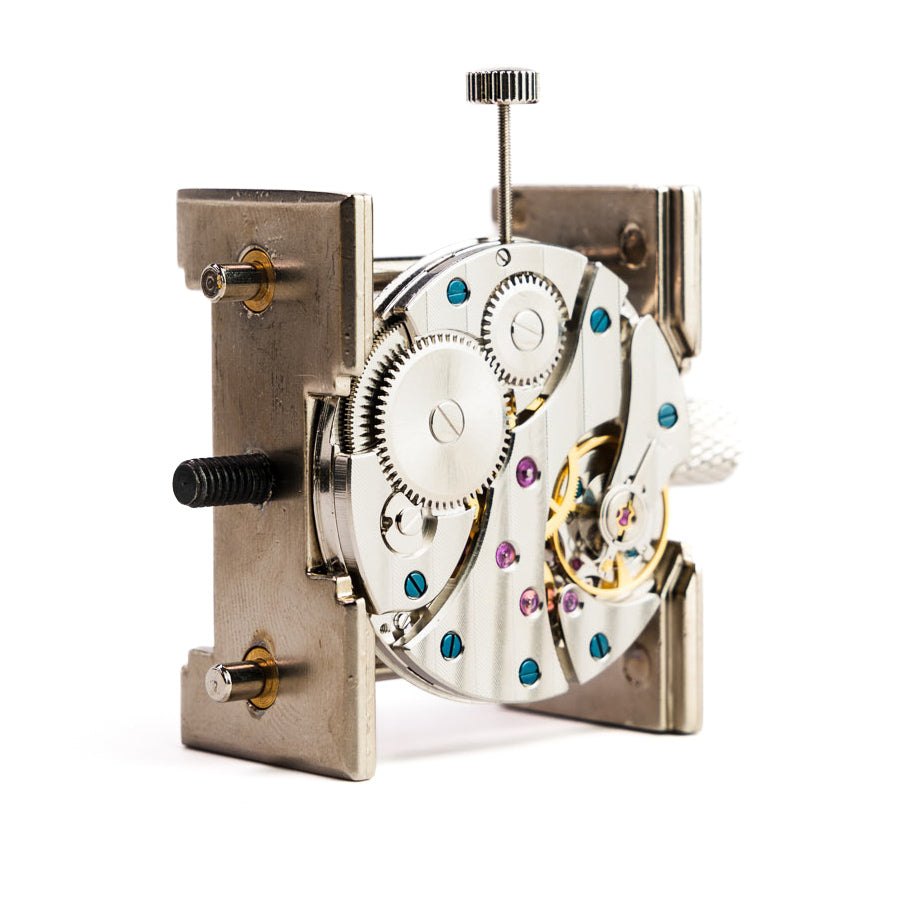
For anyone who has built a hand-wound watch movement kit and felt crown resistance build during winding, the power reserve indicator puts that sensation into a readable display.
Key Takeaways
- Power reserve indicators track mainspring tension through a differential gear and display remaining run time
- Most standard movements provide 38 to 48 hours of reserve, with extended models reaching 72-80+ hours
- Accuracy drops as the reserve nears depletion because lower tension reduces the balance wheel amplitude
How Power Reserve Indicators Work
The complication connects to the mainspring barrel through gears that translate remaining tension into hand movement on the dial.
Power reserve indicators first appeared in marine chronometers, where knowing remaining energy was critical for longitude calculations. Breguet built the first wristwatch prototype with a power reserve indicator in 1933, though only one piece was assembled. Jaeger-LeCoultre brought the complication to series production in 1948 with the Powermatic Calibre 481.
Measuring Mainspring Tension
A differential gear set linked to the barrel compares two rotating inputs: the winding side (ratchet wheel) and the unwinding side (barrel drum). The relative rotation between them translates into hand position on the dial.
The Display Mechanism
Most displays use a fan-shaped gauge with markings from empty to full. A small hand sweeps across as the mainspring winds and unwinds. Some watches use a linear bar instead.
Power Reserve Display Types
Watchmakers use several approaches to show remaining energy on a dial. Common formats include:
- Fan-shaped subdial gauge (most widespread)
- Retrograde linear scale
- Rotating disc through a window
Subdial Gauge
The most common approach places a semicircular gauge on a subdial showing hours remaining, like 0 to 40 hours. As the mainspring unwinds, the hand sweeps from full to empty. Many manufacturers label the extremes "F" and "E," similar to a fuel gauge.
Retrograde Display
Some watches use a retrograde indicator. The hand sweeps one direction as energy depletes, then snaps back when wound. Linear retrograde scales appear on some Panerai and IWC models, giving the dial a distinctive instrument-panel look.
Disc-Based Displays
A few watches use a rotating disc visible through a window, showing color-coded zones (green for full, red for low) or numerical hour markings. Some manufacturers place the indicator on the case back rather than the dial, keeping the face clean.
Power Reserve Ranges
Power reserve varies based on mainspring length, barrel size, and movement design. A longer mainspring stores more energy but requires a larger barrel, increasing movement thickness.
Standard Reserves
Most movements provide 38 to 48 hours:
- Seagull ST3600 (hand-wound): 40+ hours
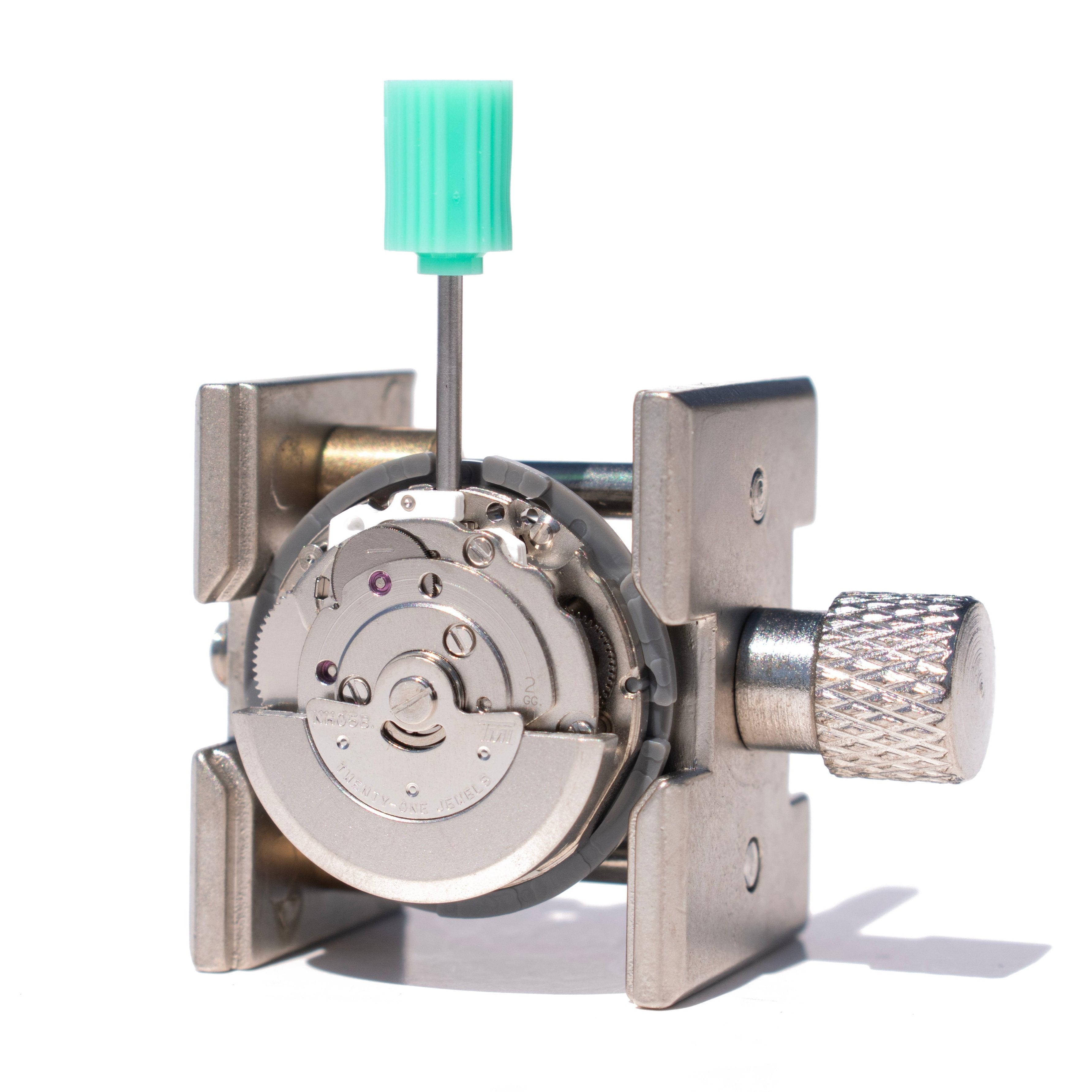
- Seiko NH36 (automatic): 41+ hours
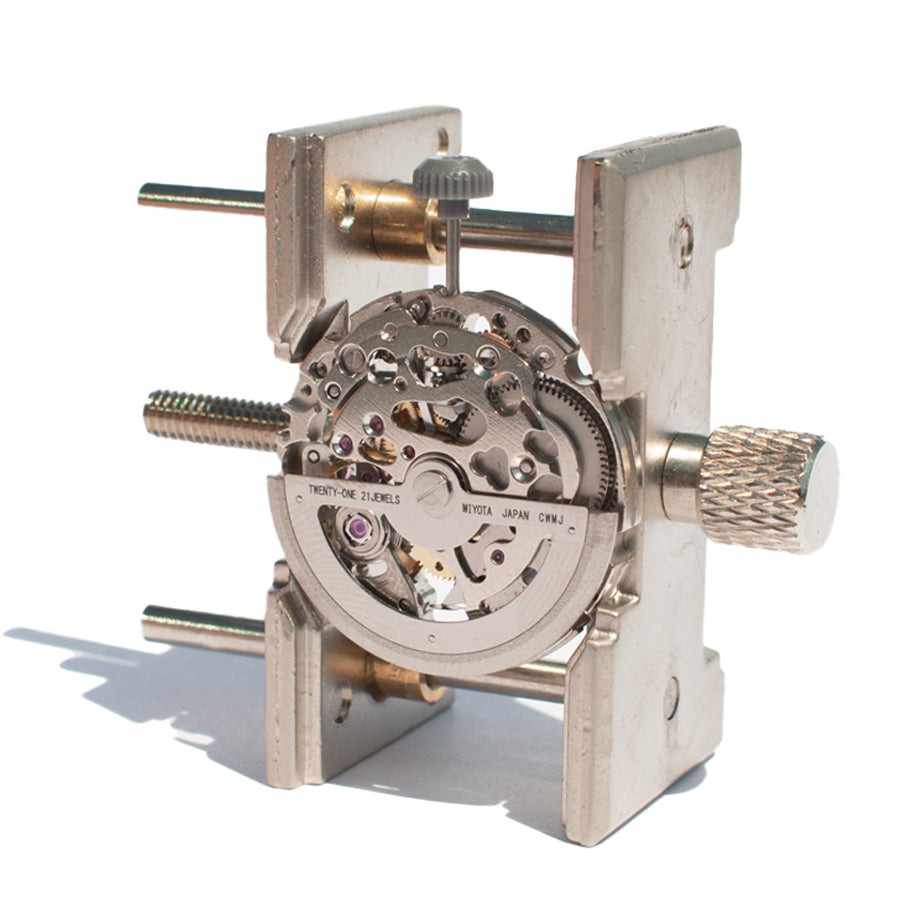
- Miyota 8215 (automatic): 42+ hours
Daily wearing or winding keeps these running continuously. A 40-hour reserve means a fully wound watch left on a desk Friday evening may still run Sunday morning.
Extended Reserves
Modern movements achieve 72+ hours using longer mainsprings or multiple barrels. The Hamilton Khaki Field Mechanical reaches 80 hours. Some high-end calibers push past seven days using twin or triple-barreled systems.
Why Power Reserve Matters
Power reserve affects both accuracy and the practical experience of owning a mechanical watch. Understanding how reserve level influences timekeeping gives you more control over performance.
Accuracy Drops as Power Decreases
A fully wound mainspring delivers consistent torque. As tension drops, the balance wheel amplitude decreases, which may affect accuracy.
Automatic Watches and Power Reserve
Automatic watch movement kits wind through wrist motion while worn. Removing the watch stops winding, and the reserve depletes. An automatic watch winder keeps the mainspring charged during storage.
Conclusion
The power reserve complication translates mainspring tension into a visual dial display. Understanding your movement's reserve helps maintain accuracy and avoid unexpected stops.
Rotate Watches watchmaking kits include movements with 40+ hour power reserves and step-by-step assembly guides.
Frequently Asked Questions
Q1. What is a power reserve complication?
A power reserve complication is a display on the watch dial showing how much mainspring energy remains. A small hand or gauge indicates hours of run time left before the movement stops. The complication uses a differential gear connected to the mainspring barrel to track tension levels in real time.
Q2. How is power reserve measured?
A differential gear system compares two rotating inputs inside the movement: the winding side and the unwinding side. The relative rotation between these two inputs drives a hand or disc on the dial, translating mechanical tension into a visual reading. The measurement happens continuously as the mainspring winds and unwinds.
Q3. What is a typical power reserve?
Most standard mechanical watches run between 38 and 48 hours on a full wind. Modern luxury calibers often reach 60 to 80 hours through longer mainsprings or improved barrel efficiency. Some high-end movements with multiple barrels achieve reserves exceeding seven days.
Q4. Does power reserve affect accuracy?
Yes, accuracy may decrease as the reserve nears depletion. Lower mainspring tension reduces balance wheel amplitude, which can cause the watch to gain or lose time. Keeping the mainspring reasonably wound helps maintain stable timekeeping throughout the day.
Q5. Do all mechanical watches have a power reserve indicator?
No. Every mechanical watch has a power reserve (stored mainspring energy), but the indicator display is an additional complication requiring extra gears. Many watches omit the indicator to keep the dial clean or reduce manufacturing costs. You can still estimate the reserve by tracking when you last wound the watch.
Q6. Can I extend my watch's power reserve?
No. Power reserve is fixed by the mainspring length, barrel size, and movement design. You cannot modify these components to increase run time. Regular winding or daily wear keeps the reserve topped up and maintains consistent performance from the movement.