
How to Regulate a Miyota 8215 Movement (Rate Adjustment Step-by-Step)
If your Miyota 8215 is drifting more than you would like, regulation can help. Many owners notice steady gain or loss after a few months of wear, and most builders can handle the adjustment at home with basic tools.
Watch regulation means adjusting a mechanical movement to gain or lose fewer seconds per day. Miyota 8215 regulation involves moving a tiny lever on the balance wheel bridge, changing the effective length of the hairspring. The balance wheel powers the watch hands, and since its speed determines accuracy, regulation simply adjusts that speed. Anyone learning how to regulate an automatic watch will find the 8215 a good starting point, and this guide covers each step and common mistakes to avoid.
Miyota 8215 Regulation at a Glance
- The Miyota 8215 uses a regulator lever (not a screw) to adjust timekeeping.
- Moving the lever toward "+" makes the watch run faster.
- Moving the lever toward "-" makes the watch run slower.
- Only move the lever in very small increments, as changes are amplified.
- Factory accuracy is -20 to +40 seconds per day. After regulation, +/-5 to 10 seconds per day is achievable.
Tools and Preparation for 8215 Regulation
Taking a few minutes to prepare prevents costly mistakes during regulation.
Tools You Need
- Tweezers (fine-tip, non-magnetic)
- Loupe or magnifier (5x or higher)
- Optional: timing machine or smartphone timing app (set lift angle to 49 degrees for the 8215 if using a timing machine)
- Patience
Measure Current Accuracy First
Before touching the regulator, you need to know exactly how far off the watch runs. Set the watch to a reference time, such as a phone clock synced to atomic time. Let it run for 24 hours in a consistent position, with dial up being the standard testing orientation. After 24 hours, check the difference and record the result as fast (+) or slow (-) along with the number of seconds gained or lost.
Understand Factory Specifications
The Miyota 8215 timekeeping fix starts with realistic expectations. The factory specification is -20 to +40 seconds per day. A full breakdown of these specs is available in the Miyota 8215 key features and complications guide. A watch running +15 seconds per day is within spec and may not need adjustment at all. Many watchmakers and builders accept anything within +/-10 seconds per day as well-regulated.
How to Adjust the Miyota 8215 Regulator Lever
Follow these steps carefully to adjust watch accuracy in your Miyota 8215.
Step 1: Open the Case Back
Place the watch face-down on a soft surface to protect the crystal. Unscrew the case back by hand, turning counter-clockwise until it lifts off. Rotate's screw-type case backs do not require any special opening tools. When closing the case back after regulation, a case press helps seat the back evenly and securely.
Step 2: Locate the Regulator Lever
Look at the balance wheel bridge, where you will see two arms near the balance wheel:
- The regulator arm has two brass-colored pins (the curb pins) on its end. Moving this arm changes timekeeping speed.
- The stud arm (the other one) holds the hairspring in position. Do not move this arm, or you will put the watch "out of beat."
Use a loupe magnifier to clearly identify which arm has the curb pins, since confusing the two arms is one of the most common beginner mistakes.
Step 3: Note the Current Position
Before making any adjustment, mark or photograph the regulator's current position. Having a reference point matters because if the regulation goes wrong, you will want to return to exactly where you started. Pay attention to where the lever points relative to the "+" and "-" markings on the bridge.
Step 4: Make a Small Adjustment
Using fine-tip tweezers, gently tap the regulator arm in the desired direction:
- Watch running fast? Move the lever slightly toward the "-" mark.
- Watch running slow? Move the lever slightly toward the "+" mark.
The "+" and "-" markings are stamped on the balance wheel bridge, and the regulator lever sits between them. Simply nudge the lever toward whichever symbol matches your goal. Do not rely on clockwise or counter-clockwise directions alone, since the orientation of the markings varies depending on how you hold the movement.
Most importantly, move the lever almost imperceptibly. The Miyota 8215 uses a direct regulator arm rather than a micro-adjustment screw, which means even small movements have a noticeable effect on timekeeping. Even a tiny movement of the regulator arm changes timekeeping by several seconds per day, and pushing it to either extreme can change the rate by minutes per day.
Step 5: Close the Case and Test
After each adjustment, close the case back, set the watch to the reference time, and measure accuracy over another 24-hour period. Rushing this step leads to over-correction, so expect to repeat the adjust-and-test cycle two or three times before landing on the desired accuracy.
Mistakes to Avoid When Regulating the 8215
Avoiding these errors saves time and prevents damage to your movement.
Moving the Wrong Arm
The stud arm (without curb pins) controls the beat position of the hairspring. Moving the stud arm puts the watch "out of beat," causing an irregular tick-tock rhythm. The technical term for this problem is beat error, and correcting it requires a timing machine and professional skill. To stay safe, only move the regulator arm with the brass curb pins.
Over-Adjusting
The biggest beginner mistake is pushing the lever too far. With the Miyota 8215, a barely visible movement changes the rate by 5 to 15 seconds per day. Resist the urge to make large corrections, and instead rely on small nudges tested over full 24-hour cycles for the best results.
Fouling the Hairspring
The hairspring is an extremely thin, coiled spring that controls the balance wheel's oscillation speed. If tweezers slip during regulation, the hairspring can snag or kink. A damaged hairspring requires professional repair or movement replacement, so work slowly and steadily to avoid contact with it.
Not Accounting for Position
Mechanical movements run at slightly different rates depending on orientation. Dial-up typically runs fastest, while crown-down usually runs slowest. A positional variance of 10 to 15 seconds between orientations is normal for the 8215. For a deeper look at what affects Miyota accuracy across calibers, see Miyota movement accuracy. When regulating, aim for the position you wear most often, which is usually dial-up or 12-up on the wrist.
When Regulation Alone Will Not Fix Accuracy
Sometimes the issue goes beyond the regulator lever.
Worn Components
A movement that consistently drifts despite repeated regulation may have worn components. Low amplitude (the swing angle of the balance wheel) is a common sign that the movement needs servicing rather than further regulation. The pallet fork jewels, escape wheel teeth, or mainspring may need professional attention. Regulation adjusts accuracy within a healthy movement, but it cannot fix worn parts.
In many cases, sourcing a replacement Miyota 8215 Movement is more cost-effective than professional servicing, especially for builders who already have the tools on hand.
Service Interval
A well-maintained Miyota 8215 holds regulation for one to two years before accuracy may drift again. Periodic checking and small adjustments keep the movement within acceptable tolerances long-term.
Conclusion
Miyota 8215 regulation is a straightforward process that requires patience more than skill. Move the regulator lever in tiny increments, test over 24 hours, and repeat until the accuracy meets your expectations. A competent home adjustment can bring the 8215 to within +/-5 to 10 seconds per day, well beyond the factory specification.
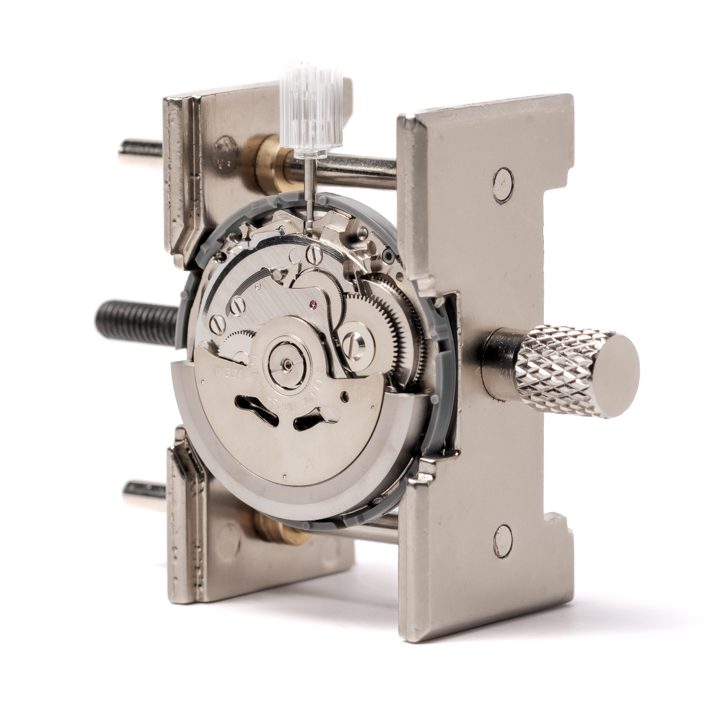
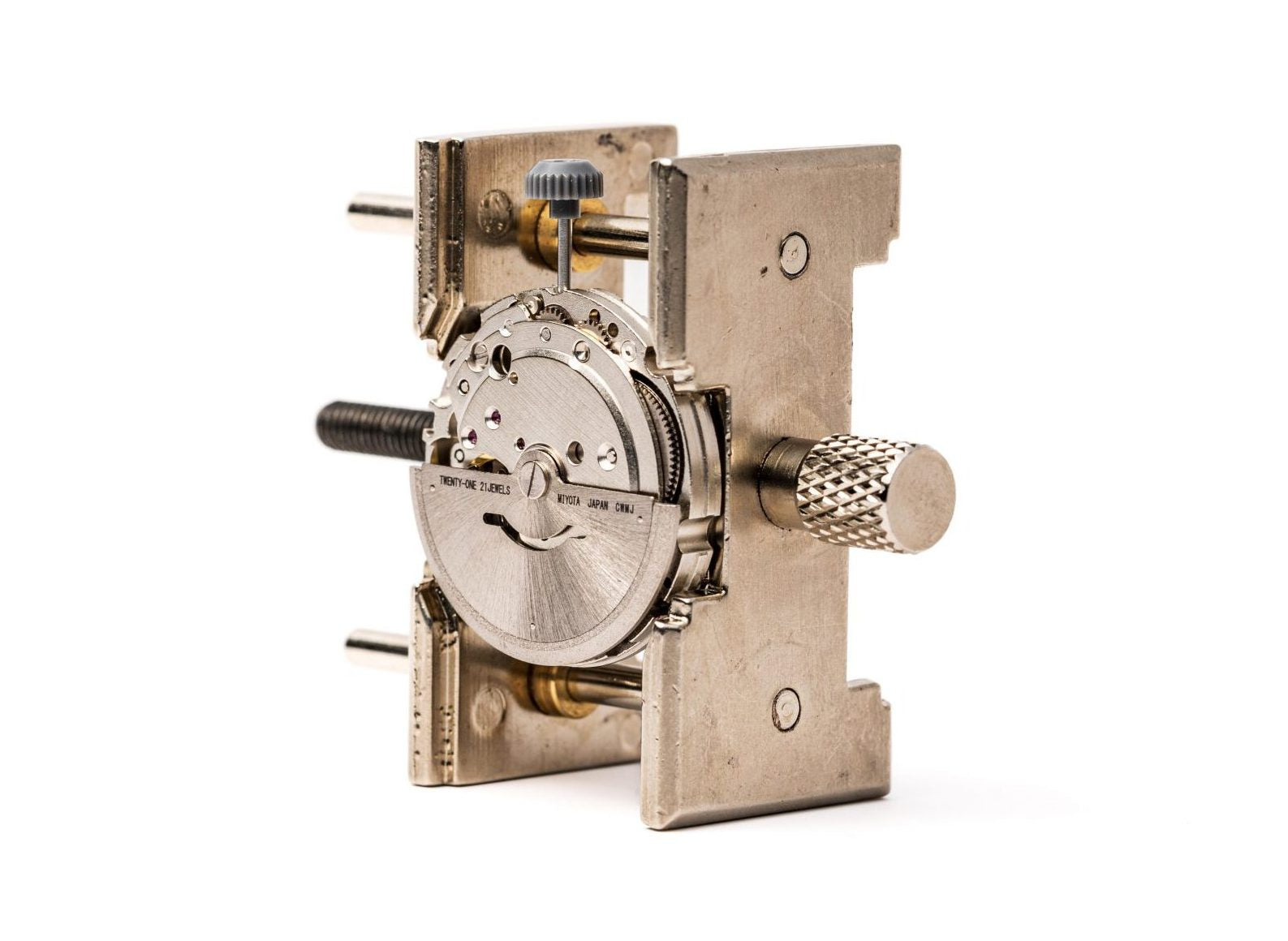
Rotate Watches provides Miyota 8215 movements and complete watch kits with tools, guides, and support. For builders looking to learn regulation hands-on, the Miyota 8215 movement kit includes the movement, holder, tools, and a detailed guide covering disassembly, reassembly, and adjustment.
Browse all 8215-compatible kits and accessories to find matching parts for your build.
FAQs
Can I regulate a Miyota 8215 without a timing machine?
Yes. A phone clock synced to a reliable time source works as a reference. Measure the watch's drift over 24 hours and adjust accordingly.
How much does a small lever movement change the rate?
Even a barely visible adjustment can change the rate by 5 to 15 seconds per day. Always make tiny nudges and test over a full day before adjusting again.
What is a good accuracy target for the Miyota 8215?
After regulation, +/-5 to 10 seconds per day is realistic. The factory specification allows -20 to +40 seconds per day, so any result tighter than that is an improvement.
Will regulating void my warranty?
Opening the case back and adjusting the regulator is a standard maintenance procedure. Check your specific warranty terms before proceeding.
Does the date setting affect regulation?
No. The date mechanism and the regulator lever are independent systems inside the movement. Adjusting one does not affect the other. However, avoid setting the date between 9:00 PM and 1:00 AM, since the calendar mechanism engages during those hours and forcing it can damage the date wheel gears.
How often should I re-regulate my Miyota 8215?
Check accuracy every six months. Most movements hold regulation for one to two years before noticeable drift returns.