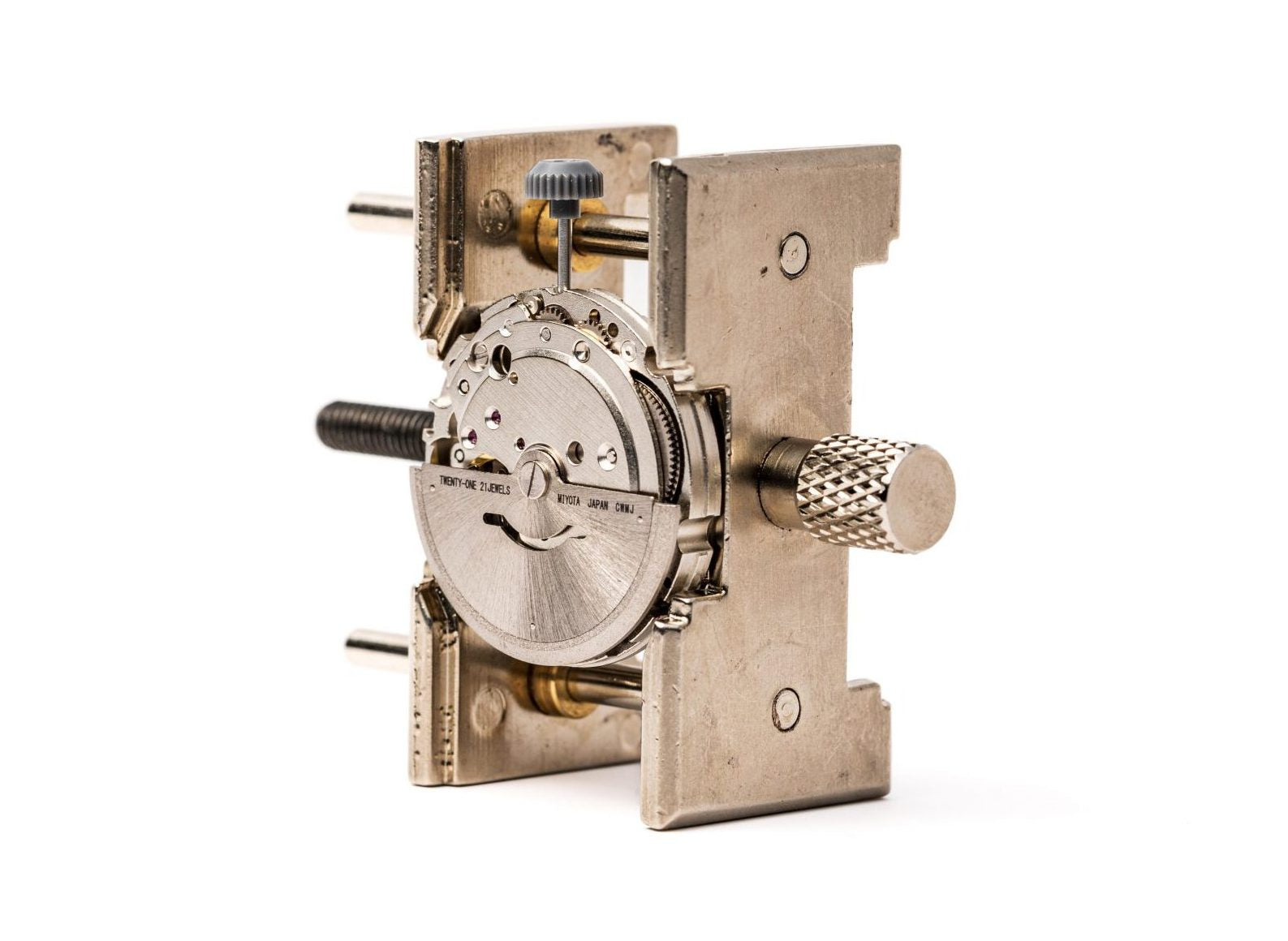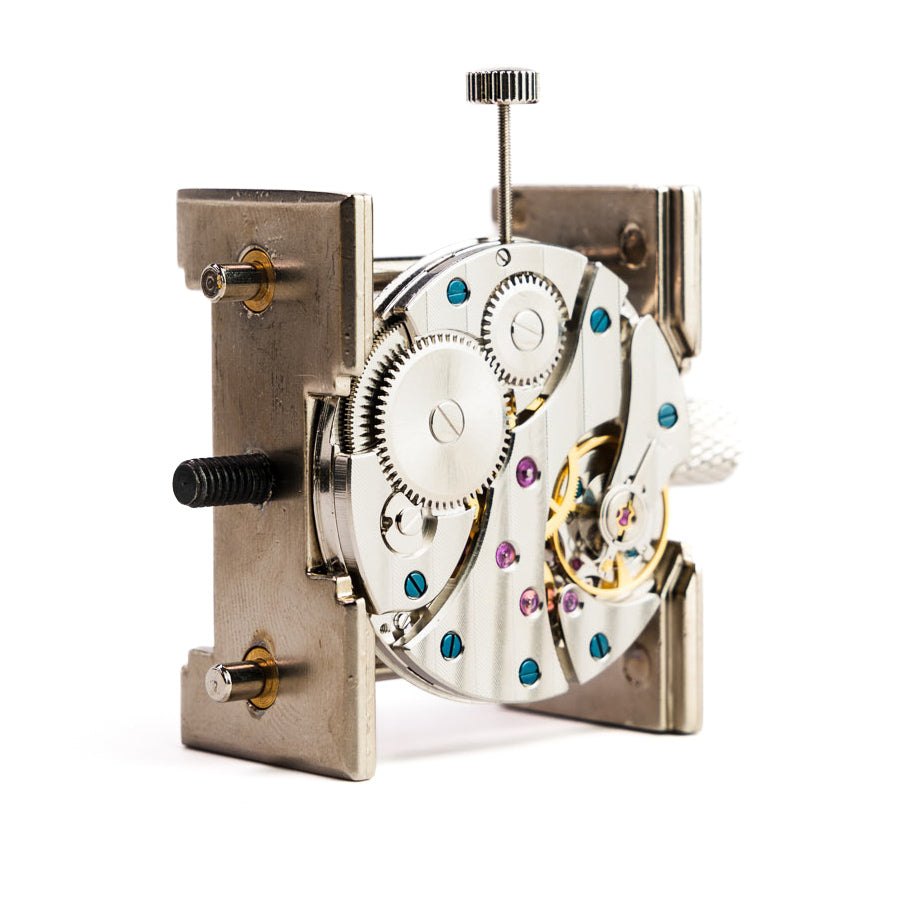

Miyota 2035 Quartz Movement Guide: The World's Most Common Caliber
Somewhere on Earth, a Miyota 2035 is ticking right now, and probably millions more alongside it. According to Miyota's official 40th anniversary page, over five billion Caliber 2035 series movements have been manufactured since the original debuted in 1981. When people say "quartz movement," there is a strong chance they are talking about this one.
For DIY watch builders, the 2035 offers a useful starting point for understanding what separates quartz from mechanical timekeeping. When you know how a battery and crystal deliver precision automatically, you gain a deeper appreciation for what springs and gears accomplish inside a mechanical movement.
Key Takeaways
- Over five billion Caliber 2035 series movements manufactured, per Miyota's 40th anniversary page.
- Accuracy of +/-20 seconds per month, with a battery life of approximately three years.
- A three-hand, no-date quartz movement with zero jewels.
- Understanding quartz fundamentals builds context for mechanical watch building.
What Is the Miyota 2035?
The Miyota 2035 is a quartz watch movement manufactured by Citizen Watch Manufacturing Co., Ltd. (CWMJ) under the Miyota brand, which operates as part of the Citizen Watch Group based in Japan. Since its launch in 1981, the 2035 has become the go-to quartz caliber for watch brands, repair shops, and independent watchmakers worldwide.
Miyota's official product page lists the following specifications:
- Size: 6 3/4 x 8 lignes, 3.15mm height
- Battery: SR626SW (377), approximately three-year life
- Accuracy: +/-20 seconds per month
- Functions: Hours, minutes, central seconds (three-hand display)
- Jewels: Zero
- Frequency: 32,768 Hz
No Date, No Complications
One of the 2035's defining traits is its simplicity. The movement has only one crown position for time setting, with no date function and no phantom date position to worry about. You pull the crown out one click, rotate to set the time, and push it back in.
For builders familiar with mechanical movements, that simplicity stands out. Automatic movements like the Miyota 8215 and Seiko NH36 offer date functions, day-date displays, and the hands-on building experience that makes mechanical watchmaking so rewarding. Quartz skips that entire mechanical layer, which is exactly why understanding it first gives useful context before moving on to more complex builds.
Hacking Function
The 2035 also includes a hacking function, meaning the seconds hand stops when the crown is pulled to the time-setting position. You can synchronize the watch precisely with a reference clock, and pushing the crown back in causes the seconds hand to resume immediately.
Why Builders Should Understand Quartz
Most watch enthusiasts gravitate toward mechanical movements because of the hands-on building experience they offer. Even so, knowing how quartz works provides valuable context for appreciating what mechanical movements achieve without batteries or circuit boards.
Accuracy Comparison
The two approaches handle precision very differently. The Miyota 2035 holds accuracy within approximately 20 seconds per month, which is typical for quartz movements. Mechanical movements prioritize the building experience over raw precision, and that trade-off is exactly what draws enthusiasts to them. You get visible, tactile engineering you can assemble and interact with directly.
Maintenance Contrast
Maintenance reflects the same trade-off. The 2035 requires nothing beyond a battery swap every three years. Mechanical movements involve regular winding or daily wear to keep the mainspring charged, along with periodic servicing that keeps components lubricated and performing well. For builders, that hands-on upkeep is part of the appeal rather than a drawback, because each interaction deepens your connection to the movement you assembled.
Cost Perspective
Individual 2035 movements cost under $5 at wholesale, and two-packs sell online for under $10 through major retailers. Mechanical movements start at $140 in complete kits that include tools and guides. That price reflects real craftsmanship: each mechanical movement contains 40+ precision components that work together without electronic assistance. Kits include everything needed to assemble them from scratch.
Standard 2035 vs Super 2035
Miyota produces two versions of the 2035, and knowing the difference matters if you are choosing a replacement.
The standard version has been in production since 1981 and delivers +/-20 seconds per month accuracy with a three-year battery life and silver-toned bridges. The Super 2035, which Miyota introduced in 2005, features gold-plated bridges for enhanced corrosion resistance and a protective coil cover. The word "SUPER" is etched above the caliber number on the movement plate.
Miyota's current official spec sheet lists the Super at +/-20 seconds per month accuracy with a four-year battery life. Earlier Miyota marketing materials had listed the Super's accuracy at +/-15 seconds per month, though current documentation no longer reflects that figure. The extra year of battery life remains the most practical advantage of the Super version.
How to Replace a Miyota 2035
Replacing a dead 2035 is one of the simplest watch repairs you can perform. Start by removing the case back with a case opener knife, then release the stem by pressing the small indentation on the movement with tweezers. Unlike some other calibers, the 2035 does not have an obvious release button, so look for the indentation rather than a protruding tab.
Once the stem is free, swap the old movement for a new one and transfer the dial and hands to the replacement unit. Reinstall the stem and close the case. Because 2035 movements cost less than a single service hour at most watchmakers, replacement is almost always more economical than repair. A faulty circuit board or damaged coil means the entire movement should be swapped rather than serviced.
Conclusion
The Miyota 2035 earned its place as the world's most common caliber through decades of reliable, affordable performance. For everyday timekeeping, few movements match its combination of accuracy and low maintenance.
For builders who want to go deeper than battery-powered precision, mechanical watch kits and movement kits provide hands-on access to gear trains, escapements, and mainsprings. Knowing how quartz handles timekeeping gives you a clearer picture of what mechanical movements accomplish through purely physical means, and that understanding makes every build more rewarding.
Browse the full collection of DIY watch kits to find your first project
FAQs
How long does a Miyota 2035 battery last?
The standard 2035 battery lasts approximately three years under normal use. The Super 2035 version extends that to approximately four years, which is its most notable practical advantage over the standard model.
What battery does the Miyota 2035 use?
The Miyota 2035 uses an SR626SW (377) silver oxide battery. Alkaline substitutes should be avoided, as they may leak and damage the movement over time.
Can I replace a Miyota 2035 myself?
Yes, with basic tools like a case opener knife and tweezers along with a replacement movement, the swap is straightforward for most watches. Professional installation is still recommended for valuable or sentimental timepieces where precision handling matters.
How accurate is the Miyota 2035?
Miyota's official spec sheet rates the standard 2035 at +/-20 seconds per month. The Super version is also listed at +/-20 seconds per month on current documentation, though older Miyota marketing materials had listed the Super at +/-15 seconds per month.
Is the Miyota 2035 still made in Japan?
Yes. CWMJ (Citizen Watch Manufacturing Co., Ltd.) manufactures the 2035 at the Saku Factory in Japan, one of the world's largest watch movement facilities. Production has continued at this location since the movement's debut in 1981.
What is the difference between quartz and mechanical movements?
Quartz movements use a battery and a vibrating crystal to deliver extreme accuracy with virtually zero maintenance. Mechanical movements use springs and gears powered by manual or automatic winding, offering a hands-on, tactile building experience that quartz cannot replicate. Mechanical watch kits let builders work directly with these components, making the difference tangible rather than theoretical.