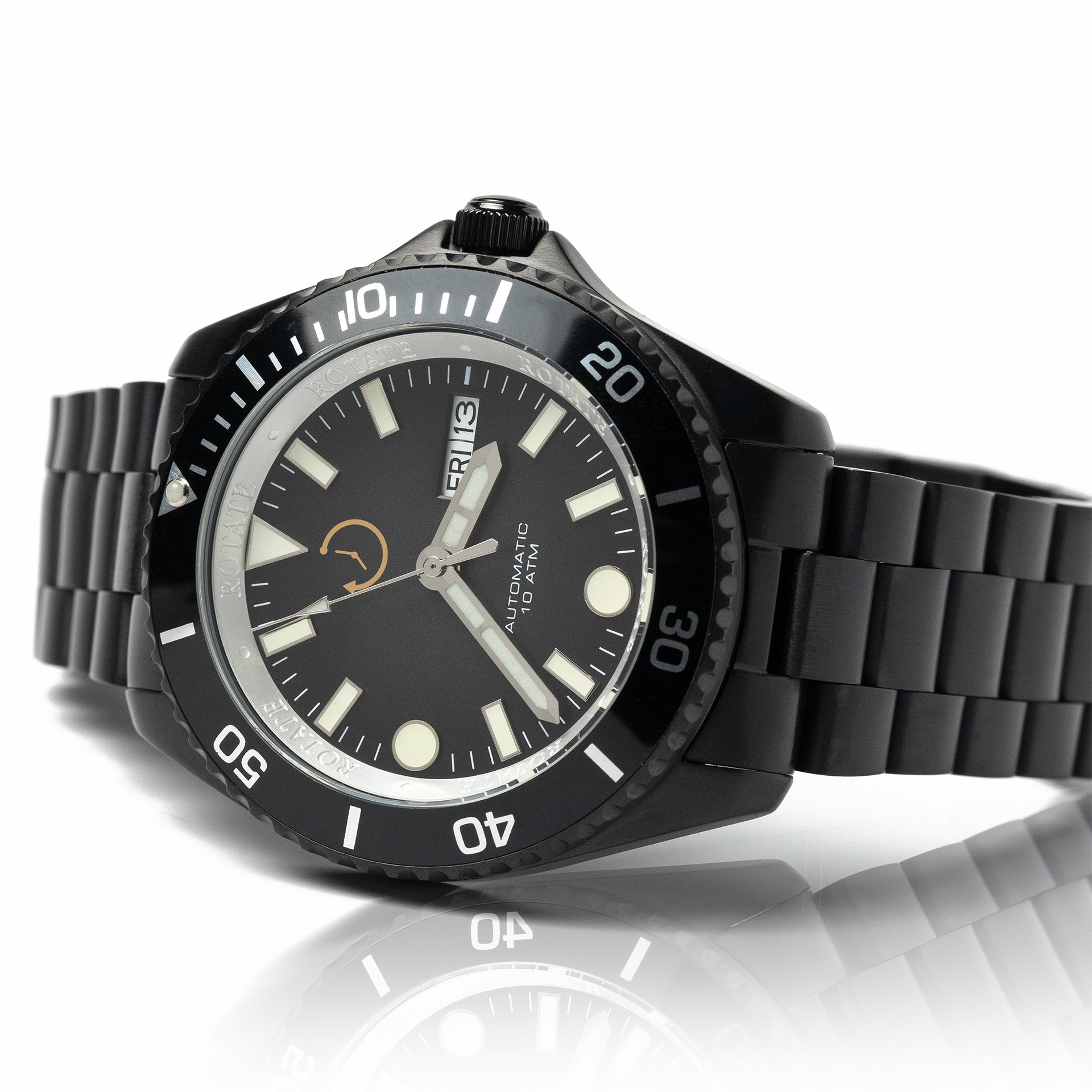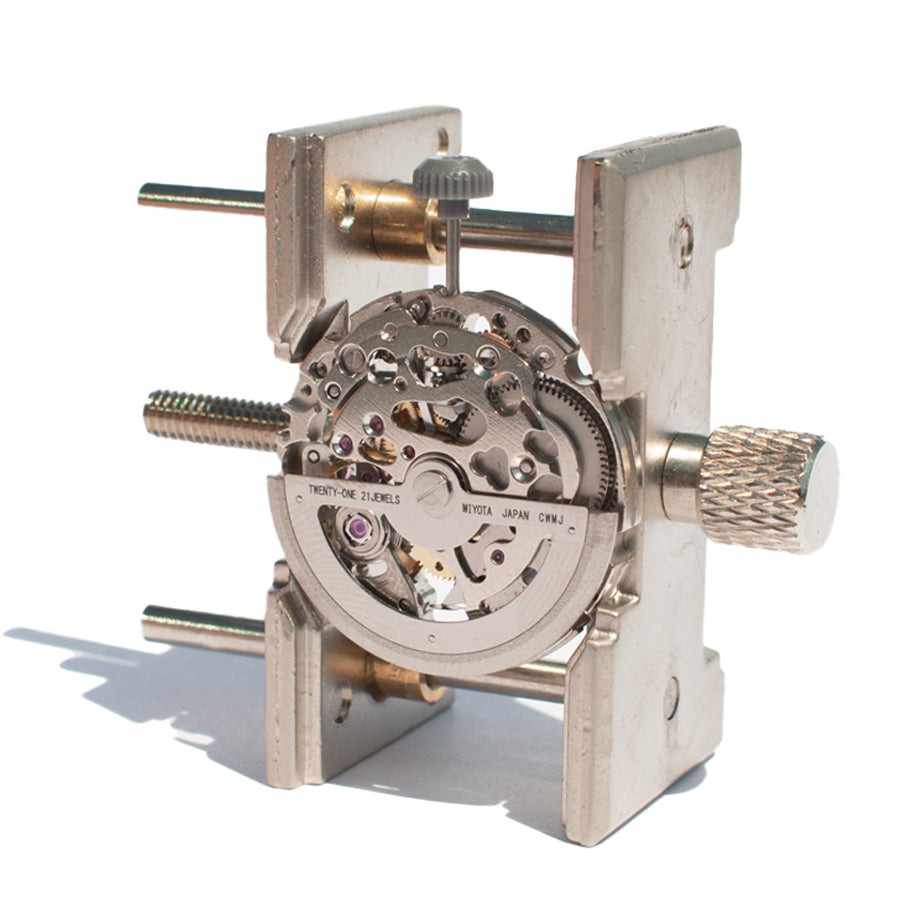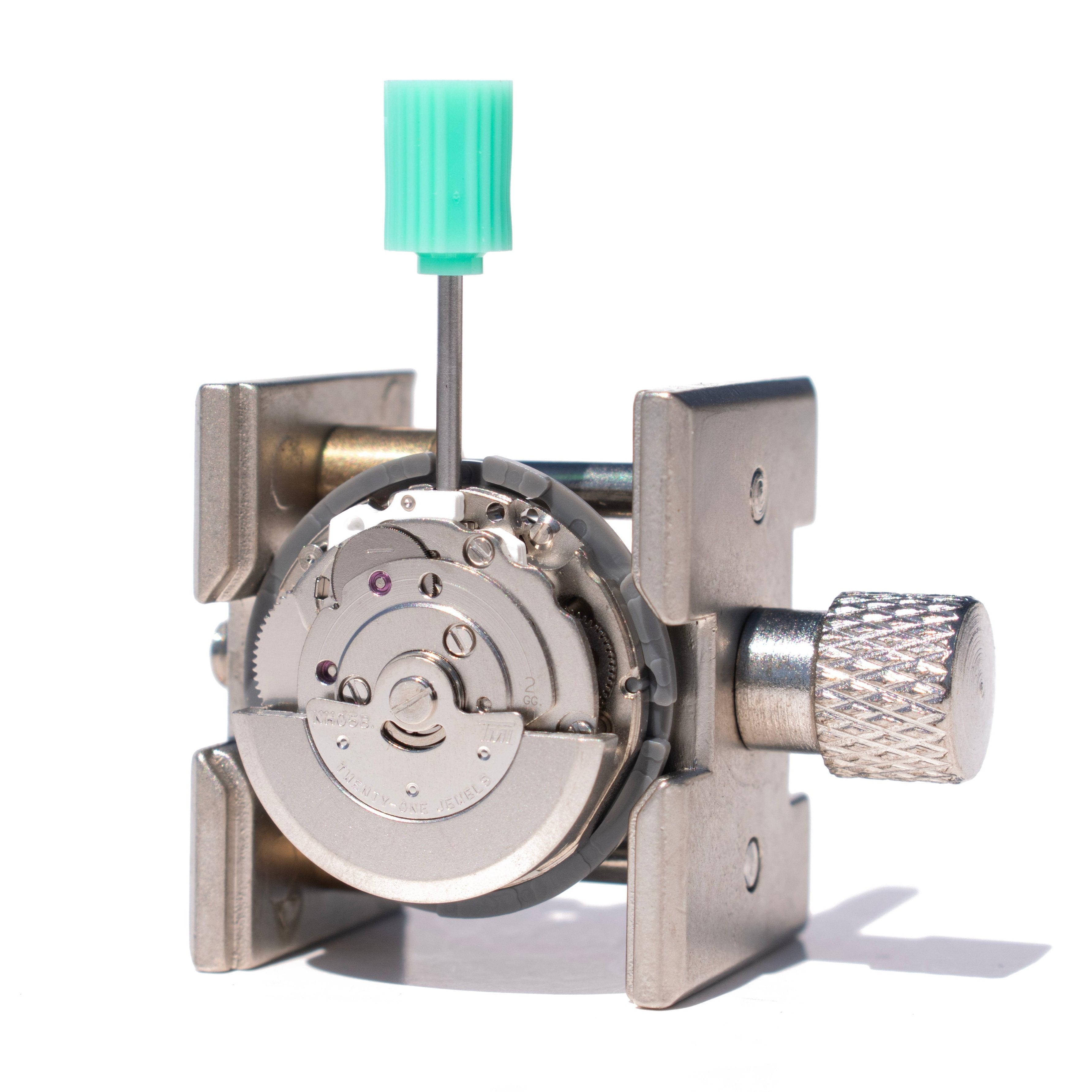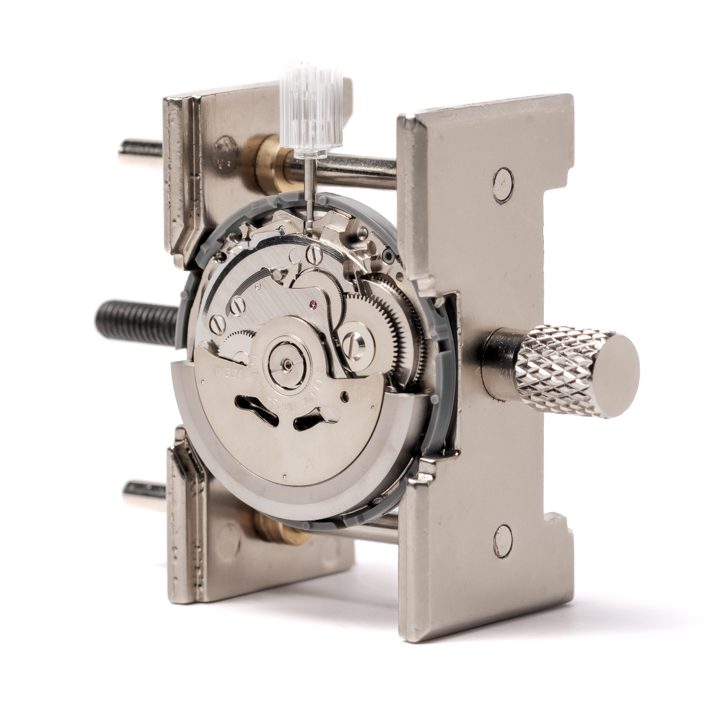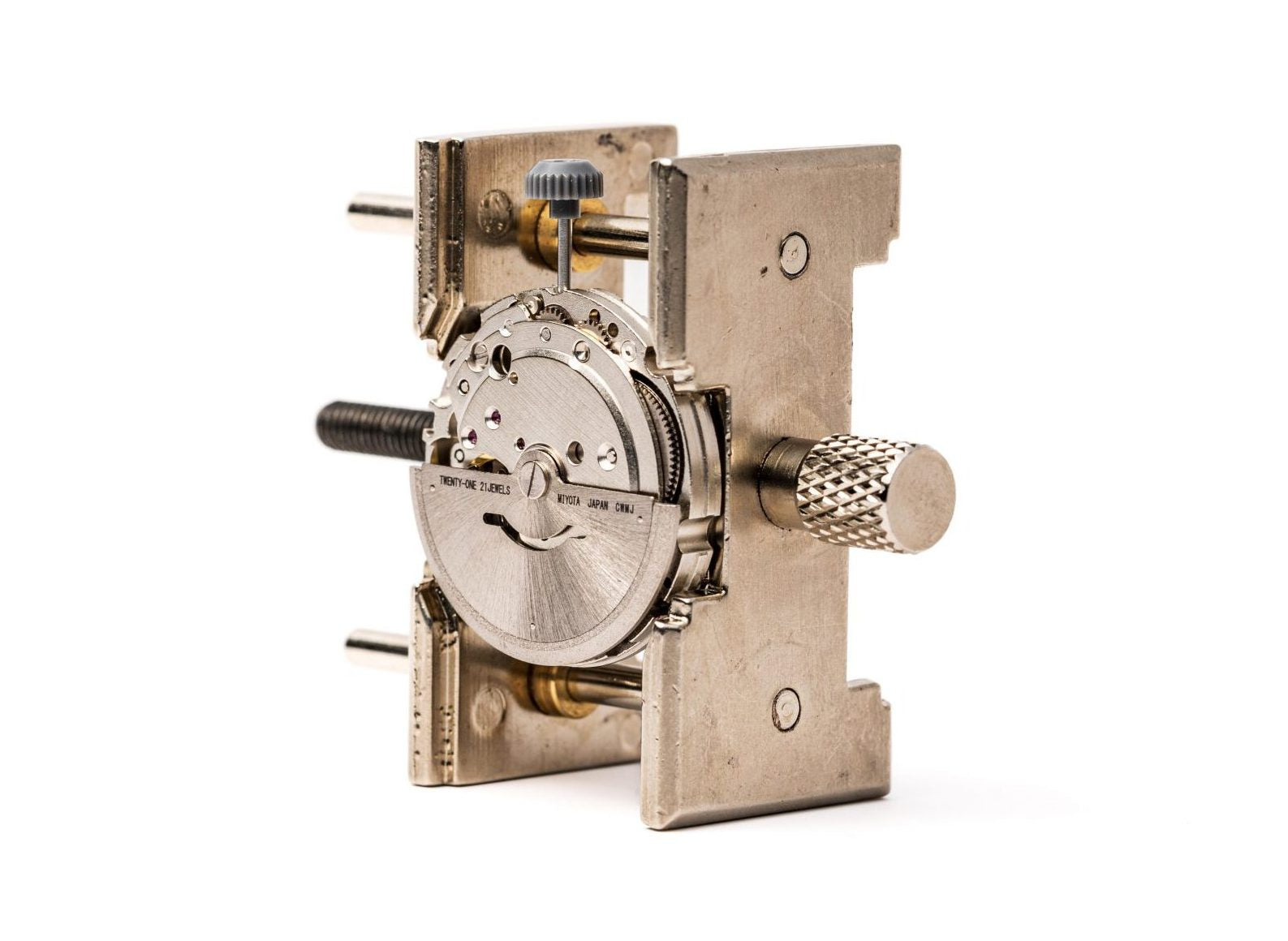

NH36 Danger Zone: Why Never Set Day or Date Between 9 PM and 3 AM
The NH36 danger zone is the 9 p.m. to 3 a.m. window when the automatic date-change mechanism is engaged. Setting the day or date during these hours can strip gear teeth and damage the calendar wheels permanently.
Avoiding this damage takes only seconds. Before touching the quick-set, simply set the time to 6:00 to move the mechanism out of the danger zone.
Key Takeaways:
- Never set the NH36 day or date between 9 p.m. and 3 a.m.
- Always set the time to 6:00 before adjusting the day or date
- Turn the crown clockwise for the day, counterclockwise for the date
- The date changes at midnight, but the day updates around 4:00 a.m.
Why Does the NH36 Danger Zone Exist?
The Seiko NH36 uses two separate systems for advancing the day and date wheels. One system operates automatically around midnight, while the other activates when you pull the crown to set the day or date manually.
According to Seiko's 4R36 caliber instructions, owners should not operate the date quick-set between 9 p.m. and 3 a.m. During this window, both systems engage at the same time, so manual adjustments end up fighting against the automatic mechanism already in motion.
How the Automatic Date Change Works
Between 9 p.m. and 3 a.m., the date indicator driving wheel engages a finger that pushes both the day and date discs forward. The finger moves into position around 9 p.m., reaches full engagement at midnight, and does not disengage until approximately 3 a.m. While the finger is engaged, forcing the quick-set puts opposing pressure on the same gear teeth.
What Happens When You Set During the Danger Zone
Forcing the quick-set while the automatic mechanism is engaged can cause several types of damage:
- Stripped or bent teeth on the day or date wheels
- Misaligned display that never centers properly
- Complete failure of the quick-set function
- Grinding or resistance when advancing the date
The damage is not always obvious right away, either. A bent tooth may cause the date to skip weeks later, and repairing it requires replacing the affected components.
How Do You Safely Set the NH36 Day and Date?
Safe day and date setting follows a simple process that becomes second nature with practice. Kit builders learn these crown positions during NH36 assembly, where they can see firsthand how the date wheels interact with the quick-set system. The entire routine adds only seconds and protects the calendar mechanism every time.
Step-by-Step Safe Setting Process
Always start by moving the time away from the danger zone:
- Pull the crown to the second click (time-setting position)
- Rotate the hands until they read 6:00
- Push the crown back to the first click
- Turn the crown clockwise to set the correct day
- Turn the crown counterclockwise to set the correct date
- Pull the crown to the second click and set the correct time
- Push the crown fully in
Setting the time to 6:00 places you at maximum distance from the danger zone. One additional rule: never turn the crown counterclockwise expecting the date to reverse, because the date wheel only moves forward, and forcing it backward damages the mechanism.
Quick Reference for Crown Positions
Builders working with a day-date automatic watch kit learn these three crown positions during assembly:
- Pushed in: Running position and hand-winding (rotate clockwise)
- First click: Day and date quick-set (clockwise for day, counterclockwise for date)
- Second click: Time-setting with hacking (seconds hand stops)
How Can You Avoid NH36 Date Damage Long-Term?
Long-term protection comes down to building one habit. Whenever your watch has stopped, set the time to 6:00 before doing anything else.
Seiko's 4R36 manual also notes a useful detail: the date changes around midnight, but the day does not update until around 4:00 a.m. If the day shows the wrong value shortly after midnight, wait for the automatic advance rather than forcing the quick-set.
When Your Watch Stops
If your NH36 watch stops and the hands land between 9 and 3, check whether the date numbers sit centered in the window. Off-center numbers indicate the date mechanism is engaged, meaning you are inside the danger zone. Advance the time to 6:00 first, then adjust the day and date.
After Power Reserve Runs Down
The NH36 has a power reserve of over 41 hours, so it keeps running for nearly two full days off the wrist. If it sits unworn longer than that, the hands could stop anywhere on the dial. A watch winder solves this by rotating the watch at regular intervals, maintaining both power reserve and the day-date display.
Build your own watch - from the ground up. Every gear, every screw, all you.
Conclusion
The NH36 danger zone between 9 p.m. and 3 a.m. is the one rule every owner should memorize. Setting the time to 6:00 before adjusting the day or date protects the calendar mechanism and takes only a few seconds.
Rotate Watches offers DIY watchmaking kits and movement kits that let you work with the NH36 day-date mechanism hands-on. Guided assembly walks you through every component, from the date wheels to the quick-set system.
FAQs
Q1. What is the NH36 danger zone?
The danger zone is the 9 p.m. to 3 a.m. window when the automatic date-change mechanism is engaged. Seiko's caliber instructions warn against using the quick-set during these hours because doing so can strip the calendar wheel teeth.
Q2. Can I set the NH36 date at 8 p.m.?
The mechanism begins engaging around 9 p.m., but setting the time to 6:00 first eliminates all risk. A few extra seconds of precaution prevent expensive repairs.
Q3. How do I know if my NH36 date mechanism is damaged?
Signs of damage include the date skipping numbers, the day or date not centering in the window, grinding resistance when using the quick-set, or the calendar failing to advance at midnight.
Q4. Does the danger zone apply to other Seiko movements?
Yes. Most Seiko movements with date complications, including the NH35, 4R35, and 4R36, share the same 9 p.m. to 3 a.m. window. Higher-tier movements like the 6R35 use a narrower 9 p.m. to 1 a.m. window per Seiko's official manual, so always check the documentation for your specific caliber.
Q5. Can a damaged NH36 date mechanism be repaired?
Yes, but the repair requires replacing the affected date or day wheels. A watchmaker can source the replacement parts and restore the movement to full function.
Q6. Is the NH36 safe to set at 6 a.m.?
Yes. Setting the time to 6:00, whether a.m. or p.m., places the mechanism at maximum distance from the danger zone. Day and date adjustments are completely safe at this position.