

Why Skeleton Movements Are So Popular with DIY Builders
Open the caseback on most watches, and you see a solid metal plate covering the gears. Open a skeleton watch, and every wheel, bridge, and spring is visible. That visual drama is why skeleton movements have become the top choice for DIY builders who want a finished piece that sparks conversation.
A skeleton movement kit does more than create a good-looking timepiece. The exposed architecture turns the watch into a learning tool, letting you see the mainspring unwind and watch the gear train transmit power. The balance wheel oscillates in plain view while the watch sits on your wrist or rests in your pocket.
Key Takeaways:
- Skeleton movements expose internal mechanics by removing material from the bridges and the mainplate
- The Miyota 8N24 is the most common skeleton movement in affordable DIY kits
- Larger 47mm pocket watch cases maximize the skeleton visual impact for builders
What Makes Skeleton Movements Different?
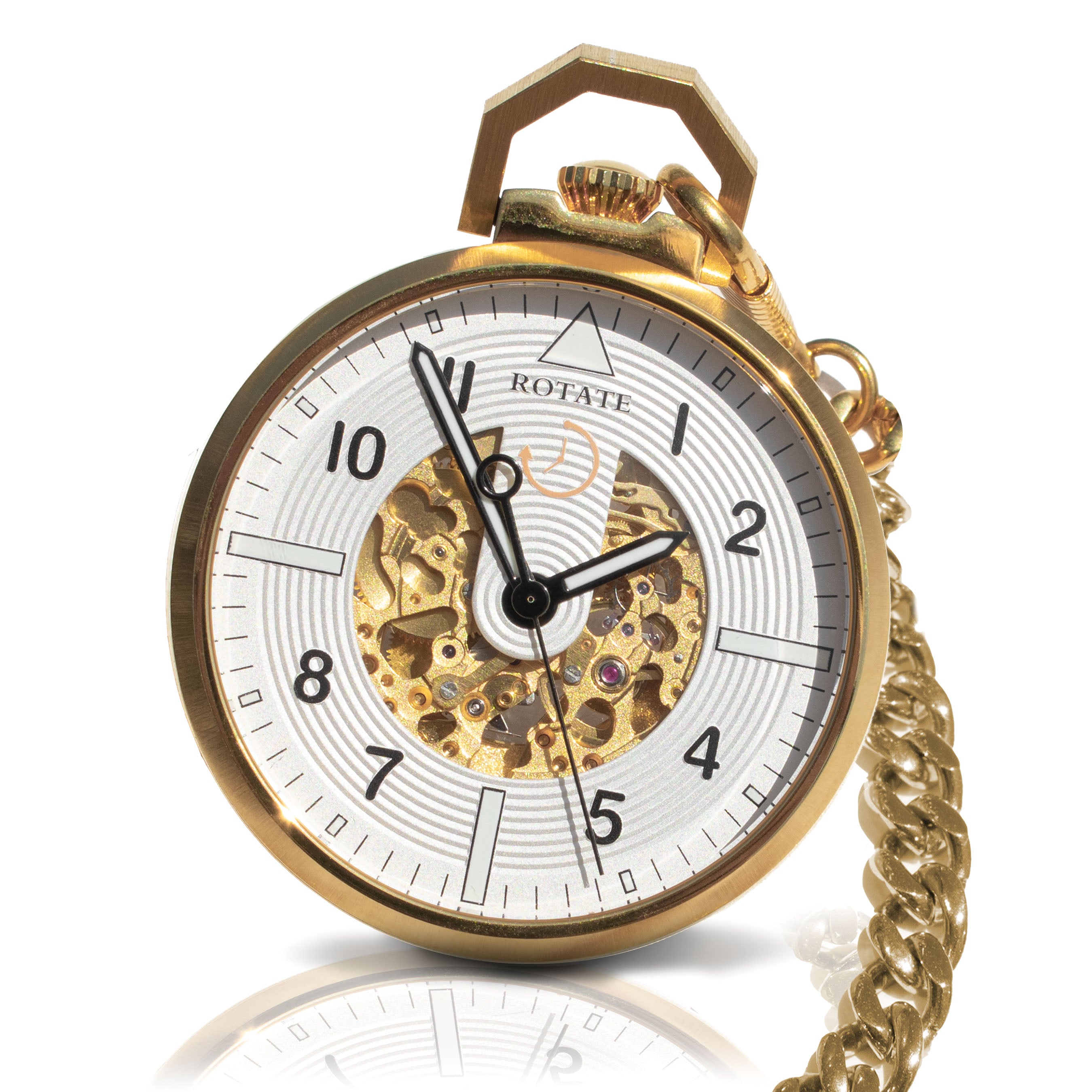
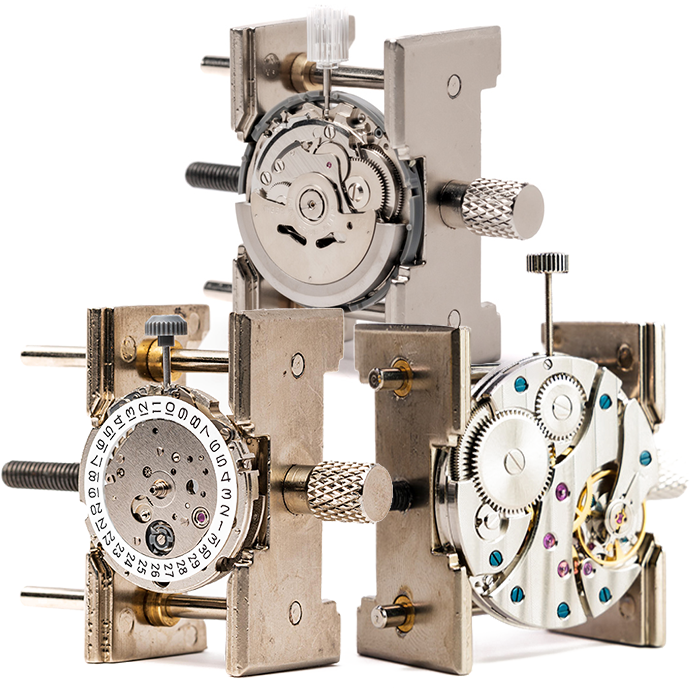
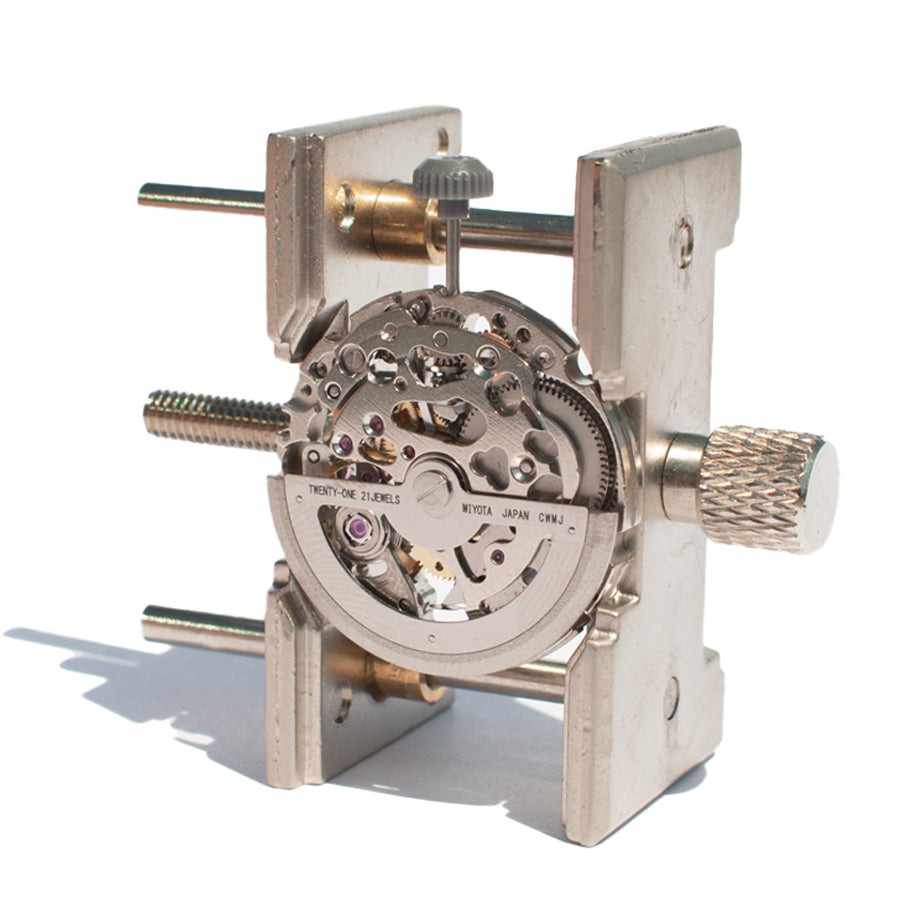
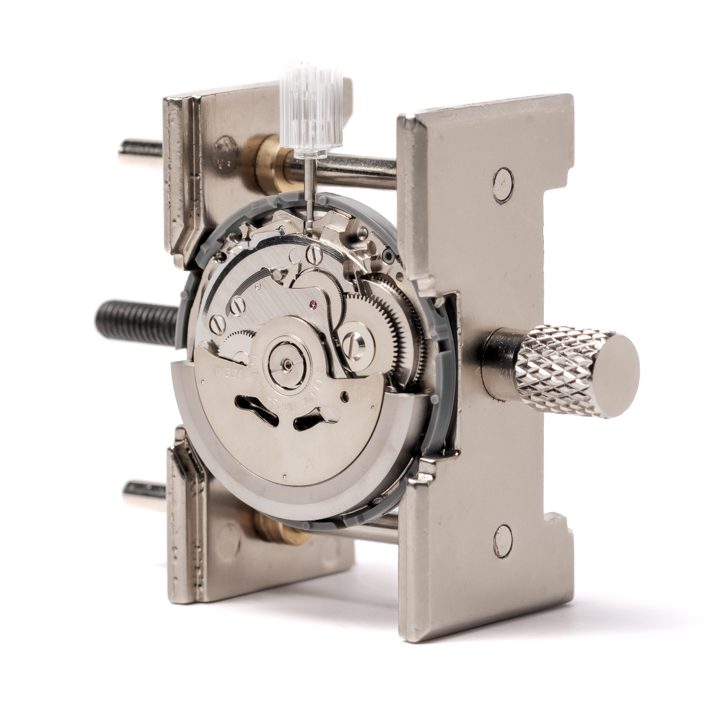
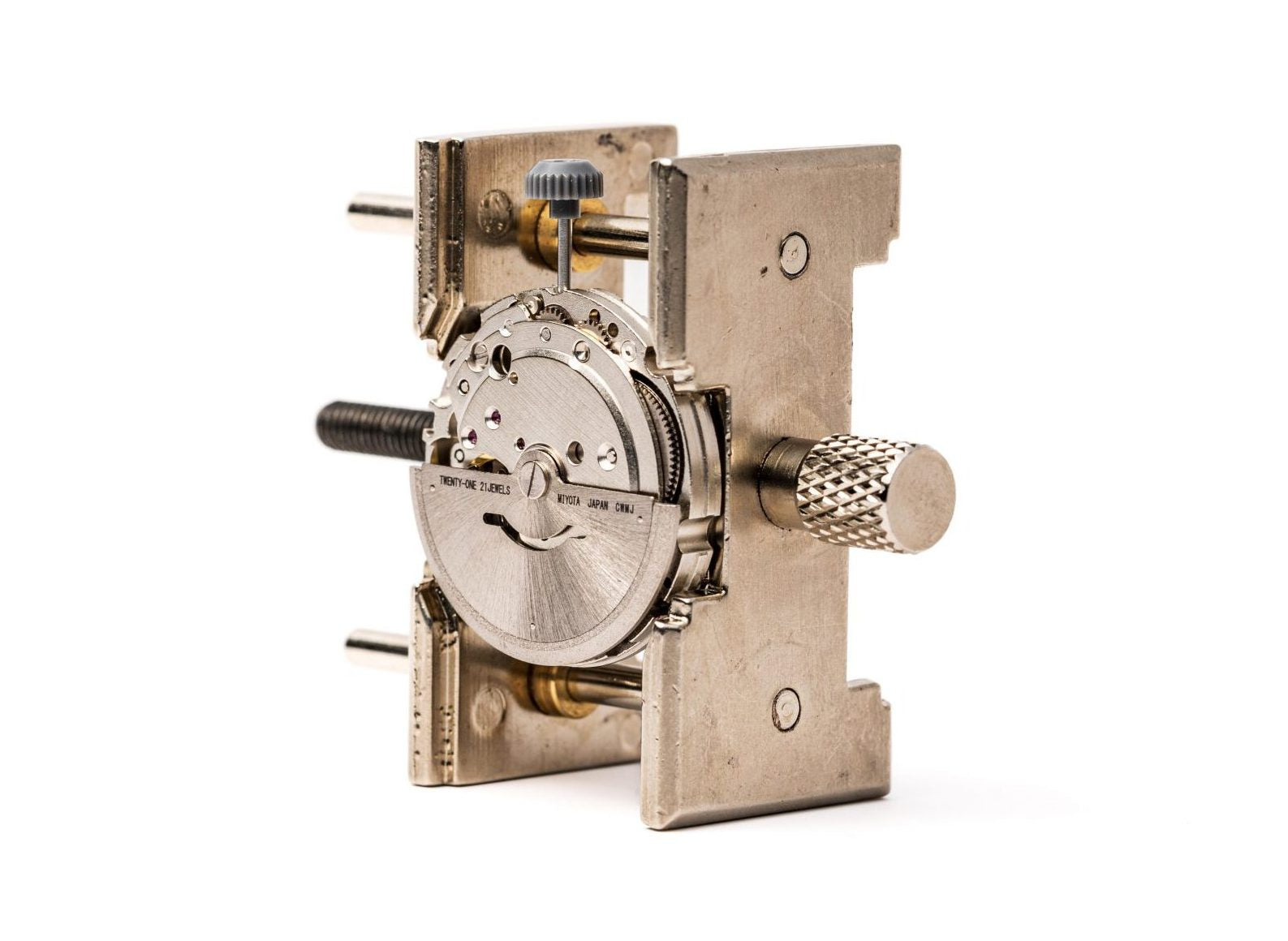
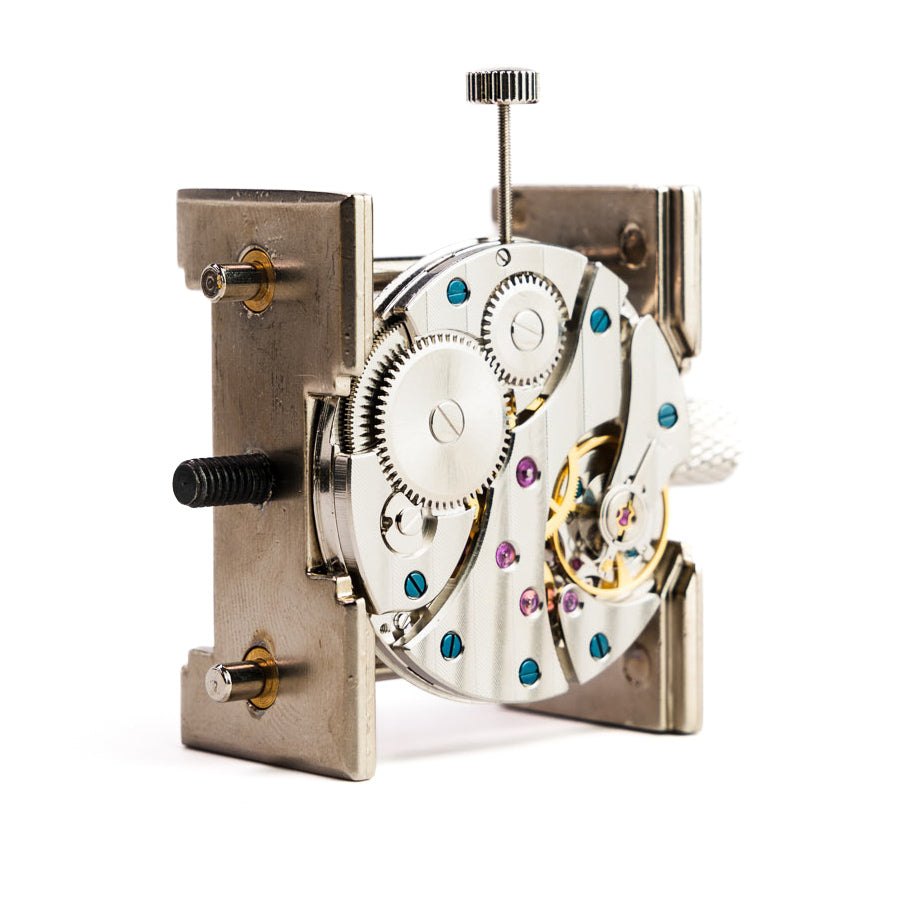
A skeleton watch movement is a mechanical caliber with material cut away from its mainplate and bridges, exposing the gears, springs, and balance wheel beneath. Where standard movements hide all of that behind solid metal, skeleton designs put it on full display. Open heart watches reveal only the balance wheel through a small dial window, while full skeleton movements expose the entire mechanism. Full skeleton builds offer the most rewarding visual result. Even people with no watchmaking background notice the difference the moment they see one.
How Skeletonization Works
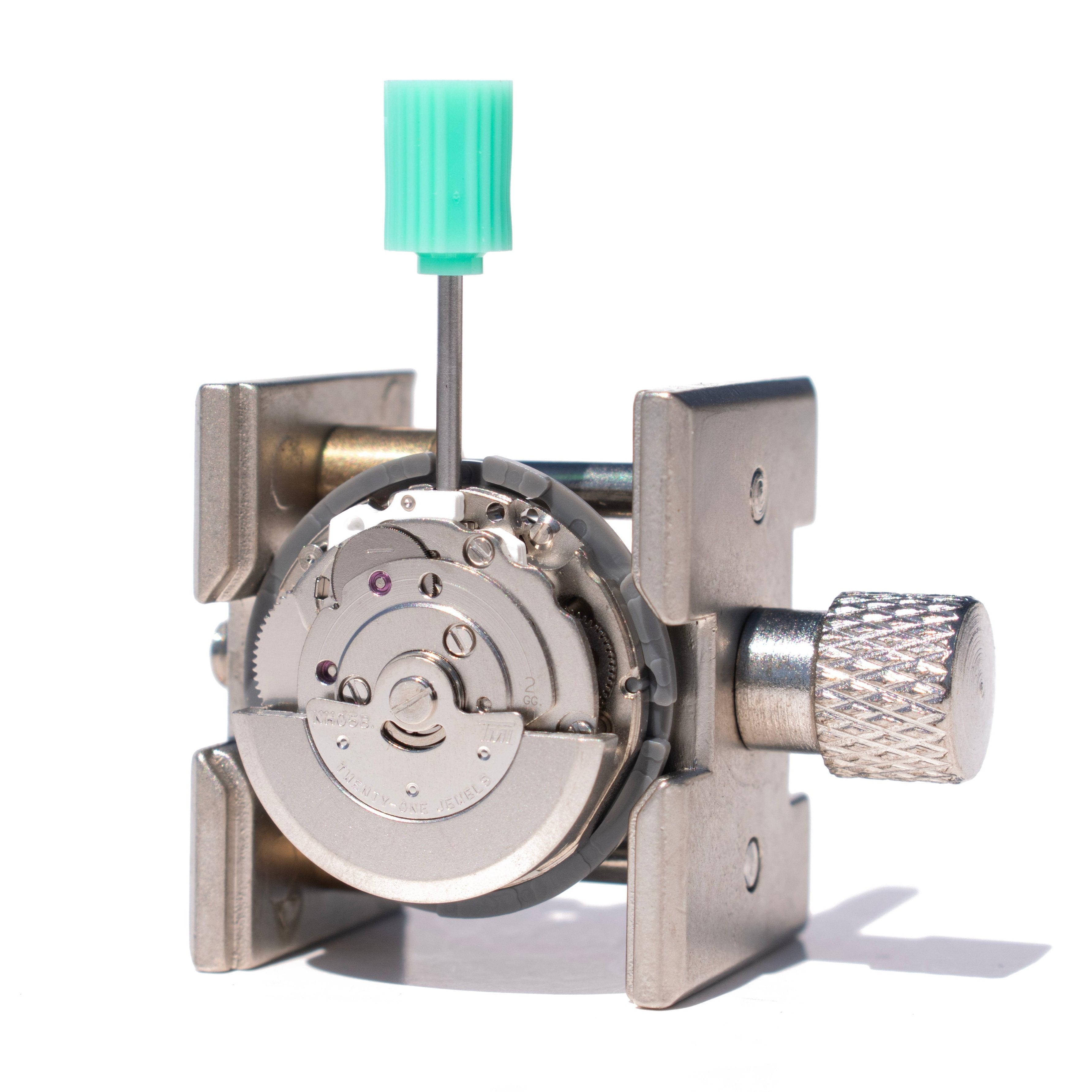
Traditional skeletonization starts with an existing movement and cuts away non-essential material. The Miyota 8N24, however, was never a solid movement that got opened up after the fact. According to Miyota's Cal. 82 series documentation, the 8N24 launched in 2006 as a purpose-built skeleton caliber with bridges engineered for visibility. The movement runs at 21,600 vibrations per hour with 21 jewels and over 42 hours of power reserve.
Why Builders Love the Visual Payoff
The build-at-home experience feels different with a skeleton movement because every component you install remains visible in the finished watch. Rotate builders often find that skeleton dials make hand installation more precise, since you can see exactly where each component seats.
Why Skeleton Watches Appeal to First-Time Builders?
First-time builders want to see what their work produced. A watch with a solid dial hides the movement entirely. A skeleton watch puts it on display, giving the builder a visible reminder of what they accomplished. Watching gears turn inside a watch you built yourself creates a sense of pride that few hobbies can match. That feeling often motivates builders to tackle more advanced projects.
The Conversation-Starter Factor
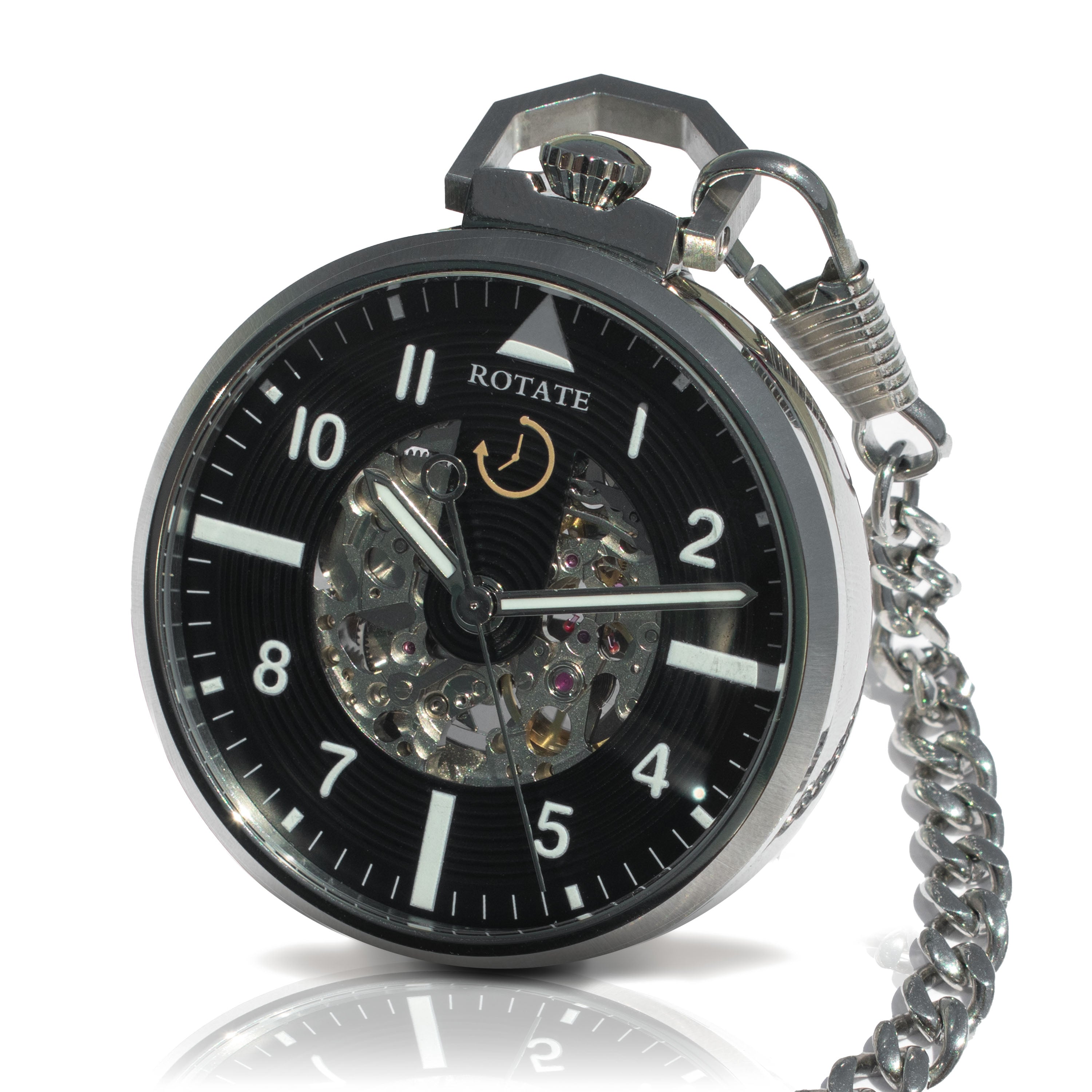
Why are skeleton watches popular beyond the watchmaking community? The answer comes down to visibility. A skeleton pocket watch on a chain catches attention immediately, and non-watch people notice the moving gears and ask questions. That kind of reaction makes the builder's effort feel genuinely rewarding.
The Educational Advantage
Skeleton movements also teach watchmaking concepts in a way that solid-dial watches simply cannot. New builders can watch the balance wheel oscillate and see how the gear train converts mainspring energy into a time display.
A skeleton build makes several core mechanics visible at once:
- How the mainspring stores and releases energy through the barrel
- How the gear train transmits power to the escapement
- How the balance wheel oscillates to regulate timekeeping accuracy
- How the automatic rotor winds the mainspring through wrist motion
How to Choose Your First Skeleton Build?
Skeleton builds vary in movement type, case style, and difficulty, so choosing the right first project means matching your experience level with the right format. Pocket watches offer larger cases and a simpler presentation, while wristwatch kits provide everyday wearability. First builds typically take 2-3 hours with a detailed guide.
Pocket Watch vs Wristwatch Skeleton Builds
Pocket watch kits typically use larger 47mm cases that give the skeleton movement maximum visual impact. Wristwatch skeleton kits do exist, but pocket watch formats remain the most popular entry point. The larger case window lets you appreciate the exposed mechanics more easily.
A skeleton pocket watch kit with a skeleton 8N24 movement and stainless steel chain combines vintage charm with visible modern mechanics. The format is popular with both watch enthusiasts and gift buyers.
Handling Tips for Skeleton Components
Since every surface stays visible in the finished watch, skeleton movements need extra care during assembly. A few precautions keep the build clean:
- Wear finger cots or gloves to prevent fingerprints on exposed bridges
- Use Rodico putty to clean smudges from visible components
- Avoid touching the balance wheel directly
- Keep the workspace dust-free, since particles show through the open dial
Conclusion
Skeleton movements earn their popularity for good reason. The visual drama, the hands-on learning, and the conversations they spark make skeleton kits one of the most rewarding builds in DIY watchmaking. The exposed mechanics turn an ordinary build into a wearable piece of mechanical engineering.
Rotate Watches offers skeleton watch kits and movement kits featuring the Miyota 8N24. Quality components and detailed guides help you build timepieces that showcase movement architecture.
Browse the full range of watchmaking kits to find your first skeleton build.
FAQs
Q1. What is a skeleton watch movement?
A skeleton movement has material cut away from the mainplate and bridges to expose the internal gears, springs, and wheels. The dial is either open or transparent to show the mechanics.
Q2. Are skeleton watches harder to build?
The difficulty is only slightly higher than a standard build. Exposed components require cleaner handling to avoid fingerprints and dust, but the assembly steps match standard movements.
Q3. What movement do most skeleton watch kits use?
The Miyota 8N24 is the most common skeleton movement in affordable DIY watch kits. Miyota introduced the 8N24 in 2006 with 21 jewels and over 42 hours of power reserve.
Q4. Can I see the movement working while wearing the watch?
Yes. Skeleton dials and exhibition casebacks let you watch the balance wheel, gear train, and rotor while wearing the watch.
Q5. Do skeleton watches need more maintenance?
No additional maintenance is required beyond standard mechanical watch care. Visible components do show dust and fingerprints more easily, so gentle cleaning helps keep them looking sharp.
Q6. Are skeleton watches good gifts?
Skeleton watches make excellent gifts. The visible mechanics make the watch feel special, and a DIY kit adds the personal touch of being hand-built by the gift giver.