
Sellita SW300 vs SW200: which Sellita should you use for your build
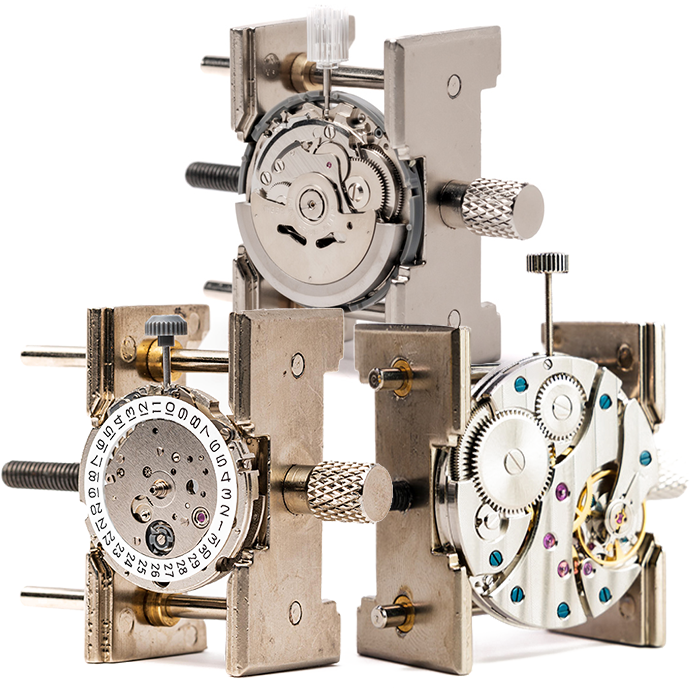
Sellita's two most popular movements share the same diameter, the same beat rate, and nearly identical functionality. Yet watch builders and brands treat them very differently. Whether you are sourcing a caliber for a custom build or a microbrand lineup, the choice hinges on a few key differences. The SW200 goes into sport watches, divers, and everyday tools. The SW300 shows up in slim dress pieces and premium collections.
The difference comes down to one millimeter of thickness, and that single millimeter changes everything about which watches these calibers fit inside.
Key Takeaways:
- The SW200 (4.6mm thick) clones the ETA 2824-2 and suits rugged, budget-friendly builds
- The SW300 (3.6mm thick) clones the ETA 2892-A2 and suits slim dress watches and premium projects
- Both share 25.6mm diameter, 28,800 vph beat rate, hacking, hand-winding, and quick-set date
- The new SW200-2 Power+ (2026) pushes SW200 power reserve to 65 hours, changing the comparison
How Do the SW200 and SW300 Relate to Each Other?
Both movements belong to Sellita's core lineup and trace their origins to separate ETA calibers. Sellita began developing its own movements around 2003 after the Swatch Group announced plans to restrict ETA movement supply to outside brands.
The SW200 Story
The SW200 launched around 2003 as Sellita's alternative to the ETA 2824-2 after ETA patents expired. Annual production sits around 800,000 units. In early 2026, Sellita announced the SW200-2 Power+, a redesigned version with 65-hour power reserve maintaining identical dimensions and drop-in compatibility.
The SW300 Story
The SW300 arrived around 2008, cloning the ETA 2892-A2 instead of the 2824-2. The SW300 matches the 2892's slimmer 3.6mm thickness while keeping the same 25.6mm diameter.
Read full guide on - ST3600 vs ETA 6497: Understanding Hand-Wound Movement Differences
What Are the Specs Side by Side?
Both movements share the same 25.6mm diameter and 28,800 vph beat rate, but they differ sharply in thickness and, since 2026, in power reserve.
|
Spec |
SW200 |
SW300 |
|
Diameter |
25.6mm (11.5 lignes) |
25.6mm (11.5 lignes) |
|
Thickness |
4.6mm |
3.6mm |
|
Beat rate |
28,800 vph (4 Hz) |
28,800 vph (4 Hz) |
|
Power reserve |
38-41 hrs; SW200-2: 65 hrs |
42 hrs (56 with opt. barrel) |
|
Jewels |
26 |
25 |
|
Lift angle |
50° |
51° |
|
Hacking |
Yes |
Yes |
|
Hand-winding |
Yes |
Yes |
|
Quick-set date |
Yes (at 3, 6, 9, or 12) |
Yes |
Lignes is the traditional Swiss unit for movement diameter. The one-millimeter thickness difference remains the defining spec, though the SW200-2 now leads on power reserve.
When Should You Choose the SW200?
The SW200 fits watch builds that prioritize reliability, value, and broad compatibility.
Rugged and Sport Builds
Dive watches, field watches, and everyday beaters benefit from the SW200's slightly thicker construction. The SW200 also has a larger balance wheel than the SW300, providing more momentum and better shock resistance during active wear. A hand-wound watch movement kit teaches the mechanical principles that carry directly into Swiss caliber work.
Budget-Conscious Projects
The SW200 costs less than the SW300, typically 10 to 15% cheaper at the movement level, though some market reports indicate the gap can be wider.
Maximum Parts Availability
As the more widely produced movement, the SW200 has broader parts availability and more watchmakers familiar with servicing it.
When Should You Choose the SW300?
The SW300 suits builds where thinness, refinement, and premium positioning matter.
Ultra-Thin and Dress Watches
At 3.6mm thick, the SW300 enables case profiles the 4.6mm SW200 cannot achieve. Slim dress watches and minimalist designs benefit from the reduced height.
Extended Power Reserve Builds
The SW300 with Sellita's optimized barrel delivers up to 56 hours of power reserve. The SW200-2 Power+ now surpasses this at 65 hours, but both SW200-1 and SW300 remain in production and widely available.
Premium Market Positioning
Brands use the SW300 to signal higher quality. According to Caliber Corner, Tag Heuer's Calibre 7, Christopher Ward's Lumière, and MeisterSinger's Pangaea all use the SW300. Choosing it for a custom build communicates a premium tier to buyers familiar with Swiss movements.
What Practical Factors Should Builders Consider?
Case design, module plans, and long-term service costs are the three practical factors that matter most beyond raw specifications.
- Case compatibility: Measure movement height inside your case before choosing. A case designed for the SW200 fits the SW300 with room to spare, but not the reverse.
- Module compatibility: Both accept GMT, chronograph, and other complication modules. The SW300's thinner base gives more headroom for stacking modules.
- Service considerations: The SW200 has a known reverser wheel issue where dried lubricant can cause the rotor to spin during manual winding. Regular servicing prevents this. SW300 service costs run slightly higher due to lower production volume. In our experience, builders who start with accessible calibers find maintenance habits easier to develop before handling Swiss components.
Build your own watch kit and experience the craft behind every mechanical movement.
How Do Both Compare to Japanese Alternatives?
Swiss Sellita movements cost significantly more than Japanese calibers like the Miyota 9039 or Seiko NH-series, but carry the Swiss Made designation valued by many builders and buyers. Rotate's own movement kits use Seagull ST3600, Miyota 8215, and Seiko NH36 calibers because hands-on experience with these movements builds foundational skills that transfer directly to Swiss caliber work.
Starting with a hand-wound movement, then progressing to automatics with a single complication, builds the fundamentals needed for Swiss calibers. Watchmaking kits compress that learning curve into accessible, guided projects.
Conclusion
The SW200 wins on value, availability, and rugged versatility. The SW300 wins on thinness and premium positioning. Match the movement to your case design and project goals, and either caliber will serve the build well.
For anyone starting that journey, DIY watch kits build confidence before advancing to Swiss movements.
FAQs
Q1. Can the SW300 replace the SW200 in any watch?
Not directly. While both share the same diameter, the SW300 is 1mm thinner. A case designed for the SW200 will accept the SW300, but the reverse does not work. Internal spacers may be needed when fitting a thinner movement into a thicker case.
Q2. Is the SW300 more accurate than the SW200?
Both movements offer the same four accuracy grades: Standard (±12 sec/day, two positions), Special/Elaboré (±7 sec/day, three positions), Premium/Top (±4 sec/day, five positions), and Chronometer (COSC-certified, -4/+6 sec/day). At matching grades, accuracy is comparable.
Q3. Which Sellita movement do most microbrands use?
The SW200 dominates microbrand use due to lower cost and versatile dimensions. The SW300 appears in brands positioning themselves in the premium tier, typically at retail prices above $1,000.
Q4. How much more does the SW300 cost than the SW200?
The SW300 typically costs 10 to 15% more at the component level, though the gap varies by supplier. Final watch pricing depends on case, finishing, and brand positioning.
Q5. Does the 1mm thickness difference really matter?
For dress watches and slim designs, absolutely. One millimeter in movement height directly affects overall case thickness and wrist feel. For sport and tool watches, the difference is negligible.
Q6. Are SW200 and SW300 parts interchangeable?
Most parts are not interchangeable. The SW300 derives from a different ETA base caliber (2892-A2 vs. 2824-2), so barrels, gear trains, and winding systems differ despite sharing the same external diameter.