

Top 10 Manual-Wind Watches for Every Budget, From Entry-Level to Luxury
Hand-wound watches offer something no automatic or quartz can replicate: a daily ritual that physically connects you to the mechanics on your wrist. Turning the crown, feeling the mainspring tension build, and knowing you powered the movement yourself is why manual winding never went out of style.
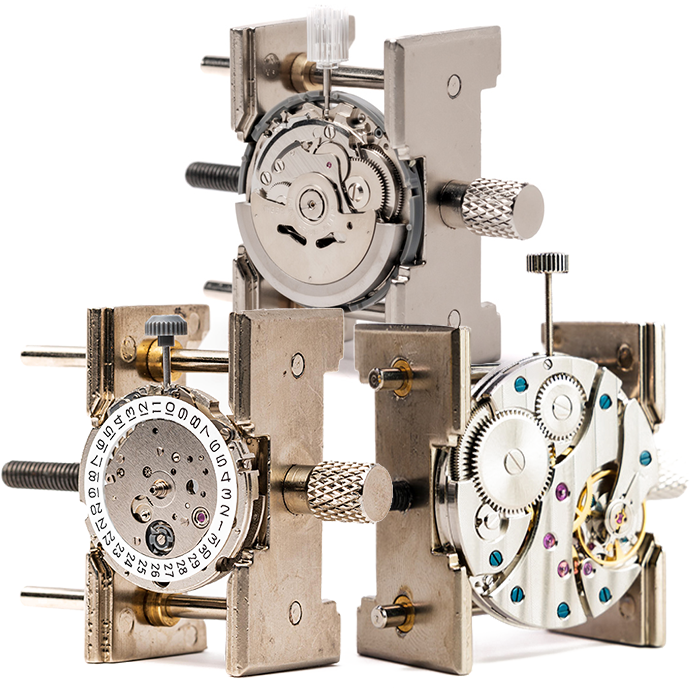
The best manual wind watches are not limited to five-figure price tags. Affordable manual winding watches exist alongside serious luxury pieces, and every budget has excellent options. Anyone who has built a hand-wound movement kit already understands the appeal of powering a watch by hand.
Here are 10 top hand-wound watches at all budgets, from under $700 to high horology.
Entry-Level Under $700
Affordable manual-wind watches prove that quality hand-winding doesn't require a massive budget. Entry-level options from established brands deliver genuine mechanical experiences at prices comparable to mid-range quartz watches.
Watches in this range share common traits that make them great starting points:
- Proven movements with decades of production history
- Simple, legible dial designs focused on readability
- Power reserves between 40 and 80 hours
- Durable stainless steel cases built for daily wear
1. Timex Marlin Hand Wound, $259
The original Marlin first went on the market in 1960 during Timex's U.S. Time Corporation years. When Timex revived the model in 2017, the Marlin became the first mechanical watch the company had made in over 30 years. A 34mm case with a domed acrylic crystal and curvilinear dial numerals captures mid-century charm at a price that invites first-time mechanical buyers.
2. Seagull 1963, Around $350
The Seagull 1963 features the ST19 column-wheel chronograph, one of the most affordable column-wheel chronographs anywhere. Originally created for the Chinese Air Force under Project D304 in the early 1960s, the ST19 descends from tooling acquired from the Swiss Venus caliber 150. For anyone curious about how hand-wound movements work from the inside, a hand-wound movement kit with 40+ components teaches mainspring, gear train, and escapement fundamentals firsthand.
3. Hamilton Khaki Field Mechanical, $675
Hamilton supplied tough, reliable timepieces to American troops starting in World War I, essentially creating the field watch genre. The modern Khaki Field Mechanical draws direct inspiration from the 1960s models built to strict U.S. Defense Department specifications for Vietnam-era troops. The H-50 caliber delivers an 80-hour power reserve, and the classic 12/24-hour dial pairs with a 38mm case and NATO strap, true to the military original.
Mid-Range, $1,000 to $3,000
Mid-range manual-wind watches introduce in-house movements and refined finishing. Brands at this level often manufacture their own calibers, giving each watch a distinct mechanical character.
The jump from entry-level adds polished movement decoration, sapphire crystals, and design heritage rooted in specific watchmaking traditions.
4. Nomos Tangente, Starting Around $1,700
Nomos builds its Alpha caliber (now designated DUW 4001) in-house in Glashütte, Germany. The Bauhaus-inspired design, 35mm case, and available exhibition caseback make this the entry-level manual wind watch for the design-conscious collector. At just 6.2mm thick, the Tangente showcases what removing an automatic rotor allows.
5. Junghans Max Bill Hand-Wound, Starting Around $1,300
Named after the Bauhaus-trained designer who created the original for Junghans in 1961, the Max Bill is pure minimalism. A slim 34mm case, simple dial, and convex plexiglass crystal create a watch that values clarity above everything else. The ETA-based J805.1 caliber delivers a 42-hour power reserve.
6. Tissot PR516 Chronograph Mechanical, Around $2,100
Tissot's PR516 Chronograph Mechanical traces its design back to the Ref. 40528 from the 1970s and features the manually wound Valjoux A05.291. Tissot removed the base movement's automatic rotor and redesigned the mainspring to lock when fully wound, achieving a 68-hour power reserve. A Nivachron balance spring provides strong magnetic resistance. The dual-scale bezel combines a tachymeter and pulsometer, giving the 41mm case a purposeful racing chronograph personality.
Read more about How a Chronograph Works
Luxury, Above $5,000
Luxury manual-wind watches represent the highest expression of hand-winding craftsmanship. Movements at this level feature hand-finished bridges, polished bevels, and proprietary escapement technologies.
What separates luxury hand-wound watches from mid-range options goes beyond materials:
- Hand-finished movement decoration visible through exhibition casebacks
- Proprietary calibers designed exclusively for specific models
- Tighter accuracy tolerances, often within seconds per day
- Heritage traceable to specific historical milestones in watchmaking
7. Omega Speedmaster Professional Moonwatch, $7,800
The Speedmaster was originally flight-qualified by NASA for the Apollo missions, and Buzz Aldrin wore one on the lunar surface in 1969. The standard Moonwatch reference stays faithful to that heritage with a 42mm steel case, Hesalite crystal, and tricompax dial layout. The hand-wound Caliber 3861 features a co-axial escapement, 50-hour power reserve, and Master Chronometer certification with magnetic resistance to 15,000 gauss.
8. Grand Seiko SLGW003, $11,600
Grand Seiko's Caliber 9SA4 is the brand's first manual-wind, high-frequency movement in 50 years. A highly efficient dual-impulse escapement drives 36,000 vibrations per hour with an 80-hour power reserve from twin barrels. The winding click mechanism is shaped like a wagtail bird native to the region near the Shizukuishi studio, and its pecking motion is visible through the sapphire caseback. The 38.6mm Brilliant Hard Titanium case houses a birch bark textured dial inspired by trees growing in northern Japan.
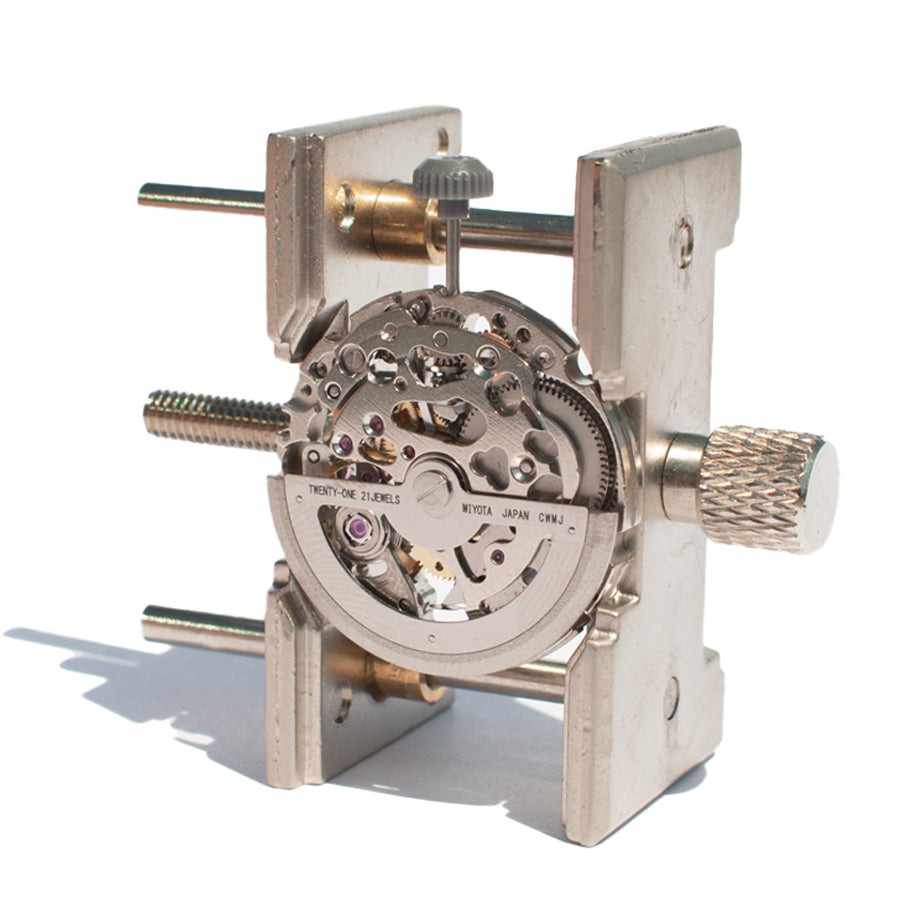
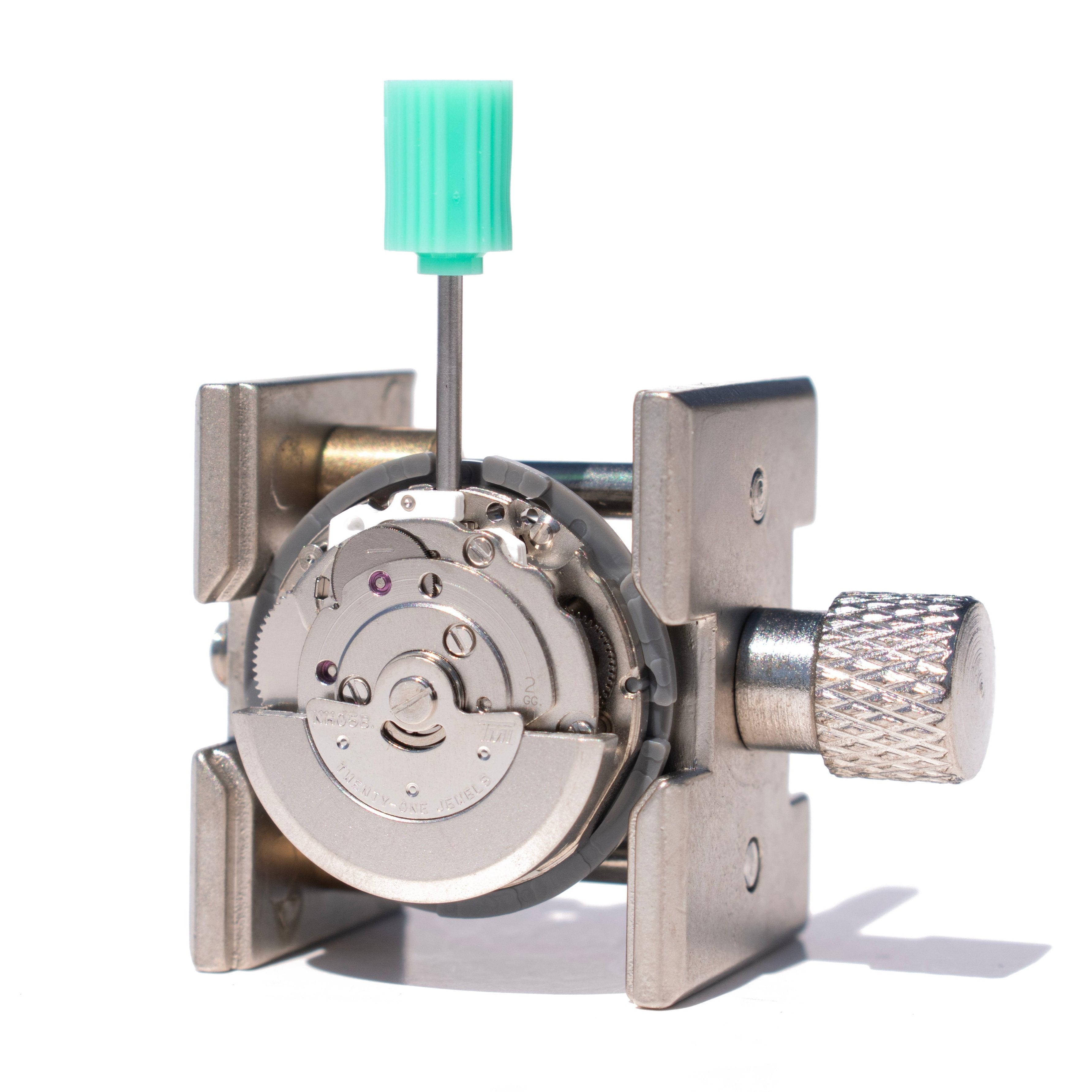
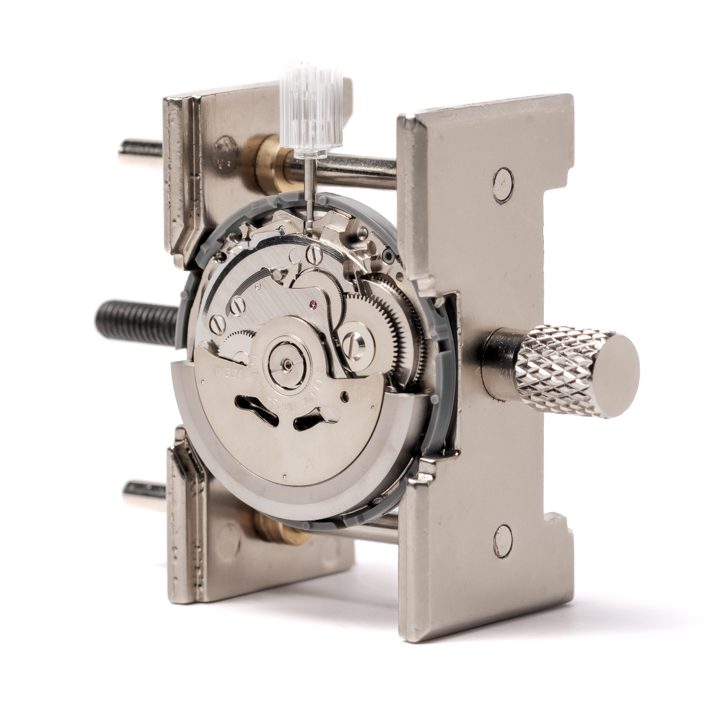
Shop Seiko NH36 - Movement Kit
9. Jaeger-LeCoultre Reverso Tribute Monoface, $11,700
The Reverso's swiveling case was originally designed for polo players in 1931 and has remained in production ever since. The Caliber 822 is a form movement, meaning the mechanism is shaped specifically to follow the rectangular case contours. Art Deco gadroons, Dauphine hands, and trapezoidal hour indexes maintain the classical design language. The Casa Fagliano leather strap connects to the watch's Argentinean polo heritage.
10. A. Lange and Sohne Lange 1, $49,500
The Lange 1 debuted in 1994 when A. Lange & Söhne relaunched after German reunification, reviving a watchmaking house founded by Ferdinand Adolph Lange in 1845. The manually wound Caliber L121.1 delivers a 72-hour power reserve and features a three-quarter mainplate in untreated German silver with Glashütte stripes. The hand-engraved balance cock, swan's neck regulator, and outsize Grande Date at 2 o'clock are unmistakable. Every movement is assembled twice for precision.
Why Manual Winding Still Matters
Manual-wind watches appeal to both collectors and beginners for practical reasons beyond nostalgia. The simplicity of hand-wound construction makes these movements ideal for learning mechanical watchmaking.
Winding takes 20 to 30 seconds each day. That brief moment connects you to the mechanism and separates wearing a watch from checking the time. Manual movements skip the automatic rotor, allowing thinner cases and unobstructed exhibition caseback views. Anyone who has built a DIY watch kit appreciates seeing the full movement without a rotor blocking the view.
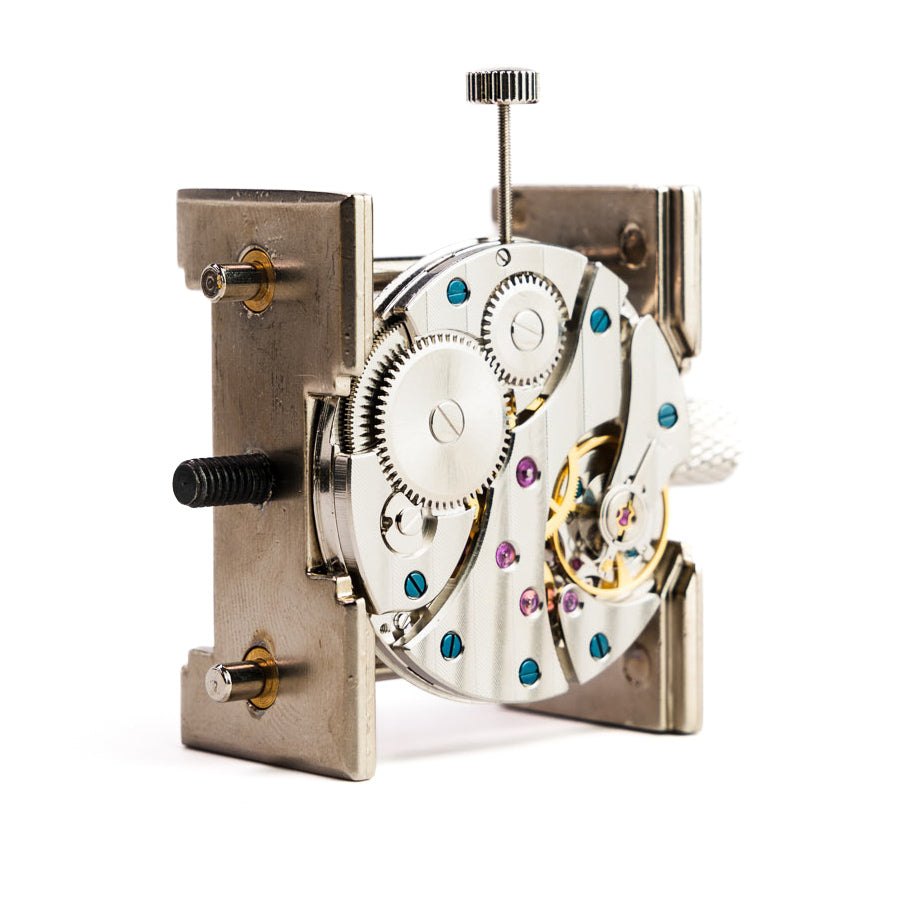
Watchmaking schools start students on hand-wound movements because simpler construction reveals mechanical principles. A hand-wound movement kit with 40+ components is the fastest way to understand mainsprings, gear trains, and escapements firsthand.
Conclusion
Manual-wind watches span every price point. What unites them is the winding ritual and direct connection to traditional mechanics.
Rotate Watches offers watchmaking kits and movement kits that let you build a mechanical watch from scratch with tools, guides, and expert support. Starting with a hand-wound build teaches the same fundamentals that power every watch on this list.
Frequently Asked Questions
Q1. What is a manual-wind watch?
A manual-wind watch uses a mainspring wound by hand through the crown. Turning the crown stores energy that powers the movement. Unlike automatic watches, manual-wind models require daily winding to keep running.
Q2. How often do you need to wind a manual watch?
Most manual watches need winding every 24 to 48 hours. Some modern calibers, like the Hamilton H-50 and Grand Seiko 9SA4, offer 70 to 80-hour reserves. Winding at the same time each day helps maintain consistent accuracy.
Q3. Are manual-wind watches less accurate than automatics?
No. Accuracy depends on movement quality, regulation, and manufacturing tolerances, not the winding method. A well-regulated hand-wound movement performs identically to an automatic, using the same escapement technology.
Q4. What is the most affordable entry-level manual wind watch?
The Timex Marlin Hand Wound at $259 is one of the most accessible quality options. Seagull 1963 chronographs start around $200, depending on the version, offering column-wheel chronograph functionality at remarkable value.
Q5. Can automatic watches be wound manually?
Yes. Most modern automatic movements include manual winding through the crown. Pulling the crown to the winding position and turning clockwise charges the mainspring the same way a dedicated manual-wind movement works.
Q6. Why are manual-wind watches popular with collectors?
Collectors value the daily winding ritual, thinner case profiles, and unobstructed views of the movement through exhibition casebacks. Hand-wound calibers also tend to have cleaner movement architecture since they lack the automatic winding module.