
What Is a Chronograph and How Does It Work?
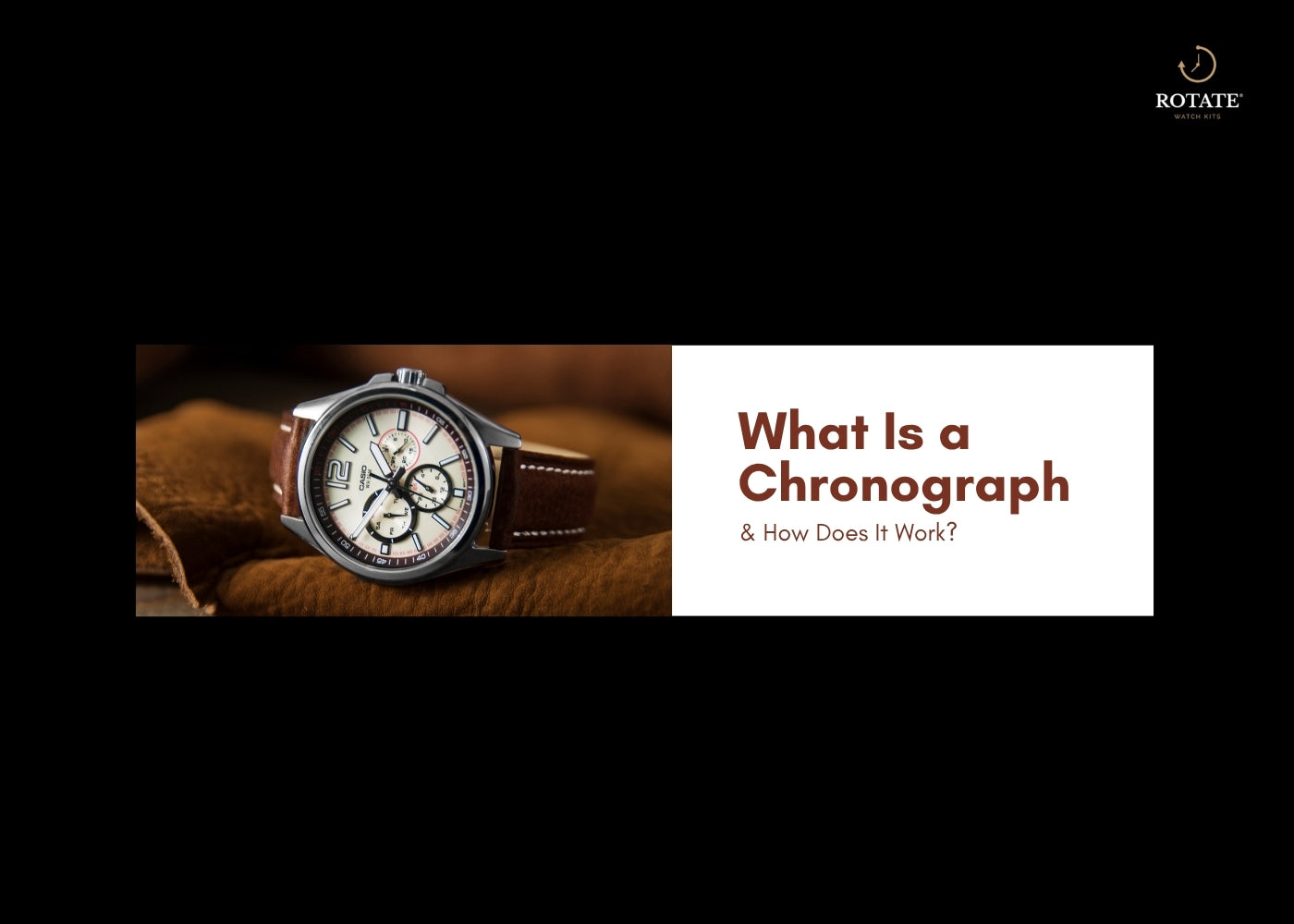
A chronograph is one of those watch terms that sounds complicated but really is not. At its simplest, a chronograph is a watch with a built-in stopwatch. Press a button, time something, press it again. That is the core idea.
What makes chronographs fascinating is how that simple function is achieved through gears, levers, and springs, all packed into a wristwatch case. From timing horse races in the 1820s to tracking laps at Le Mans today, the chronograph has remained one of the most popular and practical watch complications ever made. This chronograph watch guide covers how it actually works, what the parts do, and why it remains essential for watch enthusiasts.
The Basics of a Chronograph Watch
So what is a chronograph, exactly? A chronograph combines standard timekeeping with an independent timing function. Two systems run side by side inside the same watch. Understanding how a chronograph works starts with knowing what separates it from a regular timepiece.
What Makes It Different from a Regular Watch
A standard three-hand watch shows hours, minutes, and seconds. A chronograph adds a separate set of hands and sub-dials dedicated to measuring elapsed time. The stopwatch function operates independently, so starting and stopping the timer does not affect the regular timekeeping. Anyone interested in mechanical watch movements will recognize this as an additional layer on top of the base caliber.
The Key Components at a Glance
Every chronograph watch has three main elements beyond the standard time display:
- Pushers: Two buttons on the side of the case, usually at 2 o'clock and 4 o'clock
- Central seconds hand: A large seconds hand for the stopwatch function
- Chronograph sub-dials: Small dials on the face showing elapsed minutes and hours
For a clear picture of where these parts sit within a complete timepiece, the anatomy of a watch guide breaks down everything from the case and crystal to the crown — useful context before going deeper into how the chronograph layer works on top."
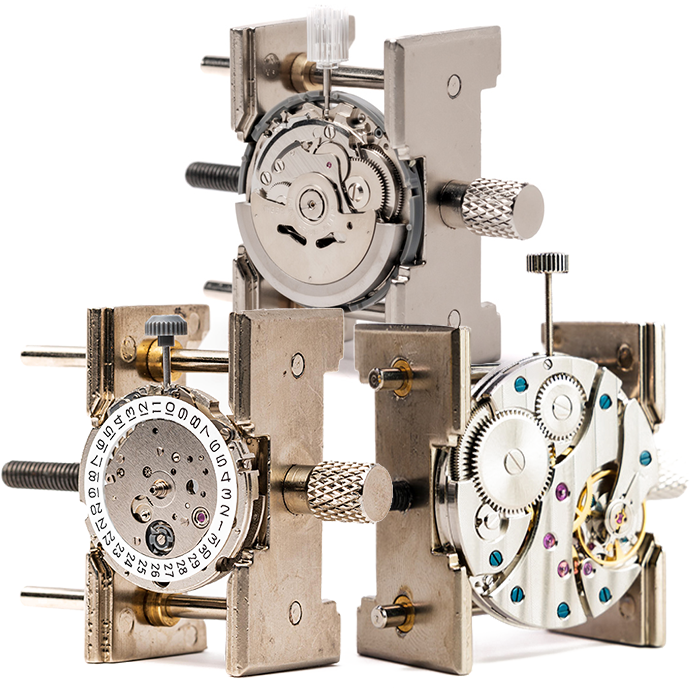
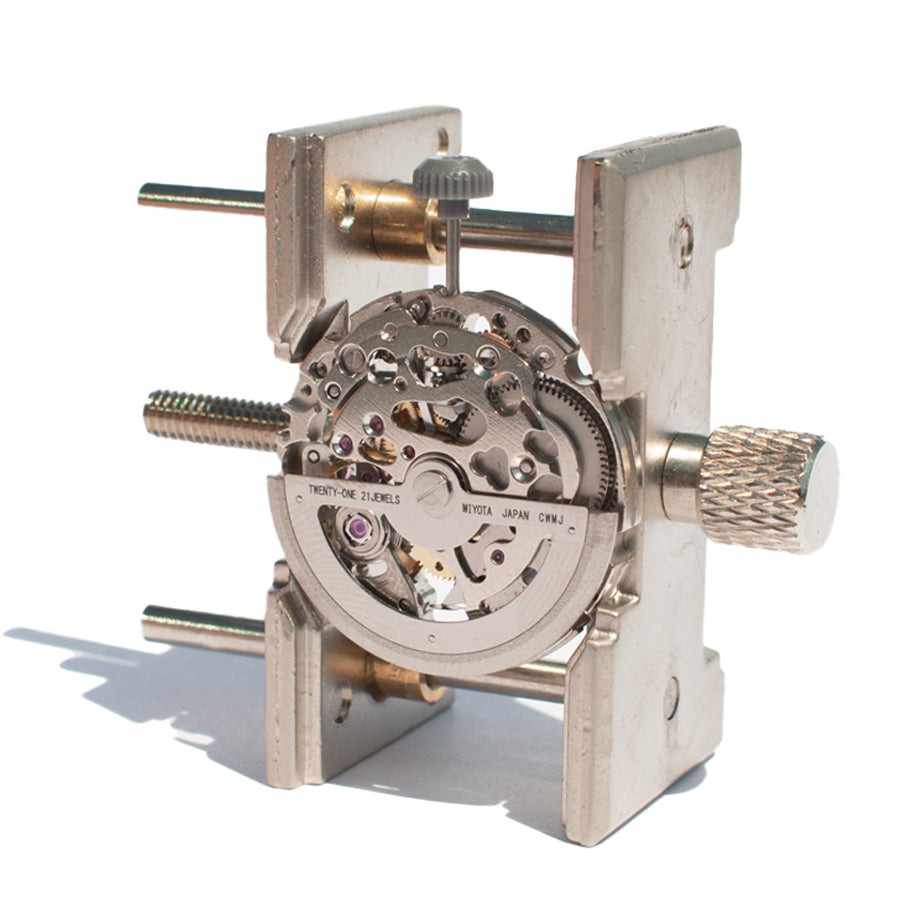
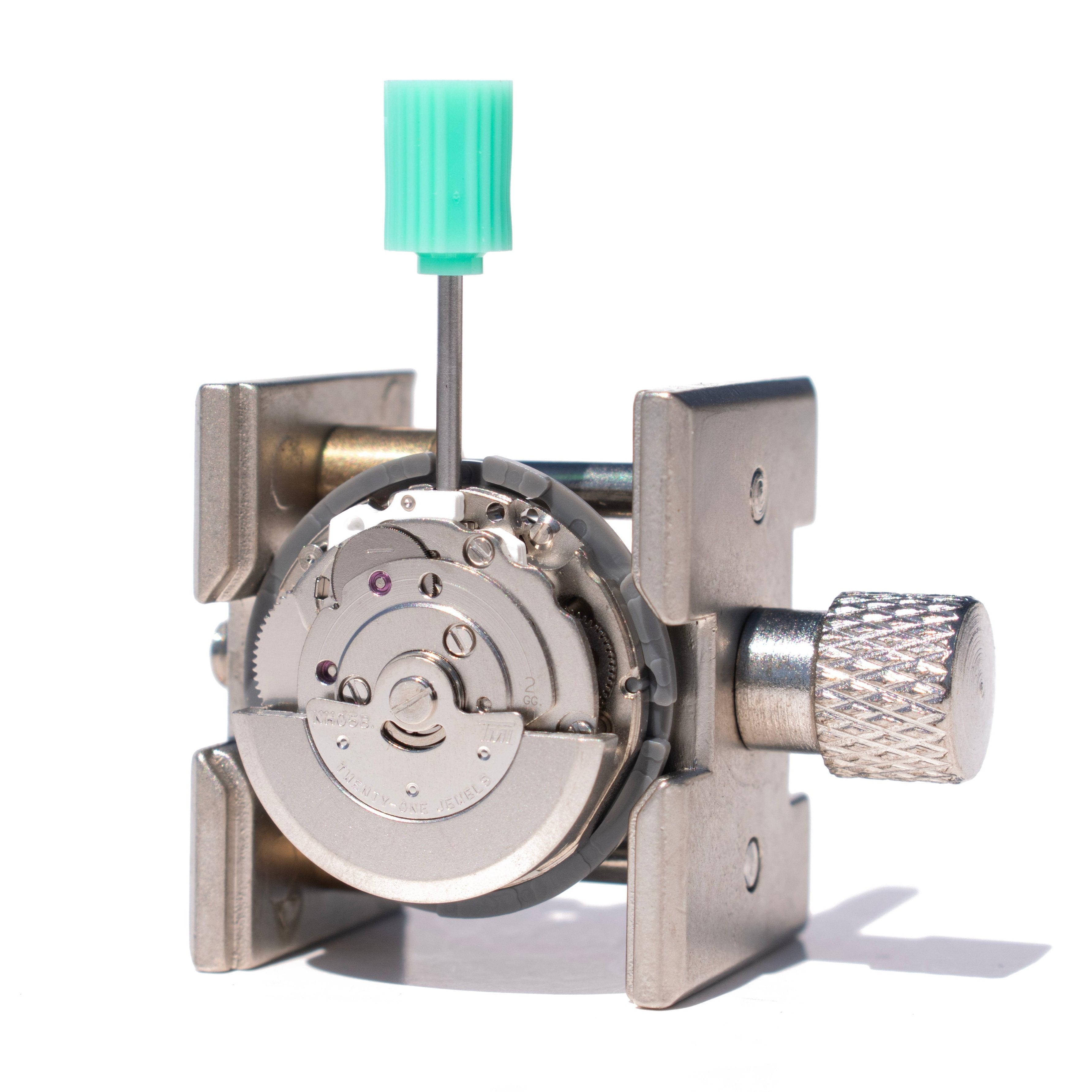
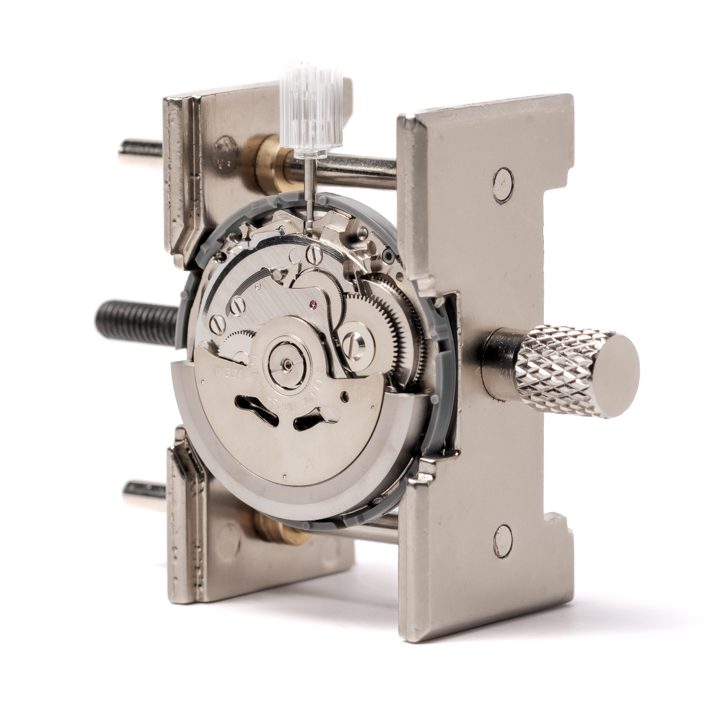
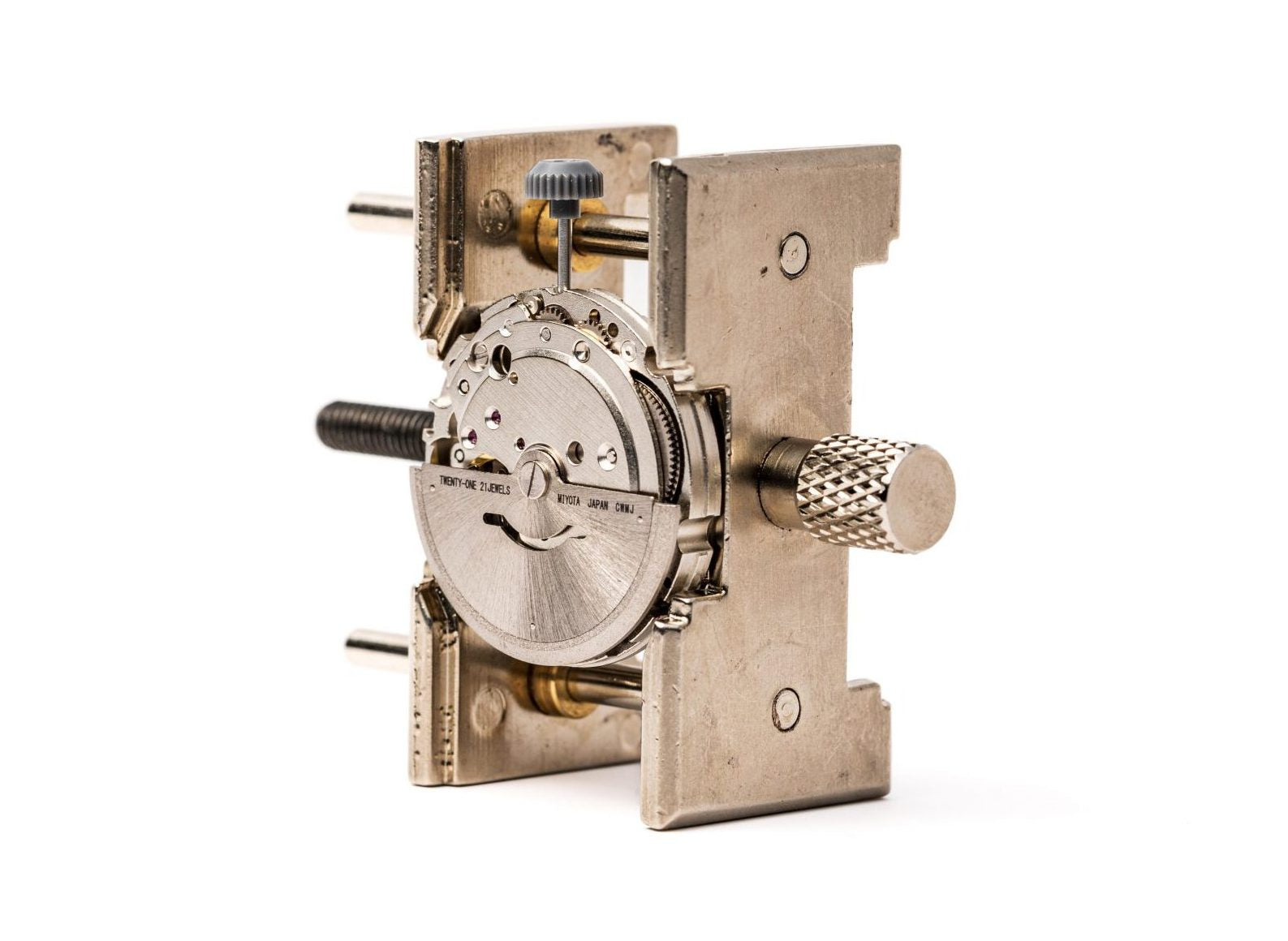
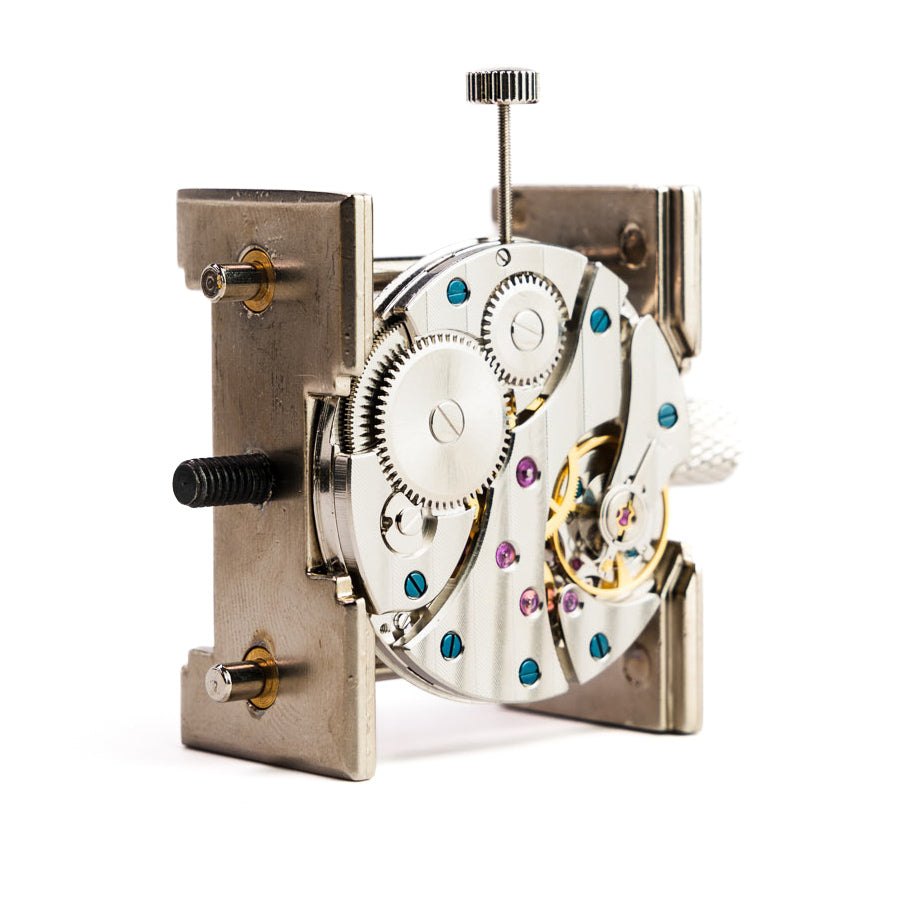
Want to see these components up close? Explore our guide on top watch movement kits to disassemble and reassemble a real mechanical caliber and understand exactly how each part connects.
The top pusher starts and stops the stopwatch. The bottom pusher resets it. When the chronograph is not running, the central seconds hand sits motionless at 12 o'clock.
How the Stopwatch Function Works
Using a chronograph is as straightforward as using a kitchen timer. The mechanical engineering inside, however, is remarkably clever.
The chronograph is one of several functions that watchmakers have layered onto a base movement over centuries. To see how other complications like perpetual calendars, moon phases, and tourbillons are built alongside it, the guide to mechanical watch complications covers all of them in depth.
Starting, Stopping, and Resetting
Press the top pusher once to start the chronograph. The central second hand begins sweeping around the dial, counting elapsed seconds. Press the top pusher again to stop it. The chronograph sub-dials track elapsed minutes and, on some models, elapsed hours. Press the bottom pusher to reset everything back to zero.
What the Sub-Dials Tell You
Most chronographs have two or three sub-dials. A two-register (bicompax) layout shows elapsed minutes and continuous seconds. A three-register (tricompax) layout adds an elapsed hours counter. The continuous seconds sub-dial tells you the watch is running normally even when the chronograph is stopped.
The Tachymeter Scale
Many chronographs include a tachymeter scale printed around the outer edge of the dial or on the bezel. The tachymeter measures speed over a known distance. Start the chronograph at a mile marker, stop it at the next one, and the tachymeter scale shows your speed in units per hour.
Types of Chronograph Watches
Not all chronographs are built the same. Different types suit different needs.
Standard Chronograph
The most common type uses two pushers, one to start and stop, one to reset. The Omega Speedmaster and Rolex Daytona both use this layout. Simple, reliable, and intuitive. Perfect for everyday timing tasks.
Flyback Chronograph
A flyback chronograph lets the wearer reset and restart timing with a single press of the lower pusher, skipping the stop step entirely. Pilots and racing professionals favor this type because it eliminates delays between consecutive timing events.
Practical Uses in Everyday Life
You do not need to be a pilot or racecar driver to find a chronograph useful. The chronograph function adds everyday practicality that goes well beyond sports.
Fitness and Sports
Timing runs, laps, intervals, and rest periods. A chronograph on your wrist works without reaching for your phone, and it never needs charging. Mechanical watchmaking kits teach the same principles that power these complications.
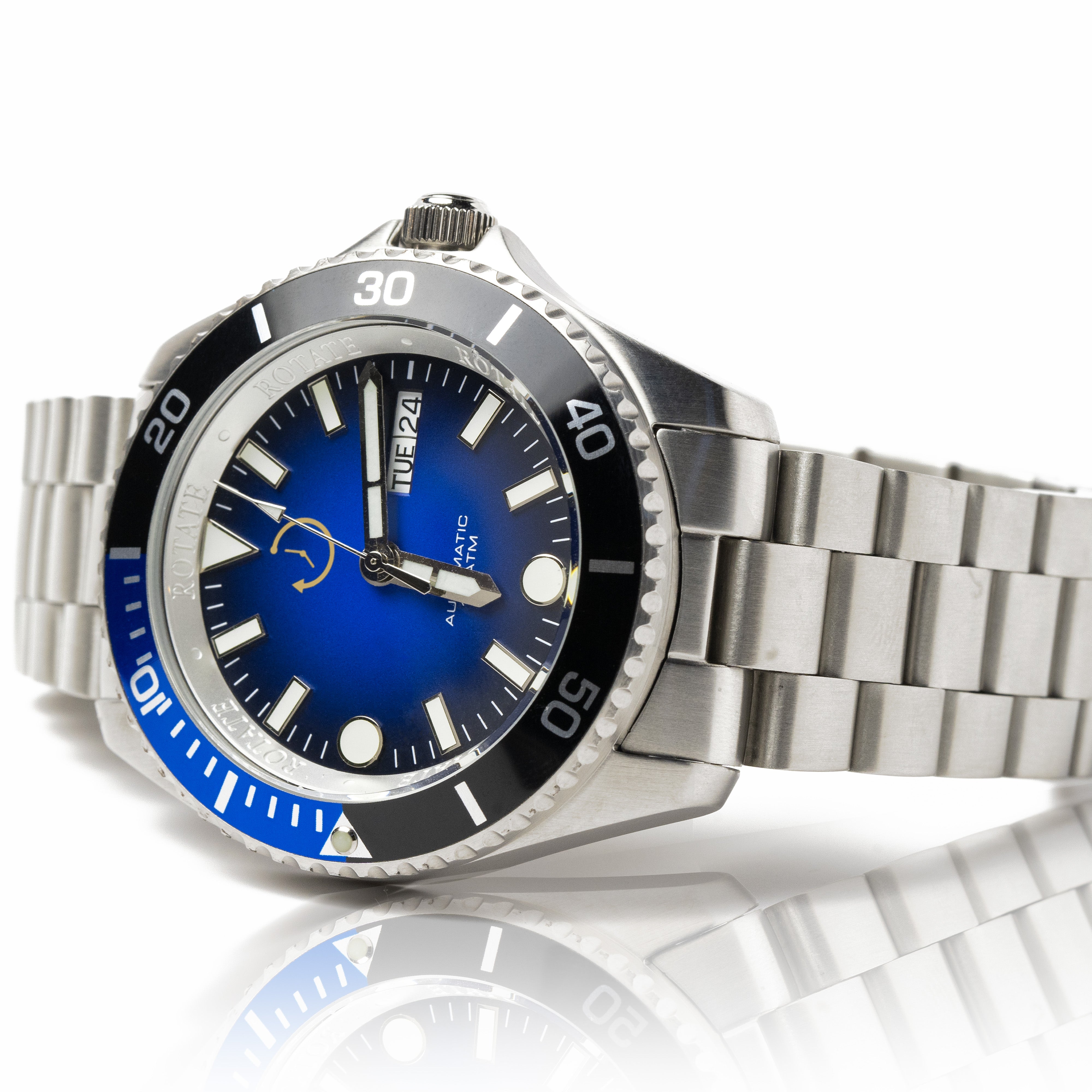
If the sports watch form factor appeals to you, the Cabot Watchmaking Kit lets you build your own mechanical sports watch from scratch — rotating bezel, 10 ATM water resistance, and a deep-sea blue dial included.
Cooking and Daily Tasks
Parking meters, laundry cycles, cooking times, and meeting lengths. Quick timing tasks come up more often than most people realize, and a chronograph handles them all with a single button press.
Just for the Love of Mechanics
Many people wear chronographs simply because they appreciate the engineering. Watching the sweep of a mechanical chronograph's seconds hand is satisfying in a way a digital timer cannot match. Understanding how a chronograph works builds a deeper appreciation for mechanical watchmaking as a whole.
That appreciation goes further when you understand how watchmaking itself got here. The evolution of watch movements traces the journey from early spring-driven pocket watches to the modern calibers that make a complication like this possible."
Conclusion
A chronograph is simply a watch with a built-in stopwatch, but the engineering behind it is anything but simple. From standard two-pusher designs to complex rattrapante movements, chronographs combine everyday practicality with impressive mechanical craftsmanship.
Curious about how watch movements work from the inside with a DIY watch kit? Rotate Watches's DIY movement kit lets you disassemble and rebuild a real mechanical caliber, giving you a firsthand look at the gears and springs that power every complication. Browse the full collection of watchmaking kits to find the right starting point.
FAQs
Q1. What is the difference between a chronograph and a chronometer?
A chronograph is a watch with a stopwatch function. A chronometer is a watch certified for high accuracy by an independent testing organization. A watch can be both.
Q2. Does running the chronograph drain the battery faster?
In quartz watches, running the chronograph continuously may reduce battery life slightly. In mechanical watches, it adds wear to the movement components over time.
Q3. Can I leave the chronograph running all the time?
You can, but it is not recommended for mechanical chronographs. Continuous operation increases wear on internal parts. Stop and reset the chronograph when not actively timing.
Q4. What is a tachymeter on a chronograph?
A tachymeter is a scale around the dial edge that calculates speed. Time is something over one mile or a kilometer, and the scale shows units per hour.
Q5. Are chronograph watches more expensive than regular watches?
Generally, yes. The additional components required for the stopwatch function add complexity and cost, especially in mechanical chronographs.
Q6. Who invented the chronograph?
Louis Moinet built the first known chronograph in 1816 for astronomical observations. Nicolas Rieussec created the first inking chronograph in 1821, testing it at a Paris horse race. The French Academy of Sciences formally named his device a "chronograph," establishing the term still used today.