

What is a gear train in a mechanical watch?
Every mechanical watch runs on stored energy. A coiled mainspring holds that energy, and the escapement regulates its release. But how does power travel between those two endpoints?
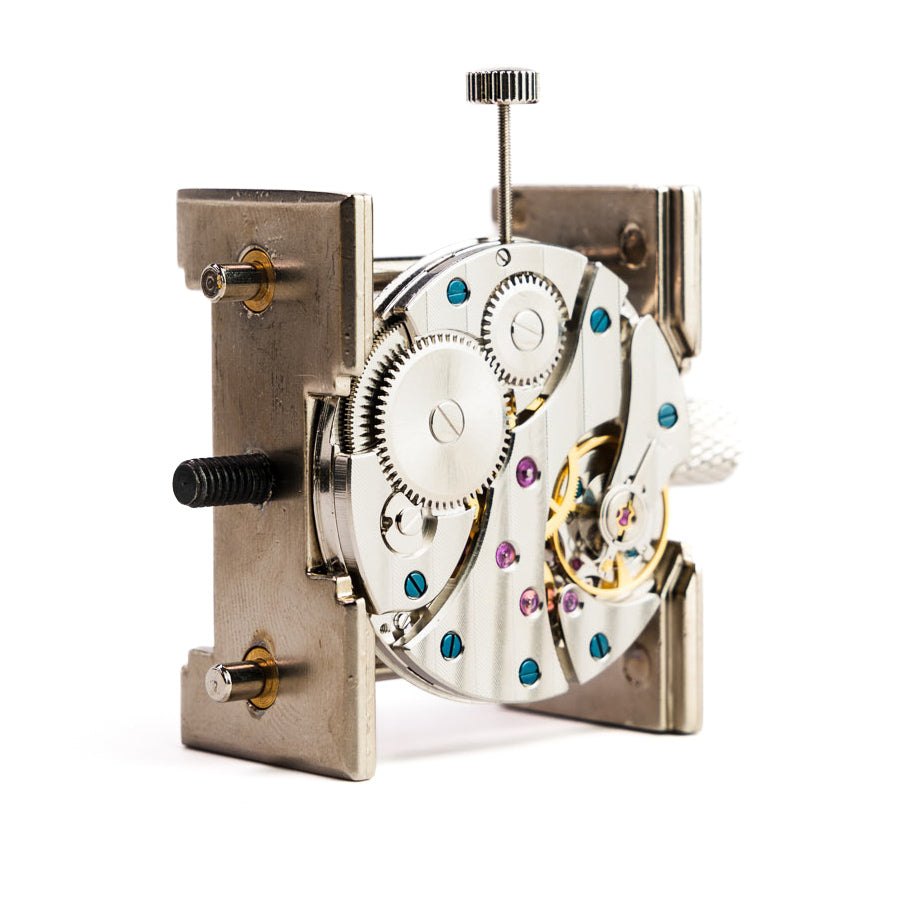
The answer is the gear train. Also called a wheel train, a gear train in a mechanical watch is the series of interlocking wheels and pinions that carries energy from the mainspring barrel to the escapement. Without it, a mechanical watch movement would have no way to translate spring tension into the steady tick of a seconds hand.
How the Gear Train Works Inside a Watch
A watch gear train acts like a transmission in a car. The mainspring unwinds slowly, so the gear train speeds up that rotation step by step until the escapement receives energy at the right pace.
Gear trains have powered mechanical watches since the earliest portable clocks in the 15th century. The basic architecture, a series of wheels and pinions transferring energy from barrel to escapement, has stayed remarkably consistent for over 500 years. Modern manufacturing simply refines what early clockmakers established.
The Going Train Breaks Down Power Step by Step
The main gear train, called the going train, has five key components. Each spins faster than the one before:
- Mainspring barrel: Receives energy from the wound mainspring and rotates slowly
- Center wheel: Turns once per hour and drives the minute hand
- Third wheel: Passes energy from the center wheel to the fourth wheel
- Fourth wheel: Turns once per minute and drives the seconds hand
- Escape wheel: Delivers energy pulses to the pallet fork, which transmits them to the balance wheel
The watch gear train function is speed multiplication. A slow-turning barrel becomes a fast-spinning escape wheel through calculated gear ratios.
Watches with complications like date displays or chronographs add separate gear trains beyond the going train. Each complication requires its own set of wheels and pinions to operate independently without disrupting timekeeping.
Wheels and Pinions Work as Partners
Each stage in the wheel train in a watch has a larger wheel and a smaller pinion. The wheel has more teeth and turns slowly. The pinion has fewer teeth and turns quickly. Wheels are usually brass for their machinability and corrosion resistance. Pinions are typically steel for hardness and wear resistance. The shafts holding them, called arbors, rotate inside jewel bearings to reduce friction.
Watch gears use cycloidal tooth profiles rather than the involute profiles found in industrial machines. Cycloidal shapes create rolling contact with minimal sliding friction, keeping energy loss low across the entire gear train.
The Motion Work Drives the Hour Hand
A separate mini gear train called the motion work sits between the dial and the movement. The center wheel drives the minute hand directly. The motion work reduces that speed by 12:1 to turn the hour hand once every 12 hours. When you pull the crown to set time, a clutch disconnects the winding system and connects the motion work instead.
Why the Gear Train Matters for Accuracy
A well-made gear train keeps time accurately and protects the movement from wear.
Gear Ratios Divide Time Into Readable Units
A mechanical watch gear train, explained simply, converts the barrel's slow rotation into precise time divisions. The center wheel turns once per hour for minutes. The fourth wheel turns once per minute for seconds. If any ratio is off, the watch gains or loses time. Accuracy in a DIY watch-building kit depends on properly seated wheels meshing cleanly with their pinions.
The gear train also smooths out torque fluctuations from the mainspring, delivering consistent energy to the escapement even as spring tension decreases over the power reserve.
Jewel Bearings Reduce Friction
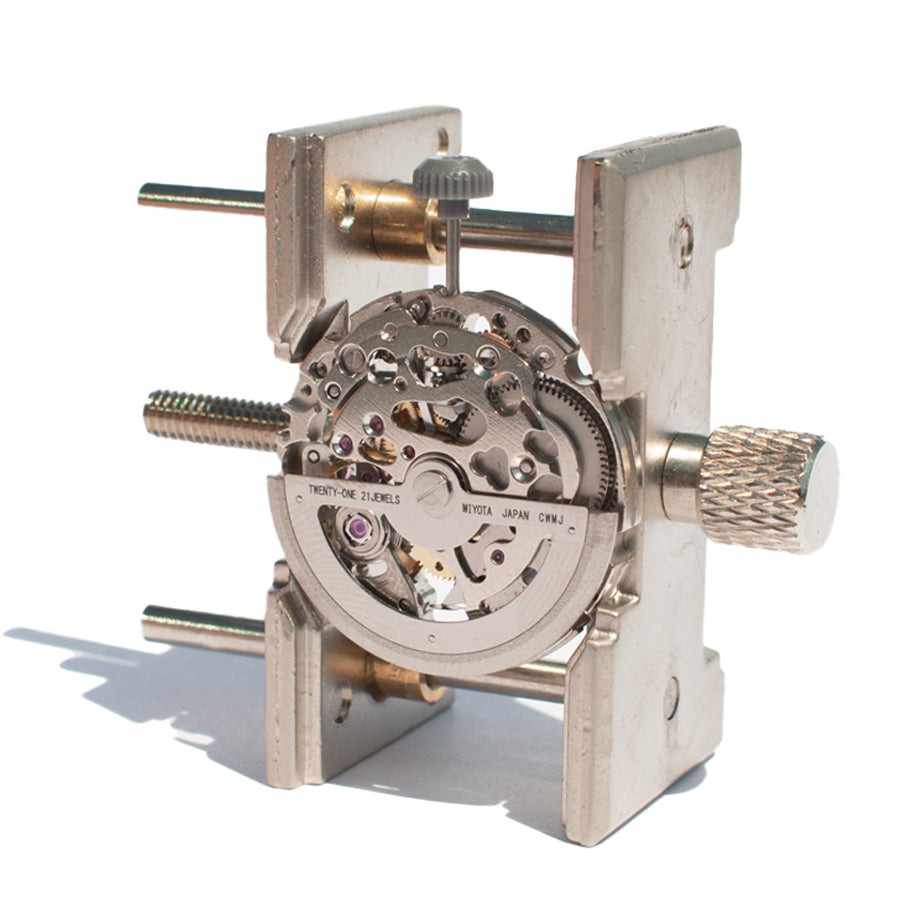
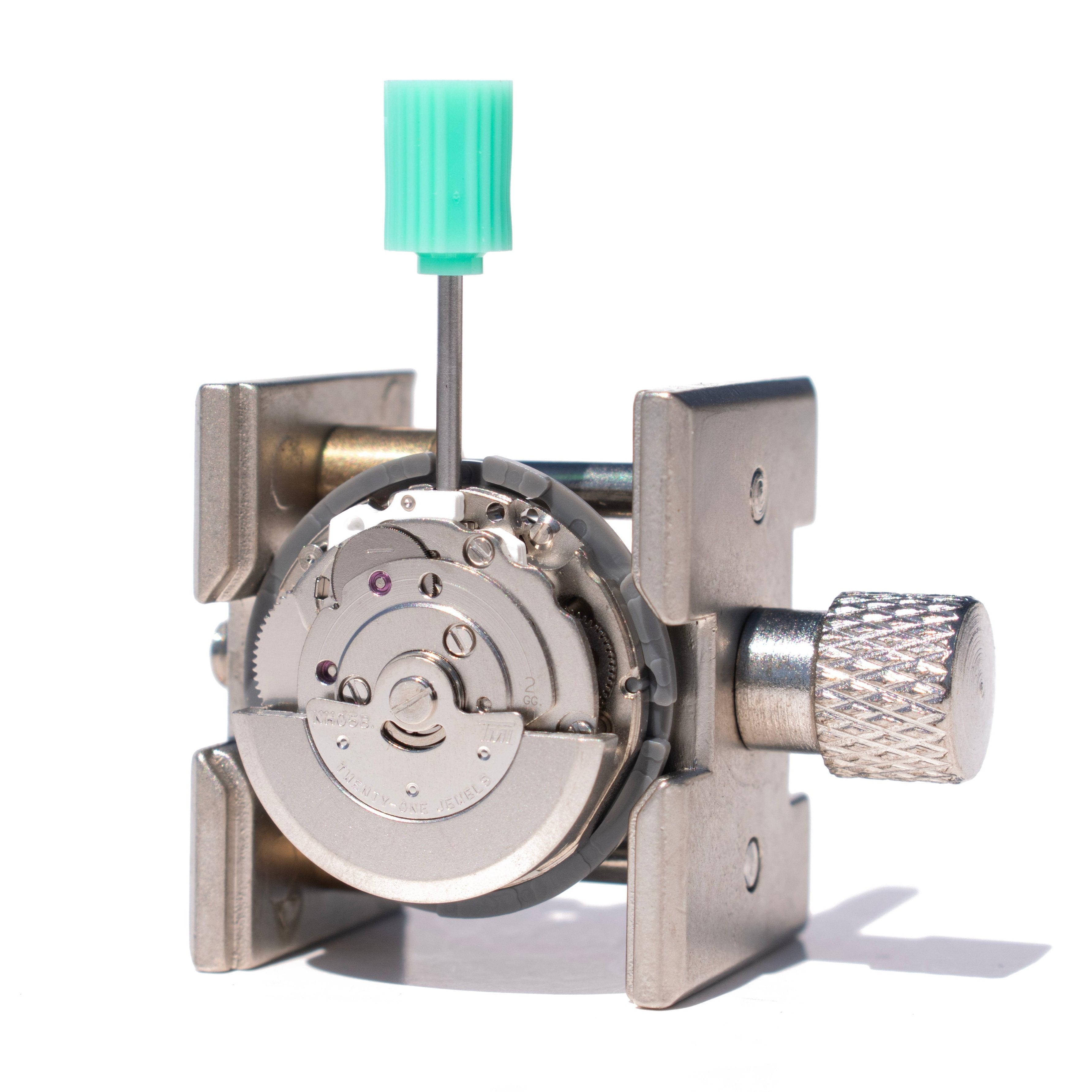
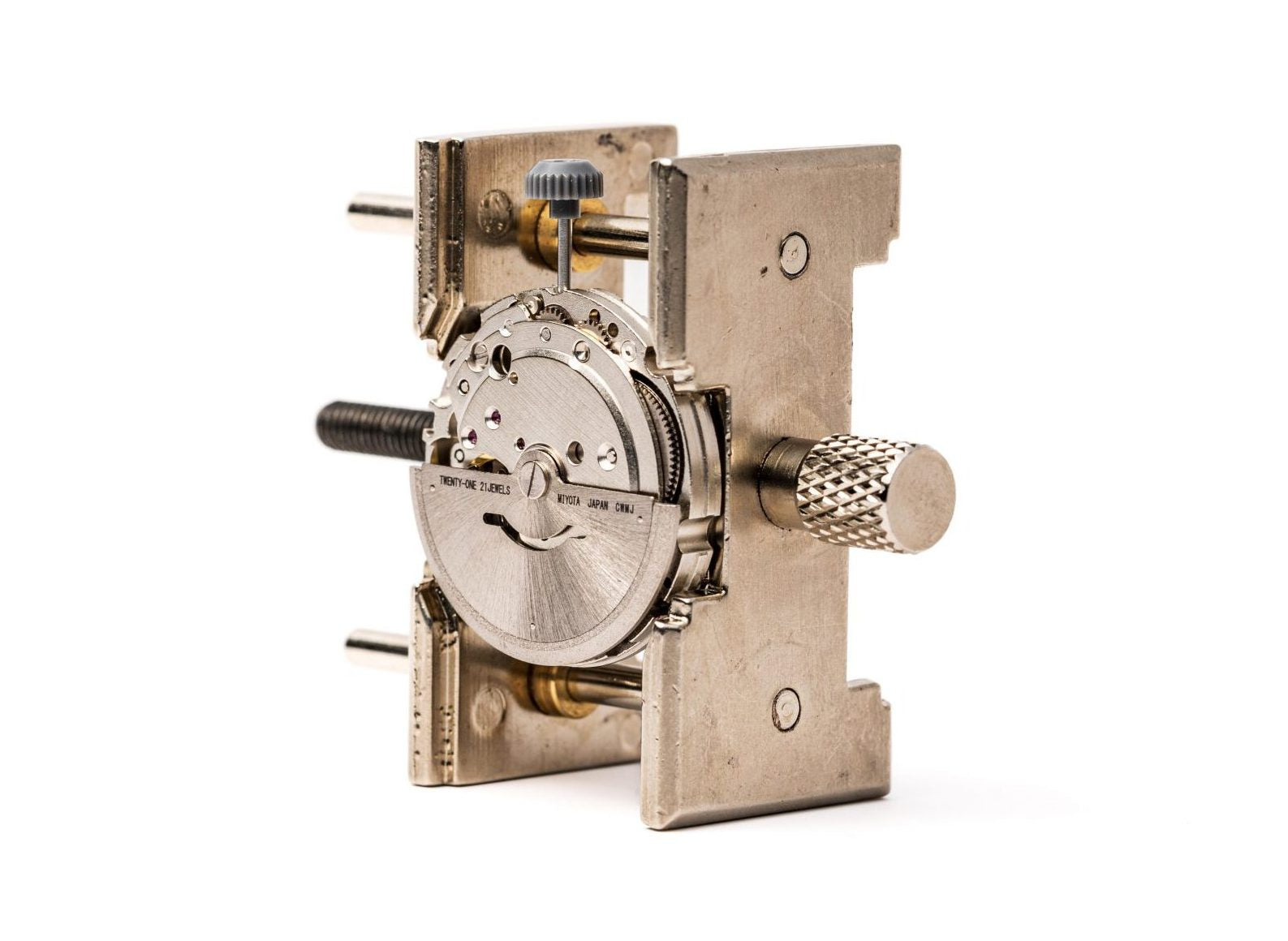
Synthetic corundum jewel bearings at each pivot point reduce friction and energy loss. A hand-wound movement like the Seagull ST3600 uses 17 jewels. More complex automatic movement kits use 21 or 24 jewels for additional protection.
What Happens When a Gear Train Has Problems
Gear train issues show up as timekeeping errors or complete movement failure. A bent arbor, a missing jewel, or debris between teeth can halt the system.
Common Signs of Trouble
- The watch stops randomly despite a wound mainspring
- Timekeeping accuracy drops significantly day to day
- The seconds hand stutters instead of sweeping smoothly
Regular servicing keeps the gear train lubricated and free of dust. Most watchmakers recommend service every three to five years.
Hands-On Learning Makes It Click
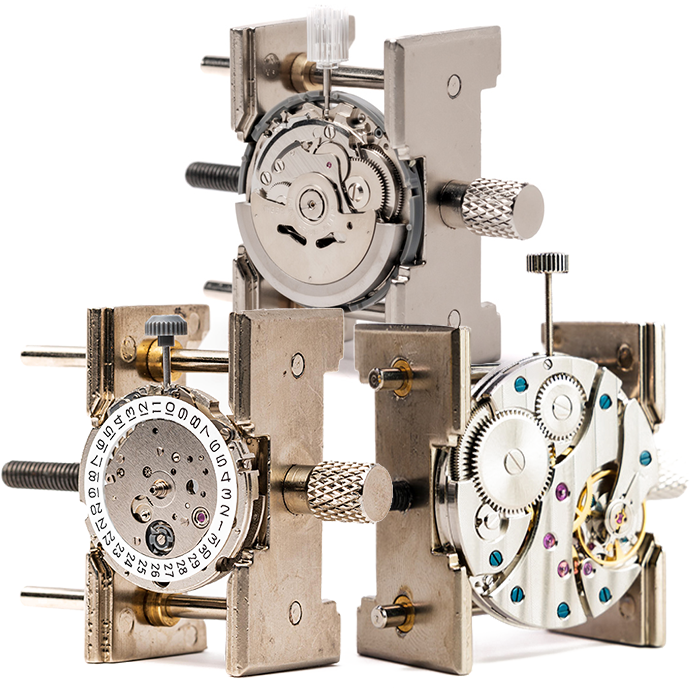
Building a movement is one of the fastest ways to understand how a gear train works in a watch movement. A hand-wound movement kit walks you through each stage. The Seagull ST3600's 40+ components are arranged simply enough to follow the energy path from barrel to escapement.
Conclusion
The gear train is the backbone of every mechanical watch. Each meshing pair of wheels and pinions delivers energy and divides time into hours, minutes, and seconds.
Rotate Watches watchmaking kits and movement kits include tools, components, and step-by-step guides for hands-on learning.
FAQs
Q1. What is a gear train in a mechanical watch?
A gear train is a series of interlocking wheels and pinions transferring energy from the mainspring barrel to the escapement. Each wheel spins faster than the one before, multiplying speed step by step. The gear ratios divide rotation into readable time units: hours, minutes, and seconds.
Q2. How many wheels are in a typical watch gear train?
Most going trains have five: the mainspring barrel, center wheel, third wheel, fourth wheel, and escape wheel. The center wheel turns once per hour to drive the minute hand. The fourth wheel turns once per minute for the seconds hand. Watches with date displays or chronographs add extra wheels beyond these five.
Q3. What is the difference between a wheel and a pinion?
A wheel is the larger gear with more teeth that rotates slowly. A pinion is the smaller gear with fewer teeth that rotates quickly. Wheels are typically brass, while pinions are steel for hardness and wear resistance. Each wheel meshes with the next pinion, stepping up speed at every stage.
Q4. Why do watches have jewel bearings?
Jewel bearings reduce friction at pivot points where arbors rotate under constant load. Less friction means less energy loss between the mainspring and escapement, improving accuracy. Synthetic corundum jewels are extremely hard and maintain smooth surfaces for decades. Hand-wound movements use 17 jewels, while automatic movements use 21 or more.
Q5. Can a damaged gear train be repaired?
Yes. A qualified watchmaker can replace individual wheels, pinions, or arbors without replacing the entire movement. Common problems include bent pivots, worn teeth, and debris between meshing surfaces. Servicing every three to five years catches issues early before they cause bigger failures.
Q6. What is the motion work in a watch?
The motion work is a small 12:1 reduction gear set between the dial and the movement. The center wheel drives the minute hand at one rotation per hour. The motion work slows that rotation so the hour hand completes one full turn every 12 hours.