
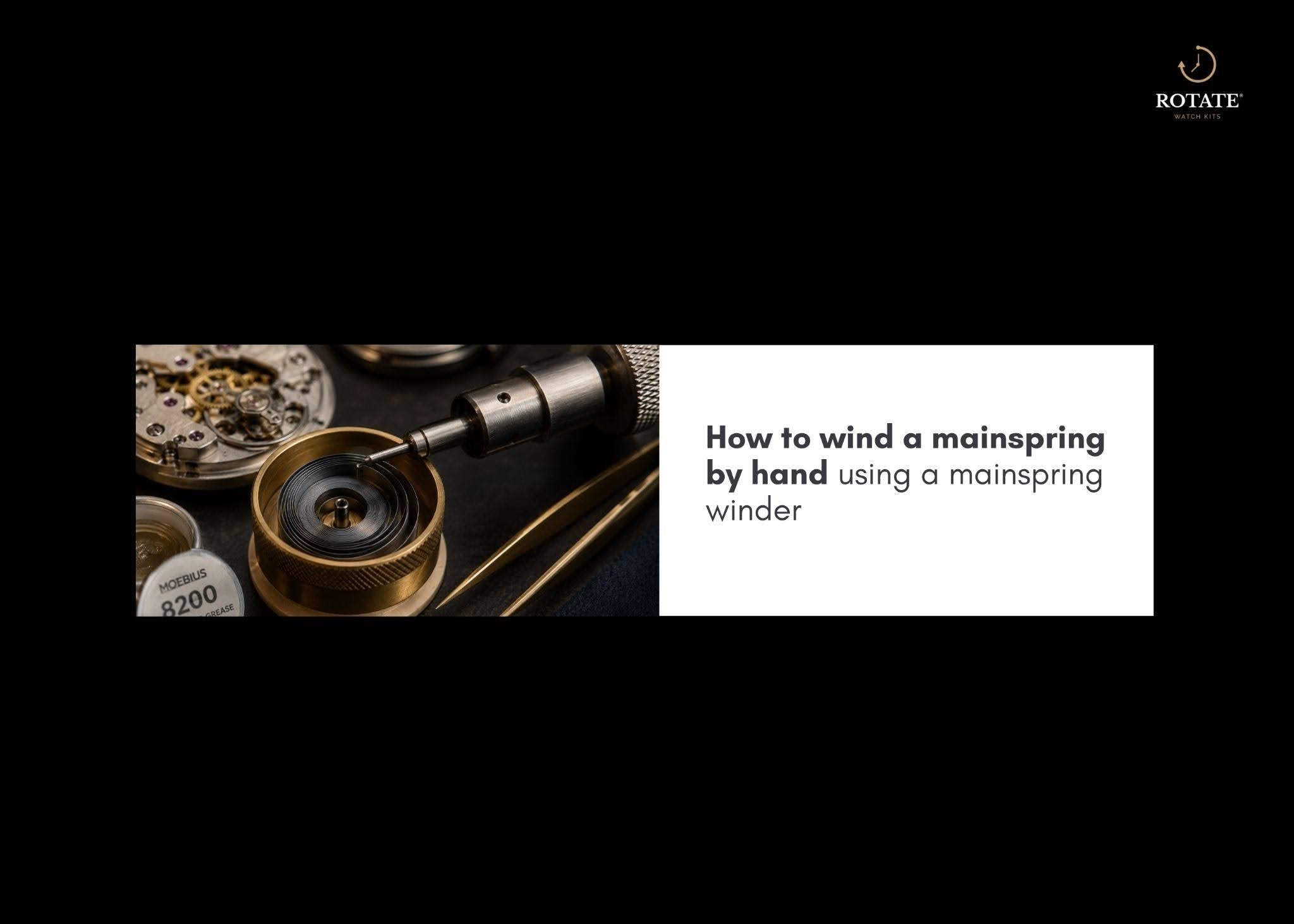
How to wind a mainspring by hand using a mainspring winder
The mainspring is the engine of every mechanical watch. Coiled inside the barrel, it stores energy to power the gear train, balance wheel, and hands for 40 or more hours. For anyone servicing movements or working through a movement kit, the mainspring must come out for cleaning and lubrication, then go back in without damage.
Winding a mainspring by hand alone is risky. The spring can cone, kink, or escape your grip. A mainspring winder eliminates these problems by coiling the spring evenly and transferring it cleanly into the barrel.
Read more about-difference between the balance wheel and the hairspring
Key Takeaways
- A mainspring winder prevents coning, kinking, and spring escape during installation
- Match the winder barrel to your watch barrel for a snug, accurate fit
- Lubricate the barrel wall and mainspring before winding
- Hand-wound and automatic mainsprings require different handling and grease types
- Back-wind two to three turns before removing the arbor to prevent spring escape
What Should You Know Before Winding a Mainspring?
How a Mainspring Stores Energy
The mainspring is a long, thin strip of high-tensile metal. Modern movements use specialized alloys like Nivaflex (a cobalt-nickel alloy developed by Nivarox-FAR) rather than traditional carbon steel. As the spring unwinds, it releases stored energy through the gear train.
Why Proper Installation Matters
A mainspring that cones creates friction against the barrel walls, wasting energy and reducing power reserve. A mainspring winder keeps the spring flat and evenly coiled.
Safety First
Mainsprings store significant energy. A spring that escapes can whip across the bench with enough force to cause injury. Before opening any barrel, let down the mainspring by releasing tension through the crown and click mechanism. Rotate's movement kits include finger cots for safe mainspring handling during this process.
How Do You Identify the Winding Direction?
Note which direction the spring coils from the center before removing it. Most watch mainsprings wind clockwise, but Japanese and Chinese movements frequently use left-hand winding. Always verify direction before selecting your winder arbor.
Winder sets include arbors marked with red dots (right-hand/clockwise) and blue dots (left-hand/counterclockwise) per Bergeon's color-coding system. Select the arbor matching your spring's direction.
How Do You Select the Correct Barrel Size?
Hold each winder barrel against the inside of your watch barrel. The correct size fits snugly without being larger. Too large, and the spring will not transfer. Too small, and the spring expands during transfer.
Why Does Mainspring Lubrication Matter?
Apply a thin coat of mainspring grease (Moebius 8200 or 8300, per Moebius Swiss lubrication specifications) to the inner barrel walls. Also lubricate the mainspring itself using oiling tweezers or by drawing it through a lightly greased cloth.
Hand-wound and automatic mainsprings require different handling:
|
Feature |
Hand-Wound (ST3600) |
Automatic (8215, NH36) |
|
Outer end |
Fixed hook or tongue |
Slipping bridle |
|
Barrel grease |
Standard mainspring grease |
Heavier braking grease |
|
At full wind |
Hard stop |
Bridle slips continuously |
Match lubrication and technique to the mainspring type in your project.
How Do You Assemble a Mainspring Winder?
Setting Up
- Insert the winding barrel into the main handle, aligning the peg with the slot
- Fit the winding arbor into the barrel. A vice frees both hands for the next steps
- Hook the mainspring's inner end onto the arbor hook
Confirming the Direction
The spring loads in the opposite direction from how it winds in the barrel. Most winders stage the spring from the floor side. If the spring spirals clockwise in the barrel, it loads counterclockwise onto the arbor.
How Do You Wind the Mainspring Into the Winder?
Turn the winding handle slowly and steadily once the spring is hooked onto the arbor.
- Turn in smooth, even rotations
- Maintain gentle tension as the spring coils into the winder barrel
- Keep the spring flat, watching for any tendency to ride up or down
Slow, consistent winding produces a flat coil. Fast winding risks kinking or coning.
How Do You Transfer the Mainspring to the Watch Barrel?
Making the Transfer
- Back the handle two to three turns to release tension before removing the arbor
- Carefully remove the arbor, watching for the spring catching on the hook
- Place the winder barrel on top of the open watch barrel, aligning them
- Press the plunger to push the mainspring into the watch barrel
- Listen for a click confirming the spring has seated
Verifying the Installation
Check that the outer hook engages the barrel wall slot, the inner end sits centered on the arbor, and the coils lie flat.
How Do You Close and Test the Barrel?
Replace the barrel cover and install the barrel into the movement. Test winding through the crown. The mainspring should wind smoothly with gradually increasing resistance. Any grinding or sudden stops suggest reinstallation is needed.
Builders working through Rotate's ST3600 movement kit learn this technique in a guided, hands-on environment. The ST3600 uses a manageable mainspring that teaches proper winding fundamentals.
What Are Common Mainspring Winding Mistakes?
- Forcing the spring by hand without a winder, creating coning
- Wrong barrel size preventing clean transfer
- Skipping lubrication, generating excessive friction
- Rushing the winding, creating kinks
- Forgetting to check hook engagement on the barrel wall
For those practicing mechanical watch servicing, Seiko NH36 movement kit and Miyota 8N24 movement kit provide hands-on experience working with mechanical movements during assembly and inspection.
Conclusion
A mainspring winder transforms a risky task into a controlled, repeatable process. Proper barrel sizing, correct winding direction, and patient technique produce a cleanly installed mainspring every time.
For hands-on practice, watch movement kits and watchmaking kits provide guided projects that build real mechanical skills.
FAQs
Q1. Can you wind a mainspring without a winder?
Technically yes, but the results are usually poor. Hand-wound mainsprings tend to develop coning, which reduces power reserve and increases friction. A mainspring winder is a worthwhile investment for anyone working on mechanical watches regularly.
Q2. How do you know which direction a mainspring winds?
Look at the spiral direction of the coils inside the barrel. Most watch mainsprings wind clockwise. Winder sets use color-coded arbors (red for clockwise, blue for counterclockwise) to match the correct direction.
Q3. What happens if you install a mainspring incorrectly?
A poorly seated mainspring can slip off the arbor or barrel hook, preventing proper winding. A coned spring wastes energy through friction. In extreme cases, the mainspring can escape the barrel during winding, potentially damaging the movement.
Q4. How often does a mainspring need replacement?
Modern alloy mainsprings can last decades under normal use. Replacement is typically needed only if the spring breaks, develops set (loses its elasticity), or shows significant corrosion. Regular service includes inspecting the mainspring condition.
Q5. Does mainspring lubrication matter for accuracy?
Yes. Proper lubrication reduces friction between the spring and barrel wall, allowing more consistent energy delivery. Uneven friction causes power fluctuations that affect timekeeping throughout the power reserve cycle.
Q6. What mainspring winder size do you need for watch movements?
Watch mainspring winder sets typically include seven to twenty barrel sizes. For most wristwatch movements, you need barrels in the 8mm to 12mm range. Match the winder barrel to your specific watch barrel by testing fit before loading the spring.